
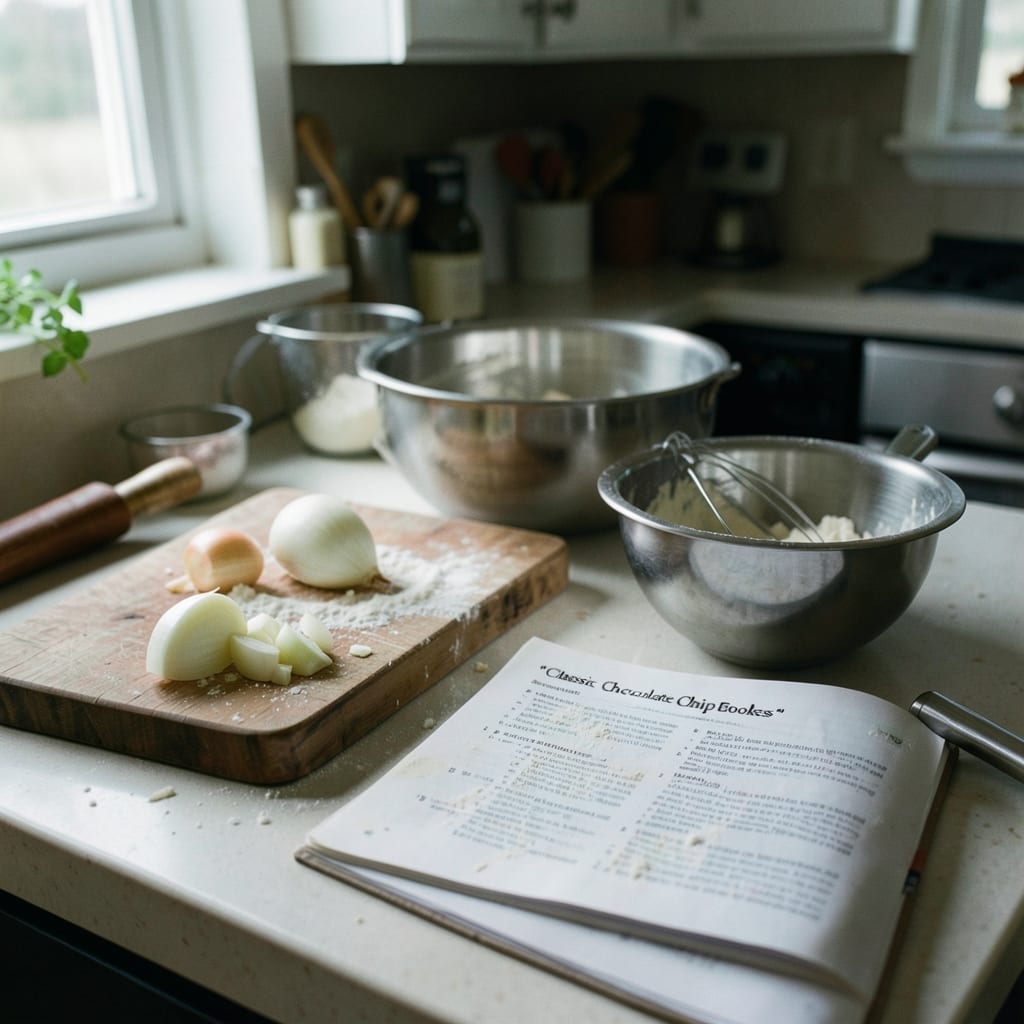
What this work is made with
This is not a story about values or a mission statement. It is a list of things: the actual objects this work depends on, described one at a time.
A reader learns more about a place from five objects than from five paragraphs about purpose, and that is the whole point.
This is *Salad Recipes Love*, a place for recipes that balance tradition and modern taste. Here, we publish dishes that feel like home, whether they’re classic comfort foods or fresh twists on old favorites. The things that make this possible are not abstract—they are physical, worn, and specific.
The things that do the work
Four objects hold this work together. Each has been here for years, some for decades, and each has shaped what appears on the page. They are not glamorous, not expensive, and not always perfect—but they are essential.
The cutting board
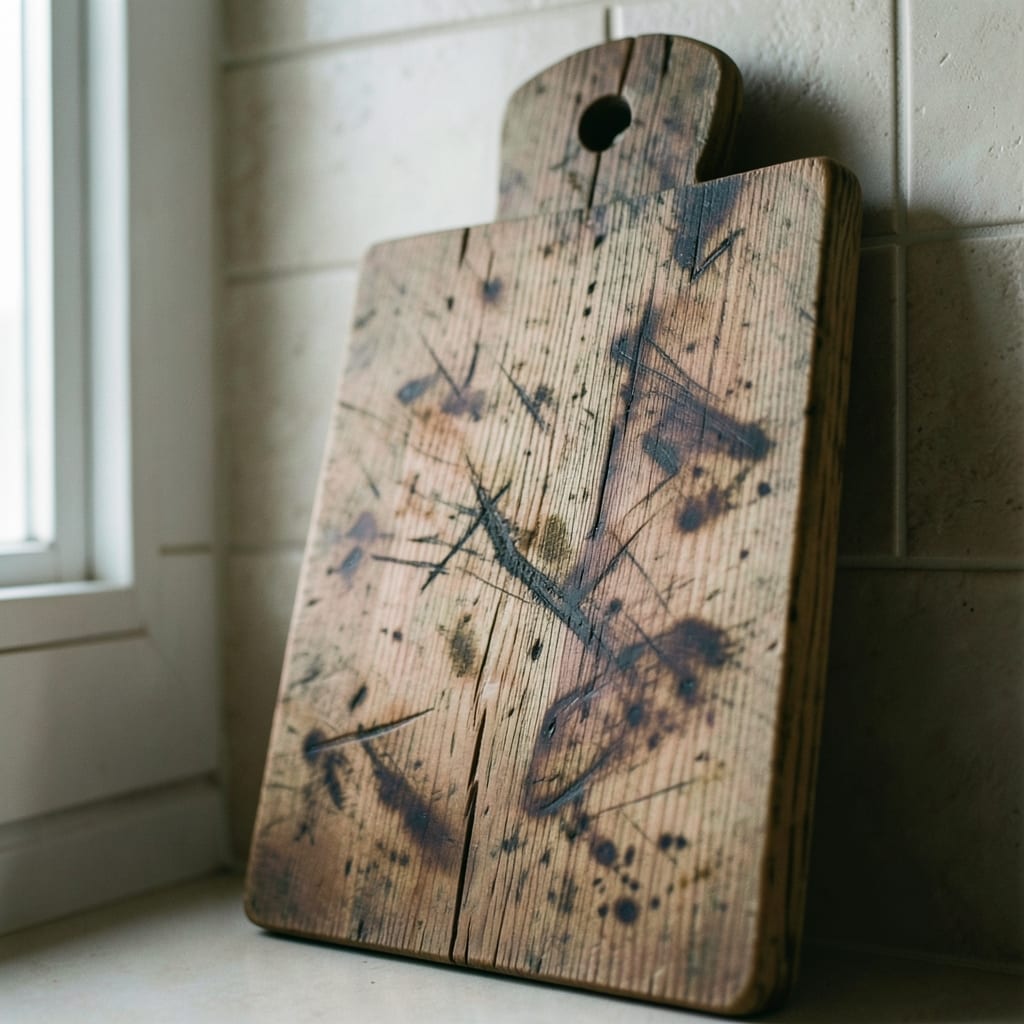
A 24-inch maple board with deep grooves from years of use. It has been here since 2008, when it replaced a cheaper plastic one that split under a whole fish.
The grooves now guide the knife better than any guide could, and the wood’s patina means no knife ever slips—even when it’s dull.
It taught us that imperfection is part of the process. The board is too wide for most countertops, and the center sags slightly when heavy. But it’s the only surface where ingredients feel right under the hand, and that matters more than symmetry.
The cast-iron skillet
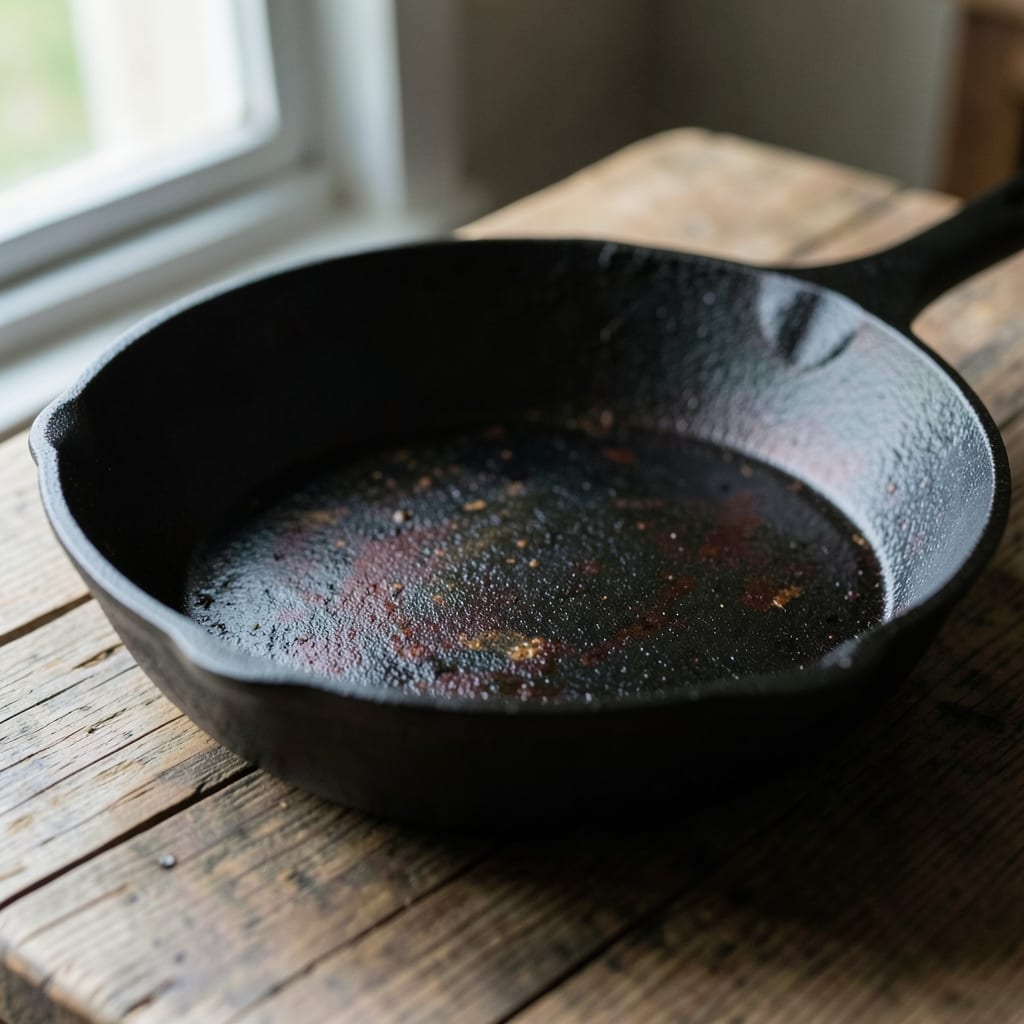
A 10-inch Lodge pan with a handle so warped it’s nearly useless for hanging. It arrived in 2012, a hand-me-down from a neighbor who swore by it for searing.
The seasoning is uneven—one side is nearly black, the other still holds a faint factory sheen—and it’s heavier than it should be.
It forced us to slow down. The pan’s weight makes it impossible to rush, and the uneven heat means some dishes take three tries to get right.
But it’s the only pan that can handle high heat without warping, and that’s why it’s still here, despite the handle that’s held together with wire for the last five years.
The wooden spoon
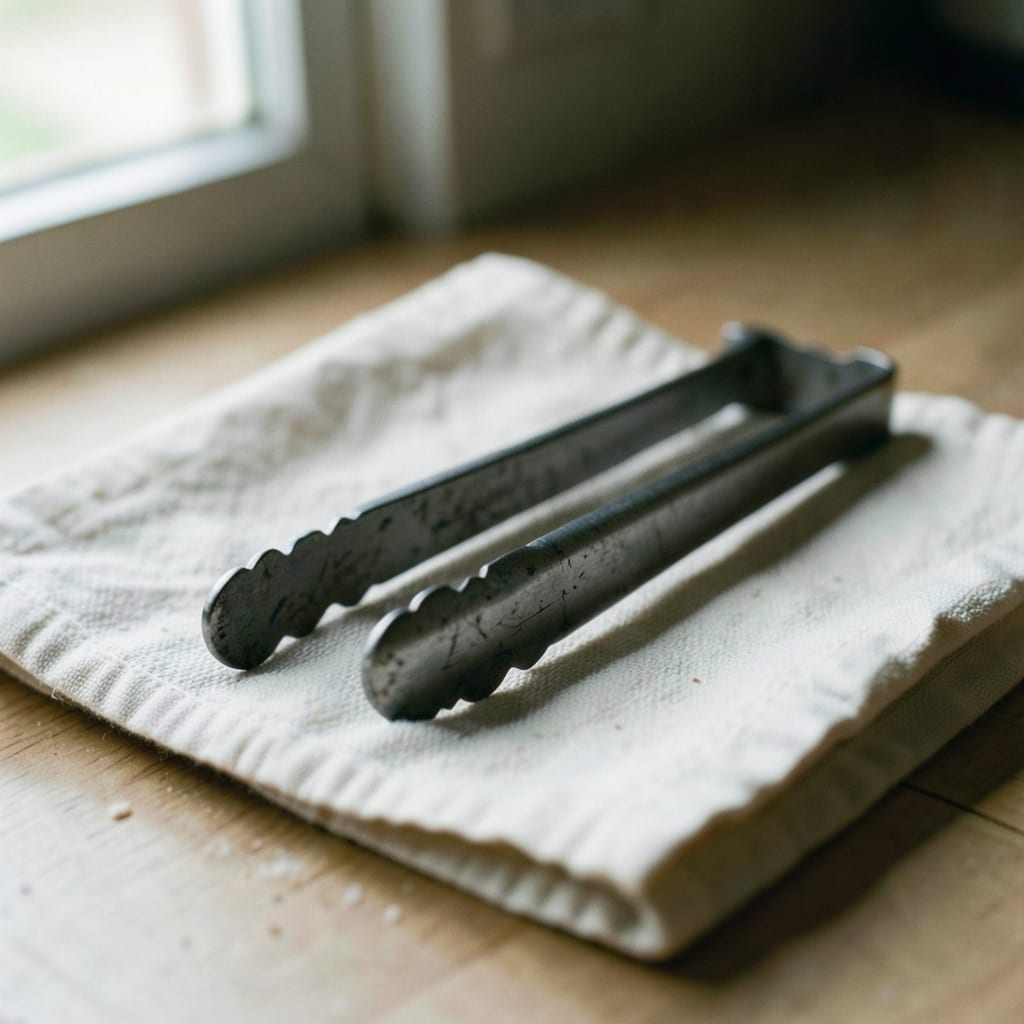
A simple, unmarked spoon carved from a single piece of cherry wood. It’s been here since before the site existed, passed down from Jerome’s grandmother. The handle is smooth from decades of use, and the bowl is slightly concave from years of stirring.
It taught us that some tools don’t need to be fancy to be perfect. The spoon is too large for most sauces and too small for big pots, but it’s the only one that doesn’t scratch the pans.
It’s also the only one that feels right for tasting—no metal, no plastic, just wood and whatever’s in the pot.
The cloth towel
A frayed, blue-and-white cotton towel with a hole near the hem. It’s been here since 2005, long before the site, and the hole is held together with a safety pin.
It’s thicker than most kitchen towels and absorbs more than it should, but it’s also the only one that doesn’t leave lint in the food.
It reminds us that some things are irreplaceable. The towel is too worn to be given away, and it’s been patched more times than anyone can count.
But it’s the one we reach for every time a sauce needs thinning or a pan needs drying—because it does the job without fuss.
What is not in the drawer
This work does not depend on gadgets, precision tools, or anything that requires batteries. The focus is on what’s essential: hands, intuition, and ingredients that speak for themselves.
Deliberately absent
- Digital scales (we measure by feel and volume when we can)
- Thermometers (temperature is learned, not guessed)
- Specialty knives (a good chef’s knife does 90% of the work)
- Food processors (hand-chopping keeps the connection to the dish)
Behind the scenes

I am Jerome Beaudry, the founder and editor of *Salad Recipes Love*. My job here is to make sure every recipe feels like it could be made at home—even if home is just a rented apartment with a single burner.
I came to this from a childhood kitchen in Montreal, where my mother’s Italian recipes and my father’s love of spices were the only rules. They handed me this work when I moved to the city and realized I could turn those memories into something others could use.
Years of chopping, stirring, and tasting have left their mark. My left hand’s knuckles are permanently bruised from holding knives too tightly, and I now notice how every board’s grain affects the way ingredients cut.
I also can’t stand the sound of a plastic spoon against a metal pot—it’s a habit I can’t unlearn.
I’m here to make sure the food on this site tastes like it was made with love—and a little bit of chaos. That means no perfect measurements, no over-reliance on tools, and no recipes that sound like they were written by a robot. Just real food, made by real hands.
Why any of this matters to you
These objects—worn, imperfect, and chosen carefully—are why the recipes here feel alive. They remind us that cooking is about more than ingredients: it’s about the tools that shape them, the hands that hold them, and the time spent getting them right.
When you read a recipe here, you’re not just seeing steps. You’re seeing the grooves in the board, the weight of the pan, the way the spoon feels in your hand. That’s the difference between a recipe and a memory waiting to be made.
Every recipe here is built on the same principles: real ingredients, real tools, and real hands. That means no shortcuts, no gimmicks, and no dishes that sound too good to be true. Just food that tastes like it was made with care—and maybe a little bit of love.
The recipes are grouped by category: Appetizers, Beverages, Breakfast & Brunch, Desserts, Main Courses and Reviews.