
Salads
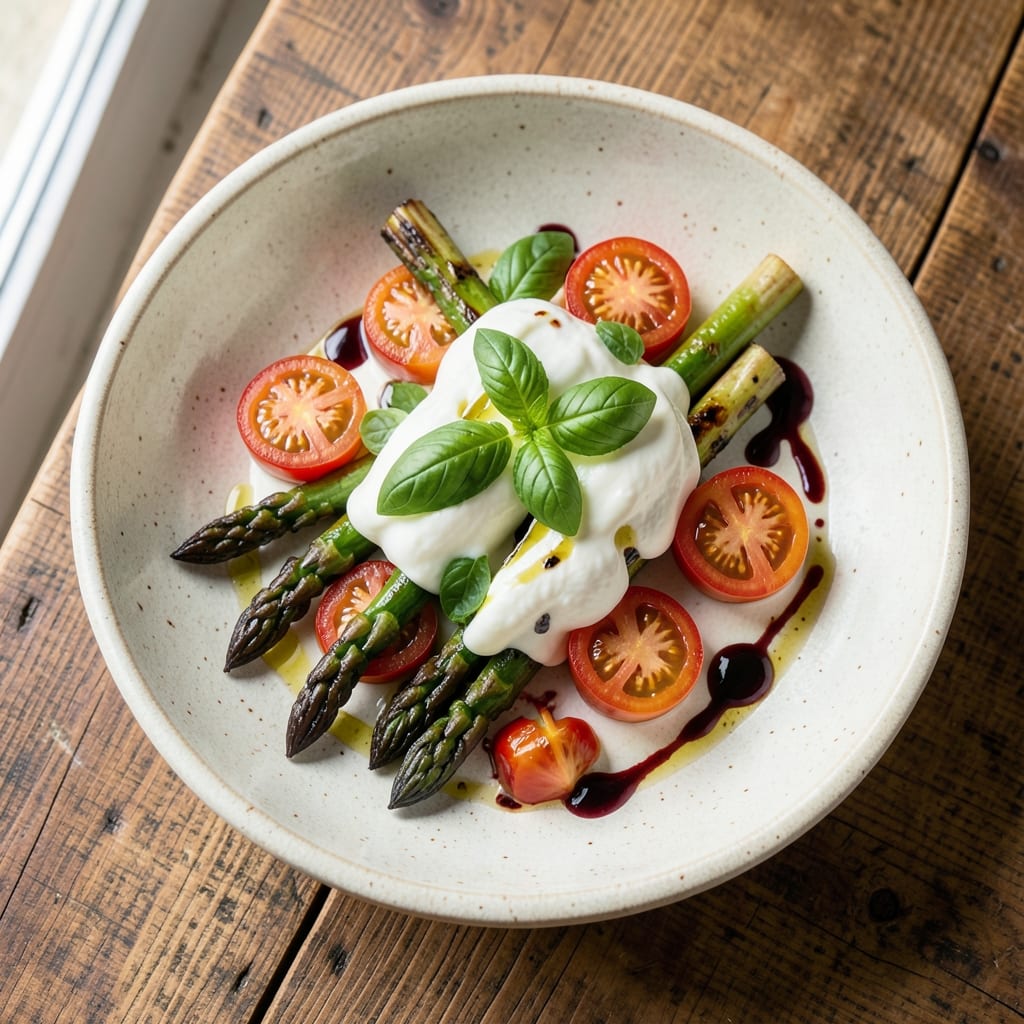
This asparagus Caprese salad recipe transforms spring's finest ingredients into a restaurant-worthy dish with charred asparagus, creamy mozzarella, and fresh basil. The secret lies in perfectly balancing textures—crisp asparagus spears, tender cheese, and bright herbs—all elevated by a light balsamic reduction. I developed this version after realizing traditional Caprese salads needed a spring vegetable update that keeps the Italian essence intact while adding modern depth.
The foundation starts with asparagus—whether roasted until tender-crisp or grilled for smoky char—paired with ripe tomatoes and fresh mozzarella. A simple balsamic reduction ties everything together, adding sweet-tart complexity without overpowering the delicate flavors. What makes this salad special is how each component plays off the others: the charred asparagus adds earthiness, the mozzarella provides creaminess, and the basil brings freshness that cuts through the richness.
This dish delivers a perfect balance of textures and flavors that's both elegant and approachable. The asparagus holds its shape while developing a satisfying crispness, the mozzarella melts slightly for creaminess, and the basil adds aromatic freshness. It's a vegetarian showstopper that works as a light main course or sophisticated side dish—ideal for spring entertaining or a special weeknight dinner.
For extra depth, toasted pine nuts or a sprinkle of flaky sea salt can elevate the dish further. The salad keeps well for up to 24 hours in the refrigerator, making it perfect for meal prep while maintaining its vibrant flavors. Let's bring this fresh, modern Caprese to your table with just a few simple steps.
Ingredients for asparagus caprese salad
Spring's brightest ingredients—charred asparagus, creamy mozzarella, and aromatic basil—come together for this refined vegetarian showstopper.
| Ingredient | Amount | Notes |
|---|---|---|
| Fresh Asparagus 🌱 | 1 lb | Trim woody ends, spears 6-8 inches |
| Fresh Mozzarella 🧀 | 8 oz | Fresh mozzarella, sliced into rounds |
| Heirloom Tomatoes 🍅 | 2 whole | Ripe, sliced into 1/4-inch pieces |
| Fresh Basil Leaves 🌿 | 1 cup | Packed, stems removed, torn by hand |
| Extra-Virgin Olive Oil 🫒 | ½ cup | Light, fruity variety preferred |
| Balsamic Vinegar 🍷 | 2 tbsp | Aged 12+ months for depth |
| Flaky Sea Salt 🧂 | 1 tsp | Diamond Crystal preferred |
| Freshly Ground Black Pepper 🌶️ | ½ tsp | Freshly cracked for intensity |
| Garlic Cloves 🧄 | 2 cloves | Minced for balsamic reduction |
| Toasted Pine Nuts 🥜 | ¼ cup | Optional for crunchy texture |
The asparagus is the star here, so prioritize fresh, firm spears with tight tips—avoid woody stalks that snap easily. Local farmers markets in spring carry the best, but any grocery store asparagus works if the ends are still closed. For charring, I recommend grilling over high heat for that smoky depth, but roasting at 425°F for 10-12 minutes yields tender-crisp results. The mozzarella should be fresh (not low-moisture)—look for whole milk mozzarella at specialty cheese counters or Italian markets for the creamiest texture. If using pre-sliced, opt for thick rounds that won't dissolve into the salad.
No heirloom tomatoes? Beefsteak or Roma tomatoes work equally well—they hold their shape better when sliced. For the balsamic reduction, aged 12+ month balsamic from Trader Joe's or Whole Foods adds that rich, caramelized depth without overpowering. Swap pine nuts for toasted walnuts or pecans if budget is a concern, but toast them first—they make all the difference. Fresh basil is non-negotiable here, but if you must use dried, reduce to one-third the amount and steep in warm olive oil for 10 minutes before using. The garlic in the reduction can be roasted for a sweeter note if you prefer.
This salad keeps beautifully for up to 24 hours in the fridge when stored in an airtight container—just keep the dressing separate until serving. For meal prep, char the asparagus and toast the nuts ahead, then assemble everything the day of. The balsamic reduction can be made 2 days in advance and stored in a small jar. When reheating, cover with a damp paper towel to prevent the mozzarella from drying out. Garnish with extra basil and flaky salt right before serving for that restaurant-quality finish.
Why You'll Love This Recipe
- Honestly, this works anywhere: a lazy Sunday brunch, a last-minute potluck, or even as a side when you’re grilling. I’ve served it on a platter with crusty bread, wrapped in foil for a beach picnic, and even as a fancy-ish appetizer. Flexible like that.
- No-Cook Magic: I swear by this when I’m too tired to turn on the oven—just snap those asparagus spears, slice the mozzarella, and toss everything with olive oil and basil. Five minutes tops, and it still feels like a proper meal.
- Crispy-Creamy Obsession: Between us, that first bite of blistered asparagus with creamy mozzarella and juicy heirloom tomatoes? It’s the kind of contrast that makes you forget about salads being boring. The olive oil ties it all together like a hug.
- Picnic to Party: Honestly, this works anywhere: a lazy Sunday brunch, a last-minute potluck, or even as a side when you’re grilling. I’ve served it on a platter with crusty bread, wrapped in foil for a beach picnic, and even as a fancy-ish appetizer. Flexible like that.
Step-by-step instructions for charred asparagus Caprese salad
Transform simple ingredients into a restaurant-worthy salad with perfectly charred asparagus and creamy mozzarella.
Char the Asparagus for Depth of Flavor
Trim the tough ends from the 1 lb fresh asparagus and discard. Heat a grill pan or cast-iron skillet over high heat until smoking. Add the asparagus in a single layer, laying spears parallel to each other. Cook for 2-3 minutes per side until the edges are deep charred and slightly blistered. You'll see dark brown marks along the edges—this is essential for that smoky, caramelized flavor that elevates the dish.
Transfer the charred asparagus to a cutting board and let it cool for 2 minutes. While it rests, slice the spears into 1-inch pieces. The residual heat will continue to develop flavor, so don't rush this step. If any spears remain undercooked, return them to the pan for another 30 seconds until properly charred. The asparagus should be tender yet still hold its shape when sliced.
Prepare the Balsamic-Garlic Reduction
In a small saucepan, combine the 2 tbsp balsamic vinegar and 2 cloves minced garlic. Bring to a simmer over medium heat, then reduce to a gentle bubble. Cook for 3-4 minutes until the mixture reduces by half and becomes syrupy. You'll notice the aroma intensify as the vinegar mellows and the garlic deepens in flavor. Remove from heat and let it cool for 1 minute—this concentrated reduction will tie all the components together.
While the reduction cools, slice the 2 whole heirloom tomatoes into ¼-inch thick rounds. Arrange them on a large platter or serving dish, slightly overlapping for visual appeal. The juicy tomatoes provide a vibrant contrast to the charred asparagus and creamy mozzarella. Season each slice lightly with a pinch of the flaky sea salt and freshly ground black pepper to enhance their natural sweetness.
Assemble the Salad with Fresh Mozzarella and Basil
Arrange the 8 oz fresh mozzarella slices on the tomato rounds, alternating with the charred asparagus pieces. The mozzarella should be slightly overlapping to create a cohesive pattern. Tear the 1 cup fresh basil leaves by hand (don't chop) and scatter them evenly over the mozzarella. The basil's bright green color and fresh aroma will balance the richness of the mozzarella and the acidity of the tomatoes.
Drizzle the ½ cup extra-virgin olive oil generously over the entire salad, allowing it to pool slightly in the crevices. The olive oil should glisten, indicating it's been applied evenly. Sprinkle with the remaining flaky sea salt and freshly ground black pepper, then pour the cooled balsamic-garlic reduction in a zigzag pattern over the top. The reduction will glaze the salad, adding a glossy finish and tying all the flavors together.
Add Toasted Pine Nuts for Crunch and Serve
Sprinkle the ¼ cup toasted pine nuts evenly over the salad just before serving. The pine nuts should be warm from toasting, adding a delicate crunch that contrasts with the creamy mozzarella and tender asparagus. Their nutty flavor complements the sweetness of the tomatoes and the richness of the mozzarella, creating a harmonious balance.
Let the salad rest for 5 minutes before serving to allow the flavors to meld. This brief wait ensures the mozzarella softens slightly, the tomatoes release their juices, and the basil releases its aromatic oils. Serve immediately while the asparagus is still warm and the pine nuts are crisp. The salad should be vibrant, with layers of texture—creamy, crunchy, tender, and juicy—all working together in perfect harmony.
Pro Tips For Making Asparagus Caprese Salad
- Blanch Asparagus First: Toss the asparagus in boiling water for 30 seconds—just until the spears soften slightly. This keeps them from turning mushy when stacked with tomatoes and mozzarella. I used to skip this and ended up with limp stalks that fell apart when sliced.
- Drain Mozzarella Well: Pat that fresh mozzarella dry with paper towels—really dry. The extra moisture makes the salad soggy within 10 minutes. I learned this the hard way after serving a watery mess to guests who asked, "Is this supposed to be a soup?"
- Skip the Crowding: Arrange the asparagus, tomato, and basil in a single layer—no overlapping. When you pile them high, the bottom ingredients get squished and release juices that turn the salad into a sad, watery pile. Trust me, it’s worth rearranging.
- Toss with Oil Last: Drizzle the olive oil over the salad right before serving. If you add it earlier, the basil wilts and the tomatoes get mealy. I now keep the oil in a small cruet on the table—because even a Caprese salad deserves a fresh finish.
Common mistakes when making this dish
Overcooking Asparagus
Charred asparagus should be tender-crisp, not mushy. I've ruined many batches by overcooking them—once I left them on the grill for 5 minutes instead of 2-3 minutes per side, resulting in a sad, limp pile. Use a timer and check frequently. The edges should be deep charred with dark brown marks, but the centers should still have a slight bite. 🌱
Using Low-Quality Mozzarella
Fresh mozzarella is non-negotiable here. I learned this the hard way when I grabbed pre-shredded mozzarella from the grocery store—it dissolved into the salad like sad, greasy pudding. Invest in whole milk fresh mozzarella from specialty cheese counters or Italian markets. It should be slightly springy and release a little liquid when pressed. If you can't find it, look for bocconcini as a substitute.
Skipping the Balsamic Reduction
The balsamic reduction is what ties this salad together, adding sweet-tart complexity. I once made this salad without it and found the flavors too one-dimensional. Simmer 2 tbsp aged balsamic vinegar with 2 minced garlic cloves until reduced by half—it only takes 3-4 minutes. This concentrated flavor is worth the effort. If you're short on time, a drizzle of high-quality balsamic glaze works in a pinch.
Uneven Dressing Distribution
Drizzling the olive oil and balsamic reduction evenly is crucial for balanced flavor. I've seen salads where the dressing pools in one spot, leaving other areas dry and flavorless. Use a spoon to gently spread the olive oil first, then pour the reduction in a zigzag pattern. This ensures every bite has that glossy, flavorful coating. Don't be shy—generous amounts create that restaurant-quality finish.
Using Stale Basil
Fresh basil is the secret weapon in this salad, but I've caught myself using wilted leaves straight from the fridge. Tear the leaves by hand (don't chop) and add them just before serving. If your basil looks sad, try reviving it by soaking the stems in ice water for 10 minutes before using. For extra freshness, I sometimes add a few basil leaves to the balsamic reduction while it simmers—it infuses the sauce with amazing aroma.
Neglecting the Resting Time
This is a small but important detail: letting the salad rest for 5 minutes before serving allows the flavors to meld and the mozzarella to soften slightly. I've been guilty of serving it immediately, only to find the components still felt separate. Use this time to set the table or toast some pine nuts. The wait ensures the tomatoes release their juices and the basil releases its aromatic oils for that perfect first bite. ✨
Nutrition facts
Frequently asked questions
Can I make this salad without asparagus?
The asparagus adds that signature charred depth, but you can substitute with grilled zucchini or blistered shishito peppers for a similar texture. Just reduce the cooking time to 1-2 minutes per side to avoid overcooking. The dish will still be delicious but lose its spring vegetable essence.
How do I store leftovers?
Store components separately in an airtight container: asparagus, mozzarella, tomatoes, and dressing. Reassemble just before serving to maintain crispness. The salad keeps well for 24 hours in the fridge. For the asparagus, blanch it for 30 seconds before storing to preserve its color and texture.
What's the best way to toast pine nuts?
Toast ¼ cup pine nuts in a dry skillet over medium-low heat for 2-3 minutes, stirring constantly. They're done when golden and fragrant. Watch closely—they burn quickly! For extra safety, spread them on a baking sheet at 350°F for 5 minutes if you're nervous about the stovetop.
Can I make this gluten-free?
This recipe is naturally gluten-free as long as you use certified gluten-free balsamic vinegar and check your mozzarella packaging. Some brands process cheese in shared facilities. For extra precaution, serve with a side of gluten-free crackers or crusty bread made with gluten-free flour.
Why does my mozzarella get watery?
Fresh mozzarella releases liquid when heated or handled. To minimize this, pat slices dry with paper towels before assembling. For a firmer texture, use bocconcini or mozzarella pearls instead of slices. If it still feels too soft, add the cheese just before serving and avoid pre-slicing it too thin.