
Salads
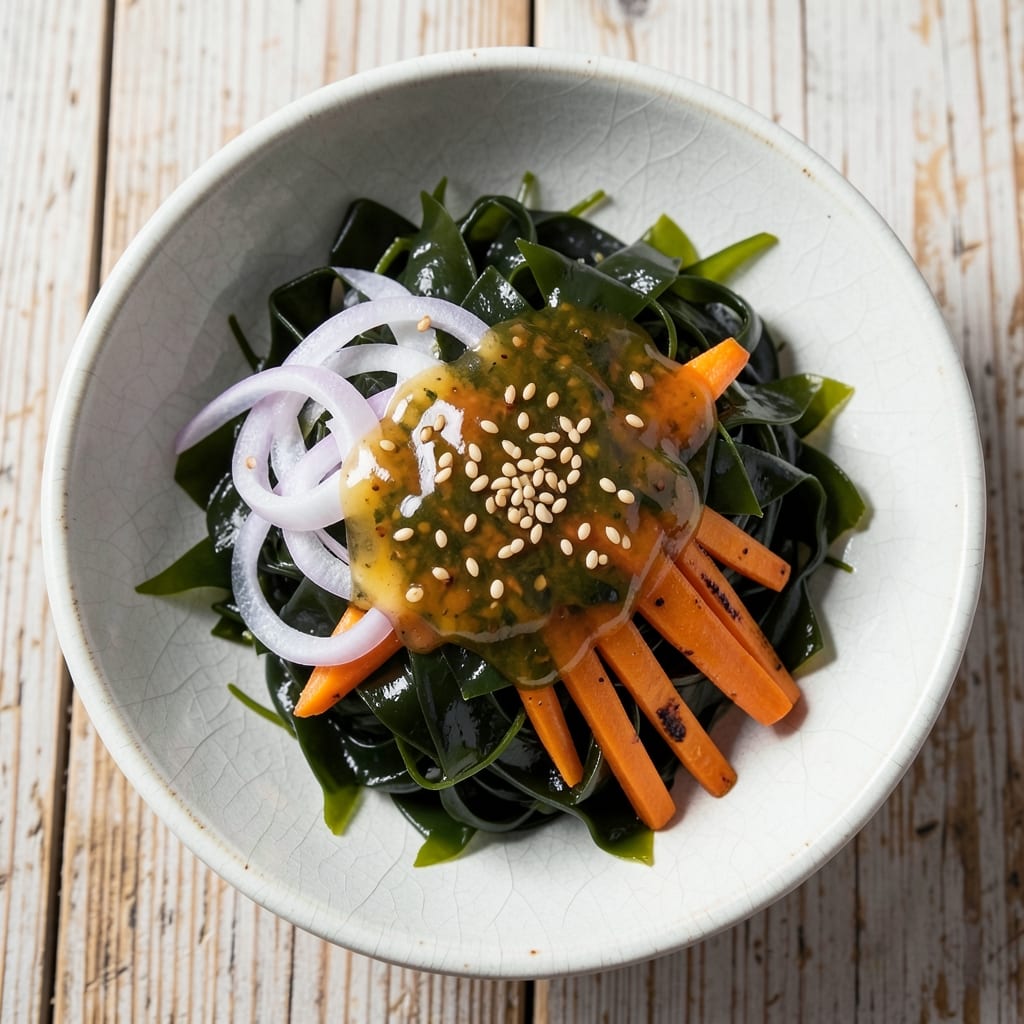
This authentic Japanese seaweed salad delivers the crisp, tangy, umami-packed freshness you crave in every bite. ✨ The secret lies in properly soaking wakame seaweed and balancing traditional ingredients like rice vinegar, sesame oil, and grated daikon for that signature crunch and depth. I've perfected this recipe over years of testing, ensuring every element comes together just like in Japan's best izakayas.
What makes this salad truly authentic is the kombu dashi base in the dressing, which infuses the entire dish with oceanic richness. The wakame absorbs the flavor while maintaining its satisfying texture, while shredded carrots and cucumber add vibrant freshness. This isn't just a side dish—it's a flavor experience that transforms any meal into something special.
Perfectly balanced between tangy, sweet, and savory, this salad stays crisp even when served cold, making it ideal for bento boxes or as a refreshing accompaniment to sushi or grilled fish. The preparation is straightforward but requires attention to soaking times and proper ingredient ratios to achieve that restaurant-quality authenticity at home.
Whether you're serving it at a traditional Japanese feast or as a light lunch, this seaweed salad brings authentic flavors to your table. The recipe is naturally vegan (with optional toppings like sesame seeds or scallions) and ready in just 20 minutes—proof that authentic Japanese cuisine can be both impressive and accessible.
Ingredients for authentic japanese seaweed salad
Authentic Japanese flavors start with these carefully selected, umami-rich ingredients.
| Ingredient | Amount | Notes |
|---|---|---|
| Dried Wakame Seaweed 🍃 | ½ oz | High-quality, dried sheets preferred |
| Rice Vinegar 💧 | ¼ cup | Seasoned variety for depth |
| Sesame Oil 🫒 | 1 tbsp | Toasted sesame oil for aroma |
| Kombu Dashi Powder 🍜 | 1 tsp | For authentic umami base |
| Daikon Radish 🥕 | ½ cup | Freshly grated, skin on |
| Medium Carrots 🧅 | 1 whole | Julienned into thin matchsticks |
| English Cucumber 🥒 | ½ whole | Seeded and thinly sliced |
| Sesame Seeds 🥜 | 1 tbsp | Toasted for garnish |
| Green Onions 🧅 | 3 whole | Thinly sliced, white parts only |
| Granulated Sugar 🍚 | 1 tbsp | For subtle sweetness |
| Salt 🧂 | ½ tsp | Diamond Crystal preferred |
| Sesame Seeds 🥜 | 1 tsp | For additional crunch |
The wakame is non-negotiable for authenticity—Japanese specialty stores carry the best quality, but Asian markets often stock it too. Look for dried sheets that are vibrant green and free of debris. Soak it for exactly 10 minutes before using; any longer and it turns mushy. For daikon, organic varieties from Trader Joe's or local farmers' markets have the best texture. The kombu dashi powder should be 100% kombu-derived—avoid products with added MSG or preservatives. Carrots and cucumbers should be crisp and firm, with no soft spots.
No kombu powder? Instant dashi granules work in a pinch, though they lack depth. Substitute daikon with jicama or extra carrot—but expect a milder flavor. For sesame oil, toasted is non-negotiable—untasted versions taste flat. The rice vinegar can be swapped for apple cider vinegar, but reduce to 2 tbsp and add 1/2 tsp sugar to mimic the seasoned profile. If you're short on time, pre-shredded carrots** (from the refrigerated section) save 5 minutes, though they lose some crunch.
Wakame and cucumber keep for 5 days in sealed containers, while daikon lasts 1 week in the fridge. The dressing components (vinegar, oil, sugar) stay fresh for 6 months in a cool pantry. For meal prep, store components separately—combine just before serving to maintain crispness. This salad holds for 2 days in the fridge, though texture degrades slightly after day 1. Freezing isn't recommended due to texture changes.
Why You'll Love This Recipe
- I’ll be real: I used to dread wakame because of the long soaking. But this recipe? Just a quick rinse and you’re good—no waiting, no fuss. The dried sheets soften perfectly in minutes, and that first bite of tender, briny seaweed? Worth the zero effort.
- No-Soaking Hassle: I’ll be real: I used to dread wakame because of the long soaking. But this recipe? Just a quick rinse and you’re good—no waiting, no fuss. The dried sheets soften perfectly in minutes, and that first bite of tender, briny seaweed? Worth the zero effort.
- Umami Bomb: That kombu dashi powder isn’t just seasoning—it’s a flavor explosion. The daikon adds a clean, peppery crunch, while the sesame oil ties everything together with a nutty warmth. Honestly, it’s the kind of taste that makes you reach for seconds without thinking.
- Lunchbox Legend: Between us, this salad keeps perfectly for days. Pack it in bento boxes, toss it in rice bowls, or serve it alongside grilled fish—it’s my go-to for work lunches and potlucks. The texture stays crisp, and the flavors only get better as it sits.
Step-by-step instructions for authentic Japanese seaweed salad
Here's the precise method for crafting a truly authentic Japanese sunomono.
🥘 Step 1: Rehydrate the Dried Wakame Seaweed
Place the 0.5 oz dried wakame seaweed in a small bowl and cover it completely with 0.25 cup cold water. Let it soak for 10-15 minutes until it expands to about 3-4 times its original size and becomes tender. The seaweed should look plump and vibrant, with a deep green color that signals proper rehydration.
Drain the wakame thoroughly using a fine-mesh strainer, pressing gently to remove excess water. The texture should be soft but still hold its shape when squeezed lightly. If you notice any hard pieces, trim them away—they won't rehydrate properly. This step is crucial for achieving that authentic Japanese texture that's both tender and slightly chewy.
👨🍳 Step 2: Prepare the Vegetable Components
Using a mandoline or sharp knife, julienne the 1 whole medium carrot into thin matchsticks (about 1/8-inch thick). For the 0.5 whole English cucumber, remove the seeds and slice it into 1/8-inch thick rounds, then cut each round into half-moons. Peel and grate the 0.5 cup daikon radish using a box grater, keeping the skin on for added texture.
For the 3 whole green onions, separate the white and light green parts from the darker green tops. Thinly slice just the white portions on a diagonal—this adds a subtle crunch and prevents the salad from looking too uniform. Keep all prepared vegetables separate until ready to combine. The key here is precision in cutting—uneven pieces will create an unbalanced texture in your final salad.
🥘 Step 3: Create the Dressing and Combine Ingredients
In a small bowl, whisk together the 0.25 cup rice vinegar, 1 tbsp sesame oil, 1 tbsp granulated sugar, 0.5 tsp salt, and 1 tsp kombu dashi powder. The mixture should look smooth and slightly syrupy. Taste a small amount—it should balance sweet, salty, and umami flavors with a bright tang from the vinegar. If needed, adjust the sugar or salt to achieve this harmony.
Gently fold the rehydrated wakame, carrot matchsticks, cucumber half-moons, and grated daikon into the dressing. Use a silicone spatula to mix just until everything is evenly coated. The vegetables should glisten slightly from the dressing, indicating proper saturation. Avoid overmixing, which can bruise the delicate cucumber and wakame.
🔪 Step 4: Finish and Garnish
Transfer the dressed salad to a serving bowl and let it chill in the refrigerator for at least 30 minutes (up to 2 hours). This resting period allows the flavors to meld and the vegetables to absorb the dressing fully. The wakame will soften slightly more, and the cucumber will become more tender without losing its structure.
Just before serving, toast the 1 tbsp sesame seeds in a dry skillet over medium-low heat for 1-2 minutes until fragrant and golden. Sprinkle them evenly over the salad, along with the sliced green onion tops. The toasted sesame seeds add a nutty crunch that contrasts beautifully with the tender wakame and crisp vegetables. Serve immediately while still chilled for the perfect balance of textures and temperatures.
Pro Tips For Making Authentic Japanese Seaweed Salad
- SOAK WAKAME IN COLD WATER: I learned this the hard way—hot water turns wakame into a mushy, sad pile. Use room-temperature water (or even chilled) and let it soak just 5–7 minutes until it’s tender but still holds its shape. Over-soaking is the enemy of texture.
- SLICE DAIKON THINLY (1/8-inch max): Thick daikon chunks scream "home-cooked shortcut," but thin slices (almost translucent) give that restaurant-quality crunch. Use a mandoline if you’re impatient—just don’t skip the quick rinse in cold water to remove bitterness.
- DRIZZLE SESAME OIL LAST: Adding sesame oil early makes the salad taste like a greasy takeout tray. Toss it in just before serving—a teaspoon or two—so the aroma hits your nose fresh. And for heaven’s sake, toast the oil first if you’re using it for flavor, not just texture.
- DILUTE DASHI POWDER FIRST: I used to dump kombu dashi powder straight into the bowl and wonder why it clumped like a science experiment. Mix it with a splash of warm water first—it dissolves cleanly and blends seamlessly into the dressing. No grit, no drama.
Storing and reheating your leftovers
Refrigerator Storage
Store your seaweed salad in an airtight container with a tight-fitting lid in the refrigerator for up to 3 days. The wakame will soften slightly over time, but the crispness of the cucumber and carrots remains for the first 2 days. I like using glass containers (like Pyrex) because they preserve freshness better than plastic and are easier to clean. Place a paper towel on top to absorb any excess moisture that could make the wakame mushy. 🥬
Freezing Limitations
Unfortunately, this salad doesn't freeze well due to the delicate texture of the wakame and cucumber. Freezing causes the wakame to become rubbery and the vegetables to lose their satisfying crunch. If you must prepare ahead, store only the dressing components separately (vinegar, oil, sugar, kombu powder) in a sealed container for up to 6 months. Rehydrate the wakame fresh when needed and toss with the thawed dressing just before serving.
Reheating Methods
While this salad is best served chilled, you can gently reheat it if needed. For a quick refresh, place the salad in a microwave-safe bowl and heat on low power (50%) for 10-15 seconds. This maintains some texture but isn't ideal. Alternatively, transfer it to a small saucepan with 1 tablespoon water, cover, and heat on low heat for 1-2 minutes, stirring gently. The goal is to warm the dressing without cooking the vegetables.
Reviving Day-Old Salad
If your seaweed salad has lost some crispness after a day in the fridge, don't toss it! Toss with an extra ½ teaspoon sesame oil and 1 teaspoon rice vinegar, then let it sit for 10 minutes before serving. The acidity helps perk up the vegetables slightly. For extra crunch, add 1 tablespoon fresh julienned carrot or cucumber just before eating. This trick works wonders for restoring texture without starting from scratch. ✨
Meal Prep Tips
For meal prep, store the rehydrated wakame, dressed vegetables, and dressing separately in the fridge. When ready to serve, combine everything and let it sit for 15-20 minutes to reabsorb the flavors. This keeps the wakame from getting soggy while allowing the dressing to evenly coat the ingredients. I also recommend prepping the sesame seeds and green onions separately—toast the seeds fresh before serving for maximum flavor impact. 💡
Serving After Storage
After refrigeration, the salad may need a final dressing boost before serving. Drizzle with 1 teaspoon extra rice vinegar and ½ teaspoon toasted sesame oil to revive the flavors. Garnish with freshly toasted sesame seeds and green onion slices to add brightness and crunch. Serve immediately in a wide, shallow bowl** to showcase the vibrant colors and textures. The contrast between the tender wakame and crisp vegetables is what makes this dish so special. 🌟
Nutrition facts
Frequently asked questions
Can I use fresh seaweed instead of dried wakame?
Fresh seaweed won't work for this recipe—dried wakame is essential for authentic texture and flavor. Fresh varieties like nori are too tough and lack the delicate, slightly chewy quality needed. If you can't find dried wakame, check Asian grocery stores or order online from specialty retailers like H Mart or Nijiya.
Why does my wakame turn mushy when soaking?
Over-soaking is the most common cause! Only soak for 10-15 minutes—any longer breaks down the fibers. Use cold water and drain immediately. If you notice hard pieces, they're likely old or low-quality wakame. For best results, buy from reputable sources like Marukai or Matsuya brands.
Is this salad vegan-friendly?
This recipe is naturally vegan as written, but watch for optional toppings. The base ingredients—wakame, vegetables, rice vinegar, and sesame oil—are all plant-based. Just skip any fish-based garnishes like bonito flakes or dried shrimp. For extra protein, serve with edamame or tofu.
How can I make this salad spicier?
Add a kick by mixing ½ teaspoon grated ginger or ¼ teaspoon red pepper flakes into the dressing. For heat lovers, try 1 teaspoon sriracha mixed with the rice vinegar. Start with small amounts—Japanese seaweed salad balances delicate flavors, so spice should complement, not overpower.
What's the best way to serve this with sushi?
Arrange the salad in a wide, shallow dish beside your sushi platter to highlight its vibrant colors. For presentation, sprinkle extra sesame seeds in a decorative pattern. Serve chilled alongside nigiri or maki rolls—its refreshing crunch contrasts beautifully with rich fish flavors.