
Salads
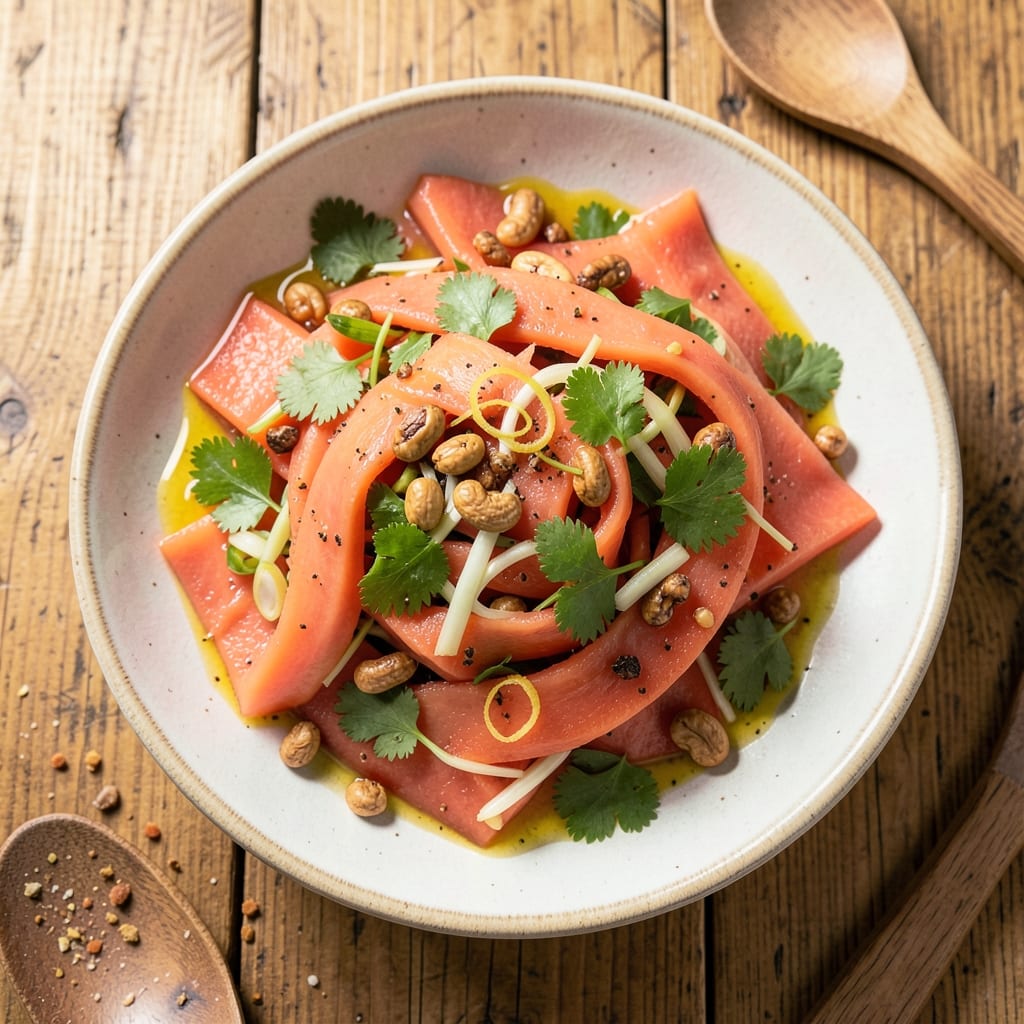
This authentic papaya salad recipe brings the vibrant flavors of Thailand to your table with a perfect balance of sweet, sour, and spicy. The key lies in fresh, ripe papaya sliced into delicate ribbons and tossed with a tangy dressing of lime juice, fish sauce, and chili. What makes this dish special is its refreshing crunch and bold, contrasting flavors that come together in just 20 minutes—ideal for a quick yet restaurant-quality meal.
The traditional preparation focuses on achieving the right texture and flavor harmony: crisp papaya, crunchy peanuts, and a dressing that’s both zesty and savory. Unlike many Western salads, this dish relies on fresh herbs like cilantro and mint, along with a touch of palm sugar, to create a sweet-spicy contrast. The secret to authenticity lies in the balance—too much lime makes it sour, too little chili makes it bland, and the peanuts must be toasted just enough to add depth without overpowering.
What you’ll end up with is a salad that’s as visually stunning as it is delicious—bright green herbs against the golden-yellow papaya, topped with crunchy peanuts and a drizzle of dressing. The flavors are complex yet refreshing, making it perfect for hot days or as a side dish that steals the show. Serve it alongside grilled meats or shrimp for a complete meal, or enjoy it on its own for a light yet satisfying bite.
For those avoiding fish sauce, a simple vegan alternative using soy sauce and a splash of coconut aminos works beautifully. The recipe is designed to be adaptable while staying true to its roots, ensuring every bite delivers that signature Thai tang and crunch. Let’s get started on making this dish that’s as much about technique as it is about taste.
Ingredients for authentic papaya salad
Fresh papaya, herbs, and a tangy dressing—this Thai-inspired salad delivers authentic flavor in minutes.
| Ingredient | Amount | Notes |
|---|---|---|
| Ripe Papaya 🍈 | 4 cups | Sliced into ribbons, seeds removed |
| Green Onions 🧅 | ½ cup | Thinly sliced, white parts trimmed |
| Fresh Cilantro 🌿 | ½ cup | Stems removed, roughly chopped |
| Fresh Mint Leaves 🍃 | ¼ cup | Finely chopped, stems removed |
| Raw Peanuts 🥜 | ½ cup | Toasted, unsalted, roughly chopped |
| Lime Juice 🍋 | ½ cup | Freshly squeezed, strained |
| Palm Sugar 🍯 | 2 tbsp | Or substitute coconut sugar |
| Fish Sauce Substitute 🍶 | 2 tbsp | Soy sauce + coconut aminos mix |
| Red Chili Flakes 🌶️ | 1 tbsp | Adjust for spice preference |
| Garlic Cloves 🧄 | 2 cloves | Minced, fresh preferred |
| Extra-Virgin Olive Oil 🫒 | 1 tbsp | For drizzling, optional |
| Sea Salt 🧂 | ½ tsp | Fine grain preferred |
The papaya is non-negotiable—look for vibrant yellow fruit with a slight give when pressed. Asian markets often have the best selection, but most grocery stores carry ripe papaya in the produce section. Fresh herbs make all the difference: cilantro and mint should smell bright and aromatic. For the fish sauce substitute, combine 1 tbsp soy sauce with 1 tbsp coconut aminos—it mimics the umami depth without the fish. Toast the peanuts in a dry pan until fragrant (about 3-4 minutes), then cool before chopping to maintain crunch.
No palm sugar? Coconut sugar or brown sugar works in a pinch, though palm sugar’s caramel notes are ideal. Too much lime juice makes this salad bitter, so taste as you go—start with 4 tbsp and adjust. Chili flakes can be swapped for fresh Thai chilies (bird's eye) or a dash of sriracha, but adjust carefully. For extra authenticity, add a pinch of ground white pepper—it’s a classic Thai touch. If you’re short on time, pre-chop all herbs and store them in the fridge for up to 2 days in a sealed container.
This salad keeps best when stored in an airtight container with a paper towel pressed on top to absorb excess moisture. 2-3 days in the fridge is ideal, though the papaya will soften over time. For serving, drizzle with a touch of olive oil just before eating—it enhances the flavors without overpowering. The dressing can be made ahead and stored separately for up to 5 days. Double the recipe and freeze half for quick meals later; just let it thaw in the fridge overnight.
Why You'll Love This Recipe
- No Knife Skills Needed: I swear, this is one of those rare salads where you can eyeball the chopping. Tear the papaya into chunks, snip the green onions roughly, and pluck the mint leaves—no Julienne required. The peanuts? Just crush them lightly between your palms. Honestly, it’s the kind of dish that makes me question why I ever bothered with fancy prep.
- Taste Like a Vacation: That perfect balance of sweet, spicy, and creamy? It’s what makes this salad dangerously addictive. The ripe papaya melts in your mouth while the lime, fish sauce, and chili flakes wake up every bite. Between us, I’ve eaten it straight off the spoon—no shame.
- Picnic to Party Star: This salad works everywhere. Pack it in a container for a beach day, toss it on skewers for a BBQ, or serve it in a big bowl when friends drop by. I’ve even used it as a topping for grilled chicken or shrimp—suddenly, you’ve got a whole menu upgrade with one bowl.
- Leftovers That Don’t Let You Down: Unlike some salads that turn soggy, this one actually improves overnight. The flavors meld, the peanuts get extra crunchy, and it’s still bright and refreshing. Plus, it’s cheap—ripe papayas are often on sale, and a bag of peanuts stretches for multiple servings. My wallet and my lunchbox thank me weekly.
Step-by-step instructions for authentic papaya salad
This Thai-style salad balances sweet, spicy, and tangy flavors perfectly—let's build it properly.
Prepare the Papaya Base
Start with the 4 cups ripe papaya sliced into thin ribbons using a sharp knife. Remove any seeds and discard them. The papaya should be soft enough to yield to gentle pressure but not mushy—this ensures the right texture in your salad. Arrange the ribbons on a cutting board and set aside.
Real talk: if your papaya is too firm, let it sit at room temperature for 15-20 minutes before slicing. You want it tender enough to absorb the dressing without turning to mush. The ribbons should be about ¼-inch wide—this creates the perfect bite-sized texture that holds up well when tossed with the other ingredients.
Toast the Peanuts and Mix Herbs
In a dry skillet over medium heat, toast the 0.5 cup raw peanuts for 3-4 minutes, stirring constantly until they turn a light golden brown and smell nutty. Remove from heat immediately—they'll continue cooking from residual heat. Let them cool slightly, then roughly chop them with a knife.
In a large mixing bowl, combine the 0.5 cup green onions, 0.5 cup fresh cilantro, and 0.25 cup fresh mint leaves. Give them a quick stir to distribute evenly—the herbs should be roughly chopped but not minced. This combination creates the aromatic foundation of the salad. I always use fresh herbs here; dried versions won't give you that authentic Thai brightness.
Create the Dressing
In a small bowl, whisk together the 0.5 cup lime juice, 2 tbsp palm sugar, 2 tbsp fish sauce substitute, 1 tbsp red chili flakes, 2 cloves minced garlic, and 0.5 tsp sea salt. Taste the mixture—it should balance sweet, sour, salty, and spicy flavors. Adjust the palm sugar if it's too tart or the fish sauce if it needs more umami depth.
Here's the thing—this dressing is the soul of the salad. The lime juice brightens everything, the palm sugar cuts through the heat, and the fish sauce adds that essential savory depth. If you're using a fish sauce substitute, make sure it's well-seasoned with coconut aminos or soy sauce to mimic the authentic flavor. The chili flakes should be finely distributed, not clumped.
Assemble the Salad
Add the papaya ribbons to the bowl with herbs and gently toss to combine. Drizzle the dressing over the papaya in stages—start with half, toss well, then add the rest. This gradual approach ensures even coating without making the salad soggy. Add the toasted, chopped peanuts and toss again just before serving.
Let the salad sit for 5 minutes before serving. This resting period allows the flavors to meld together perfectly. The papaya will soften slightly, absorbing the dressing just enough to enhance its natural sweetness. The peanuts should be scattered throughout, adding crunch with every bite. Serve immediately while the dressing is still vibrant and the peanuts are crisp.
Finish with Optional Olive Oil
Just before serving, drizzle 1 tbsp extra-virgin olive oil over the top for added richness. This step is optional but recommended—it creates a beautiful sheen and adds another layer of flavor. Toss gently to distribute the oil evenly without breaking up the papaya ribbons.
The final salad should be a vibrant mix of orange papaya, green herbs, and brown peanuts. Each bite should deliver a perfect balance of sweet papaya, tangy lime, spicy chili, and nutty peanuts. If you prefer it less spicy, reduce the chili flakes to ½ tbsp—but trust me, the authentic version packs a little heat that makes it unforgettable.
Pro Tips For Making Authentic Papaya Salad
- Cut Papaya Dry: Pat the diced papaya with a paper towel before tossing it in—this removes excess moisture so your dressing clings instead of pooling at the bottom. I learned this the hard way after serving a salad that looked like it had been watered down.
- Toast Peanuts Low: Dry-toast the peanuts in a skillet over medium-low heat until they’re just fragrant, not browned—about 3-4 minutes. High heat burns them fast, and you’ll end up with bitter bits instead of nutty crunch.
- Balance the Dressing: Taste the dressing before mixing it all in—it should be tangy but not overpowering. Start with 2 tablespoons of lime juice per tablespoon of fish sauce, then adjust. Too much fish sauce? You’ll taste it like a marinade, not a salad.
- Stack Herbs Last: Toss in the mint and cilantro right before serving—they wilt fast in the dressing. If you’re prepping ahead, store them separately and add them fresh when ready to eat. (Yes, even if you’re impatient like me.)
Regional styles of this recipe
Thai Street Food Style
In Thailand, this salad is often served as a quick street snack or side dish at roadside stalls. Vendors use a wooden mortar and pestle to crush the dressing ingredients for an extra-textured finish. Look for Thai chilies (prik kee noo) at Asian markets—these tiny, fiery chilies pack more heat than flakes. For authenticity, serve with grilled lemongrass pork skewers or steamed jasmine rice to soak up the dressing. The key is speed—Thai street food chefs prepare this in under 15 minutes while keeping all ingredients fresh and vibrant. 🌶️
Laotian Variations
Laos takes this salad in a slightly sweeter direction, often adding roasted coconut flakes for texture and lemongrass paste> for aroma. The dressing typically includes fermented fish sauce (padaek)>, which adds a funky depth. For a Lao-style twist, substitute 1 tbsp minced lemongrass> and 1 tsp shrimp paste> into the dressing. Serve with grilled chicken or sticky rice> to balance the bold flavors. The Lao version is often served at family gatherings, where it's considered a symbol of hospitality. 🍃
Vietnamese-Inspired Twist
Vietnamese chefs often incorporate shallots> and black pepper> into their version, creating a more complex flavor profile. Replace the garlic with 1 tbsp minced shallots> and add ½ tsp freshly ground black pepper> to the dressing. Vietnamese papaya salad (called gỏi đu đủ>) sometimes includes carrots or cucumber> for extra crunch. Serve with rice paper rolls or grilled shrimp> for a fusion approach that’s popular in Vietnamese street food culture. The Vietnamese version tends to be slightly less sweet, relying more on the natural sweetness of the papaya. 🥢
Modern Fusion Adaptations
For a contemporary take, try adding avocado slices> or toasted coconut chips> for texture. Some chefs blend the dressing into a smooth sauce using a high-speed blender>, then drizzle it over the salad for a more modern presentation. A fusion version might include quinoa or edamame> for protein. For dessert-inspired twists, some chefs add dried mango or lychee> to the salad for a sweet contrast. These adaptations keep the core flavors intact while appealing to modern palates. 💫
Northern vs. Southern Thai
Northern Thai versions often use wild herbs like Thai basil or holy basil> and less sugar, emphasizing the natural sweetness of the papaya. Southern Thai styles incorporate more chili heat> and sometimes shrimp paste> for depth. The Southern version is often served with spicy seafood dishes>, while Northern styles pair better with grilled meats or vegetable curries**>. Both regions use the same core ingredients but adjust the balance to suit local tastes—Northern versions are lighter, while Southern ones are bolder. 🗺️
Nutrition facts
Frequently asked questions
Why does my papaya salad turn mushy?
Overmixing or using underripe papaya are the main culprits. Always slice ripe but firm papaya into ¼-inch ribbons and toss gently—just until combined. The dressing should coat the papaya, not soak it. For extra crunch, add the peanuts and herbs right before serving.
Can I make this salad ahead of time?
Yes, but store the dressing and salad separately. Keep the papaya and herbs in an airtight container with a paper towel to absorb moisture for up to 2 days. Mix just before serving. The dressing can be made 5 days ahead—it actually tastes better after flavors meld!
What's the best fish sauce substitute?
For authenticity, mix 1 tbsp soy sauce + 1 tbsp coconut aminos. For deeper umami, add a pinch of white pepper. Avoid regular salt substitutes—they lack the complex flavor. Test small batches first, as substitutes vary in saltiness.
How spicy should this salad be?
Traditional versions balance heat with sweetness—start with 1 tbsp chili flakes and adjust to taste. For mild heat, reduce to ½ tbsp. Thai street vendors often use fresh Thai chilies for authentic heat. Remember: the dressing's sweetness should always counterbalance the spice.
Can I use green papaya instead?
Green papaya works but requires different prep—it's firmer and less sweet. Peel, deseed, and slice into matchsticks. Soak in cold water for 10 minutes to soften slightly before draining and assembling. The texture will be crunchier, similar to a slaw.