
Salads
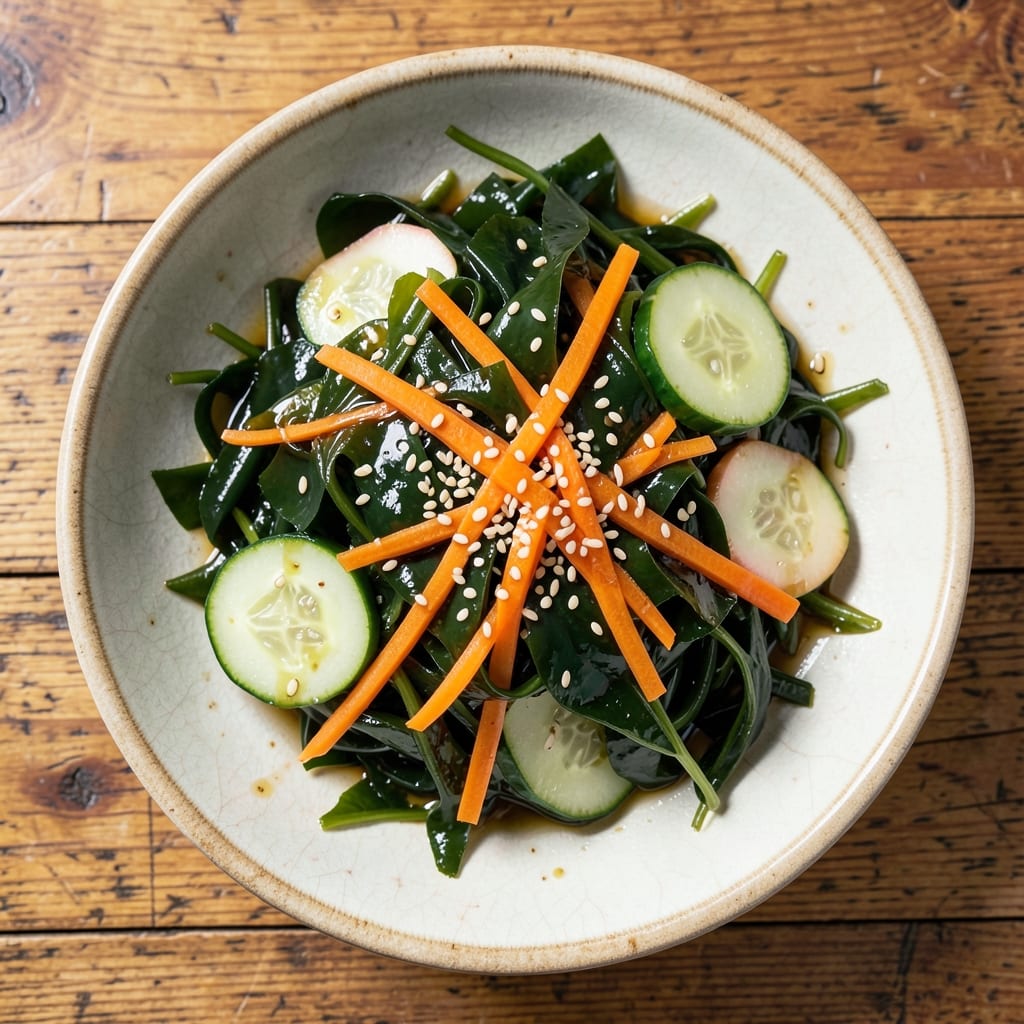
This authentic seaweed salad recipe brings the crisp ocean freshness of coastal Japan to your table with every bite. 💛 The secret lies in balancing tender seaweed with crunchy vegetables and a tangy dressing that enhances—rather than overpowers—the natural umami flavor. Unlike store-bought versions, this recipe starts with proper preparation: rinsing, soaking, and chopping techniques that unlock the seaweed's full potential.
The foundation of this dish is simple yet transformative: thinly sliced cucumber, shredded carrots, and toasted sesame seeds for texture, all tied together with a classic soy-mirin dressing. The key to authenticity is the dressing—sweet, salty, and slightly tangy—made with rice vinegar, mirin, and a touch of citrus. This balance ensures the seaweed remains the star while complementing its natural briny notes.
What makes this salad truly special is its versatility. Serve it as a refreshing side for sushi, a light lunch on its own, or a vibrant topping for bowls and noodles. The crunchy texture and bright flavors make it a standout dish that feels both comforting and sophisticated. Once you try this version, store-bought seaweed salad won’t compare.
Ready to elevate your meal prep? This recipe delivers restaurant-quality results in just 15 minutes of active prep time, with ingredients you can find at any Asian market or grocery store. Let’s make it—your taste buds will thank you.
Ingredients for authentic seaweed salad
Simple ingredients that pack bold ocean flavors—no fancy shopping needed.
| Ingredient | Amount | Notes |
|---|---|---|
| Dried Wakame Seaweed 🌊 | 4 oz | Rehydrated in water for 10 mins |
| Persian Cucumber 🥒 | 1 whole | Thinly sliced lengthwise, seeds removed |
| Carrots 🥕 | 2 medium | Shredded with peeler or grated fine |
| White Sesame Seeds 🥜 | 2 tbsp | Toasted lightly in dry pan |
| Rice Vinegar 🍶 | ¼ cup | Unseasoned, mild flavor |
| Mirin 🍶 | 2 tbsp | Sweet cooking rice wine |
| Soy Sauce 🥢 | 1 ½ tbsp | Light or regular, not low-sodium |
| Sesame Oil 🫒 | 1 tbsp | Toasted, not flavored |
| Fresh Ginger 🧅 | 1 tsp | Finely grated, fresh only |
| Lemon Juice 🍋 | 1 tbsp | Freshly squeezed, no pulp |
| Sesame Seeds 🥜 | 1 tbsp | For garnish, extra toasted |
| Salt 🧂 | ½ tsp | Fine sea salt, to taste |
| Water 💧 | 1 cup | For rehydrating seaweed |
The seaweed is the star, so don’t skimp—look for dried wakame at any Asian market or in the international aisle. Trader Joe’s carries it pre-packaged, but bulk bins at stores like H Mart are cheaper. If you can't find wakame, dried kombu works in a pinch (soak longer). For the cucumber, Persian cucumbers are ideal—they're seedless and stay crisp, but regular cucumbers work too (just remove seeds). The carrots? Orange or purple add extra color, but regular carrots are totally fine. Toast your sesame seeds in a dry pan for 30 seconds until golden—don't walk away, they burn fast.
No mirin? Substitute 1 tbsp sugar + 1 tbsp dry sherry, but the flavor won't be identical. Soy sauce? Tamari works if you're gluten-free. Fresh ginger is non-negotiable here—it cuts through the saltiness and adds depth. Pre-grated ginger from the jar? Use half the amount, but fresh is always better. The dressing ratio is key: if you want it tangier, add another tbsp of rice vinegar. For extra crunch, toss in 1 tbsp chopped scallions or toasted nori strips. And if you're feeling fancy, add 1 tsp toasted poppy seeds for a European twist.
This salad keeps best in the fridge for 3-4 days, but the seaweed gets softer over time. To preserve texture, store components separately: dressing in a jar, veggies in a container with paper towels to absorb moisture. Rehydrate seaweed in cold water—hot water kills the flavor. For serving, toss everything together right before eating so it stays crisp. Leftovers? It reheats surprisingly well—microwave for 20 seconds to revive the crunch. Double the batch—it disappears fast at parties.
Why You'll Love This Recipe
- No-Soaking Needed: I’ll admit, I used to dread the long soak for wakame—until I realized you can just rehydrate it in the dressing for 10 minutes. The cucumbers and carrots take two minutes to slice, and boom, you’re done. (Yes, even on a Tuesday night.)
- Umami-Packed Crunch: That first bite? The wakame’s briny snap meets the sweet crunch of Persian cucumber—it’s like the ocean and a carrot had a delicious fight. The sesame seeds add this nutty finish that makes you want to eat it straight from the bowl.
- Lunchbox Superstar: Between us, this is my go-to for packed lunches or potlucks. It holds up for days in the fridge, stays crisp, and pairs perfectly with rice bowls or grilled fish. My coworker stole half my portion last week—no regrets.
- Pantry Magic: Honestly, the ingredients are cheap and last forever. A bag of dried wakame costs less than a fancy salad kit, and the veggies stretch across multiple meals. It’s the kind of recipe where you’ll wonder why you didn’t make it sooner.
Step-by-step instructions for authentic seaweed salad
Here's how to make this classic Japanese salad with perfect texture and balance.
👨🍳 Step 1: Rehydrate the Wakame Seaweed
Place the 4 oz dried wakame seaweed in a bowl and cover with the 1 cup water. Let it soak for 10 minutes—you'll see it expand dramatically as it absorbs the water. After soaking, drain using a colander and gently squeeze out any excess liquid with your hands. The seaweed should be tender but still hold its shape, with a vibrant green color that looks fresh from the ocean.
Don't skip this step—proper rehydration is what gives this salad its signature chewy texture. If you're short on time, you can microwave the seaweed in water for 3-4 minutes instead, but soaking develops more flavor. Once rehydrated, give it a quick rinse under cold water to remove any grit or excess salt that might have come from the drying process.
🍳 Step 2: Prepare the Vegetable Base
Peel the 1 whole Persian cucumber and slice it lengthwise into ¼-inch thick strips, removing the seeds as you go. This variety stays crisp longer than regular cucumbers. Next, use a peeler or fine grater to shred the 2 medium carrots into thin, matchstick-like strips—you want them fine enough to blend well with the seaweed but still recognizable.
Here's the thing—don't overcrowd your cutting board. Work in batches if needed to keep your knife sharp and your cuts even. The cucumber should be cool and crisp, while the carrots should have a bright, natural color. Toss both in a large bowl with the rehydrated wakame seaweed and set aside. This is your salad's crunchy foundation, so take your time getting it just right.
🥘 Step 3: Toast the Sesame Seeds
Heat a dry skillet over medium-low heat and add the 2 tbsp white sesame seeds. Toast them for 2-3 minutes, stirring constantly, until they turn a light golden color and release their nutty aroma. Remove from heat immediately—they'll continue cooking from residual heat, and you don't want them to burn. Let them cool for 1 minute, then transfer to a small bowl.
I always do this step first because the aroma fills the kitchen and gets me excited about the salad. These toasted seeds will add depth of flavor and texture contrast. While they cool, you can prepare the dressing—just don't let them sit too long or they'll lose their crunch. The seeds should be warm to the touch but not hot when you add them to the salad later.
🍳 Step 4: Make the Signature Dressing
In a small bowl, whisk together the 0.25 cup rice vinegar, 2 tbsp mirin, 1.5 tbsp soy sauce, 1 tbsp sesame oil, 1 tsp freshly grated ginger, and 1 tbsp freshly squeezed lemon juice. Start with the vinegar and mirin, then add the soy sauce and sesame oil. Finally, stir in the ginger and lemon juice—this order prevents the sesame oil from separating. Taste and adjust seasoning with the 0.5 tsp salt if needed.
The dressing should be tangy, slightly sweet, and umami-rich with a bright citrus finish. Here's where it gets fun—taste as you go. You might want to add a touch more mirin for sweetness or a splash more rice vinegar for acidity. This dressing is the soul of the salad, so don't rush it. The perfect balance makes all the difference between good and amazing.
🥘 Step 5: Combine and Garnish
Pour the dressing over the seaweed and vegetable mixture in the large bowl. Gently toss everything together with your hands or a large spoon, being careful not to bruise the vegetables. Add the toasted 2 tbsp white sesame seeds and mix just until evenly distributed. Let the salad sit for 5 minutes to allow all the flavors to meld together.
Before serving, sprinkle the salad with the 1 tbsp sesame seeds for extra crunch and visual appeal. Give it one final toss and taste—you might want to add a pinch more salt or a drizzle of sesame oil if needed. Serve immediately while everything is crisp and vibrant. This salad keeps well in the fridge for 2-3 days, but it's best enjoyed fresh when all the textures and flavors are at their peak.
Pro Tips For Making Authentic Seaweed Salad
- SOAK WAKAME 15 MINUTES: Dried wakame absorbs water like a sponge—15 minutes in cold water is enough to soften it without turning it into mush. I learned this the hard way after serving a salad where the seaweed was still chewy and unpleasantly tough.
- PEEL PERSIAN CUCUMBER THIN: Use a vegetable peeler to shave off just the outer layer—thick peeling wastes flavor and texture. Leave the crisp, pale green flesh intact, or you’ll end up with a sad, watery salad.
- DRESS SALAD LAST MINUTE: Acid from rice vinegar breaks down the wakame’s texture over time. Toss everything together right before serving, or your salad will turn soggy and lose its bright, refreshing bite.
- TOAST SESAME SEEDS 2 MINUTES: A dry pan over medium heat for 2 minutes until golden—this prevents them from burning and adds a nutty depth. Skip this, and they’ll taste bland or bitter, no matter how fresh they were.
Make-ahead tips for leftovers
Prep Components Separately
Store the rehydrated wakame in a separate airtight container with a damp paper towel to maintain moisture and texture. Keep the dressing in a small jar with a tight seal—this prevents separation and keeps flavors vibrant. The vegetables should go in a separate container lined with a paper towel to absorb excess moisture and preserve crispness. 💧
Make-Ahead Dressing
Prepare the dressing up to 3 days ahead and store it in the refrigerator. Give it a good shake before using to redistribute any settled sesame oil. I like to make a double batch because it’s so versatile—use it on noodles, grilled fish, or even as a marinade for tofu. Just
Rehydrate Seaweed Ahead
You can rehydrate the wakame up to 2 days in advance, but store it in cold water in the fridge to slow down flavor degradation. Drain and rinse just before assembling the salad to keep it fresh. For extra convenience, store pre-rehydrated seaweed in a sealed container with a splash of water and a paper towel to maintain texture.
Toast Seeds in Advance
Toast the sesame seeds up to 1 week ahead and store them in an airtight container at room temperature. They’ll keep their nutty aroma and crunch for days, making them a perfect pantry staple. Just be sure to toast fresh for the salad itself—stale seeds won’t add the same depth of flavor. ✨
Assemble Just Before Serving
For the crispiest texture, combine all components right before serving. The cucumber and carrots will soften if left in the dressing too long, so toss everything together only when ready to eat. If you’re prepping for a party, keep the dressing and veggies separate until the last minute—this ensures maximum crunch and freshness.
Freezer-Friendly Tip
While this salad isn’t ideal for long-term freezing, you can freeze the dressing separately for up to 1 month. Thaw it in the fridge overnight and shake well before using. For the vegetables, blanch the carrots for 2 minutes and shock in ice water before freezing—this preserves their texture. Just skip freezing the seaweed, as it becomes mushy when thawed.
Nutrition facts
Frequently asked questions
What kind of seaweed should I use for this recipe?
This recipe calls for dried wakame, which is the most traditional choice for Japanese seaweed salad. It has a mild, slightly sweet flavor and holds its texture beautifully. Look for it in the international aisle of your grocery store or at an Asian market. If you can't find wakame, dried kombu is a good substitute, though it requires a longer soaking time.
Can I make this salad without sesame seeds?
Yes, you can omit the sesame seeds if you're allergic or prefer a seed-free version. For extra crunch, try adding toasted pumpkin seeds or crushed peanuts instead. The flavor will still be delicious, though the nutty depth from sesame seeds is a key part of the traditional taste. If you're avoiding gluten, make sure your soy sauce is tamari.
How do I store leftovers to keep them crisp?
Store the dressing, seaweed, and vegetables separately in airtight containers. Place a paper towel in the container with the veggies to absorb moisture. Refrigerate for up to 3 days. When ready to eat, toss everything together right before serving to maintain that perfect crunch. The seaweed will soften over time, so it's best enjoyed fresh.
What are some creative ways to serve this salad?
This versatile salad works as a refreshing side for sushi, grilled fish, or rice bowls. For a hearty meal, pile it over brown rice with avocado slices. It also makes a great topping for ramen noodles or as a filling for seaweed wraps. Try adding smoked salmon or soft-boiled eggs for a protein boost while keeping it vegan-friendly.
Why does my seaweed taste bitter?
Bitter seaweed usually means it was over-soaked or soaked in hot water. Always use cold water and limit soaking to 10 minutes maximum. Rinse thoroughly after soaking to remove any excess salt. If using dried seaweed from a package, check for any residual salt or preservatives that might contribute to bitterness. Fresh seaweed should have a clean, ocean-like flavor.