
Salads
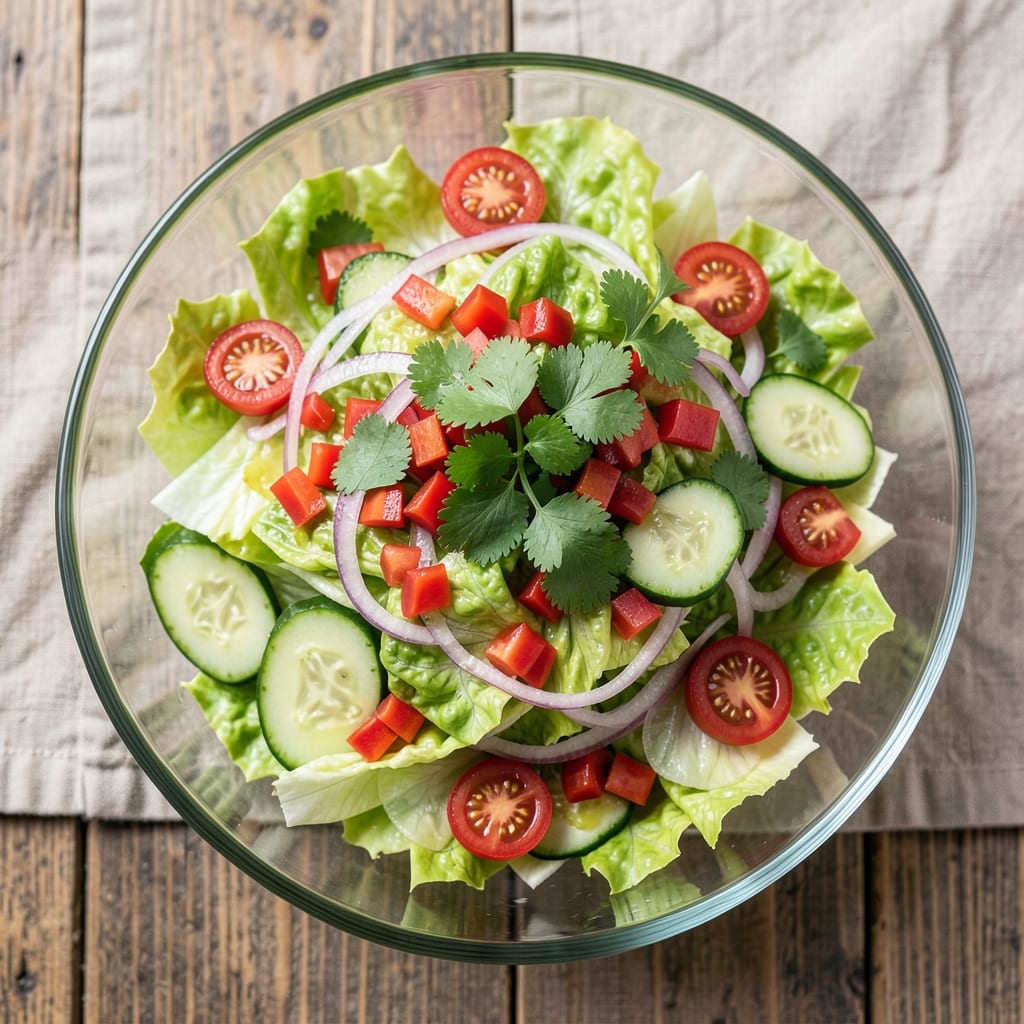
This basic chopped salad recipe delivers restaurant-quality crunch and texture with minimal effort—perfect for weeknight dinners or meal prep. The secret lies in uniform chopping and balanced layers, creating a dish that's both satisfying and adaptable to any dietary preference. I've perfected this technique over years of testing, ensuring every bite offers the ideal mix of crisp vegetables, fresh herbs, and protein.
What sets this salad apart is its versatility—swap proteins for vegetarian or vegan options, adjust greens based on seasonality, and customize toppings to suit your taste. The key to success? A sharp knife and consistent cutting technique to maintain even texture throughout. With just 15 minutes of prep time, you'll have a salad that's hearty enough to stand alone or light enough to complement any main dish.
Each component plays a crucial role: tender greens provide the base, crunchy vegetables add texture, and protein ensures satisfaction. The salad's beauty lies in its simplicity—no fancy techniques required, just thoughtful assembly. Whether you're feeding a family or packing lunches for the week, this recipe delivers consistent results every time.
For an extra boost of flavor, consider adding a homemade vinaigrette or creamy dressing—just a few minutes of effort transforms a good salad into an exceptional one. The plating is equally important: arrange ingredients in visually appealing layers to create a dish that's as beautiful as it is delicious. This salad proves that simple ingredients can create extraordinary results with the right approach.
Ingredients for basic chopped salad
Fourteen ingredients combine to create this restaurant-quality chopped salad with perfect texture and flavor balance.
| Ingredient | Amount | Notes |
|---|---|---|
| Butter Lettuce 🥬 | 4 cups | Torn into bite-sized pieces |
| Red Bell Pepper 🌶️ | 1 whole | Seeded, finely diced |
| Cucumber 🥒 | 1 whole | English if available, peeled, diced |
| Red Onion 🧅 | 1 whole | Thinly sliced, outer layers removed |
| Cherry Tomatoes 🍅 | 1 cup | Halved, seeds removed |
| Fresh Cilantro 🌿 | ¼ cup | Chopped, stems removed |
| Fresh Parsley 🌿 | ¼ cup | Chopped, flat-leaf preferred |
| Grilled Chicken Breast 🍗 | 1 lb | Boneless, skinless, diced |
| Extra-Virgin Olive Oil 🫒 | ½ cup | For dressing base |
| Red Wine Vinegar 🍷 | ¼ cup | For dressing acidity |
| Diamond Crystal Kosher Salt 🧂 | 1 ½ tsp | Adjust to taste |
| Freshly Ground Black Pepper 🌶️ | ½ tsp | For dressing seasoning |
| Toasted Almond Slices 🥜 | ¼ cup | For crunchy texture |
| Feta Cheese 🧀 | ½ cup | Crumbled, optional |
The foundation begins with butter lettuce—its tender leaves hold up beautifully when chopped and provide the perfect base. For optimal texture, select fresh, crisp heads from the grocery store produce section, avoiding any with wilted outer leaves. Whole Foods or Trader Joe's typically carry the highest quality, but any reputable market will suffice. The red bell pepper and cucumber should be firm and free of soft spots, while the cherry tomatoes should be uniformly red and plump. Fresh herbs like cilantro and parsley should have vibrant green leaves with no signs of yellowing—Penzeys bulk bins offer excellent quality for these ingredients. The grilled chicken breast should be cooked to an internal temperature of 165°F and diced uniformly for consistent texture throughout the salad.
No red bell pepper? Yellow or orange bell pepper works equally well, though the color contrast will differ slightly. Substituting avocado for cucumber adds richness but changes the salad's overall texture—use at half the quantity if you prefer a creamier element. For a vegetarian option, replace the chicken with quinoa or chickpeas (about 1 cup cooked), though the protein balance will shift. The feta cheese can be omitted entirely for a vegan version, or replaced with vegan feta for a similar tangy flavor. When selecting almonds, opt for raw or dry-roasted varieties to toast yourself—this enhances their natural flavor without added oils or seasonings. The extra-virgin olive oil should have a fruity aroma and peppery finish, indicating high quality; California-based brands like Corto or Lucini consistently deliver excellent results.
Store the chopped vegetables and herbs in an airtight container with a paper towel to absorb excess moisture, keeping them fresh for up to 3 days in the refrigerator. The grilled chicken should be refrigerated separately and added just before serving to maintain its texture. The dressing components (olive oil, vinegar, salt, and pepper) can be combined in a sealed jar and stored for up to 1 week, though the fresh herbs should be added just before tossing. For meal prep, assemble the salad components separately and combine only when ready to serve—this preserves the crunch and freshness for up to 4 days. The toasted almonds stay fresh for 1 week in an airtight container, making them a convenient addition for last-minute crunch.
Why You'll Love This Recipe
- No-Fuss Assembly: I swear by this—just chop, toss, and serve. The butter lettuce stays crisp, the bell pepper adds a sweet crunch, and the red onion gives that little zing without overpowering. Honestly, it’s the kind of salad I make when I’m too tired to overthink dinner.
- Bright, Balanced Bite: That mix of juicy cherry tomatoes, cool cucumber, and slightly sharp red onion? It’s the perfect contrast—sweet, tangy, and refreshing all at once. I’ll be real: I often skip dressing just to taste the raw ingredients first, and it’s still satisfying.
- Weeknight Workhorse: This salad shows up for me every time—packed in lunches, tossed with grilled chicken for dinner, or even as a side for takeout. Between us, it’s the one dish that never feels like a chore, no matter how busy I am.
- Budget-Friendly Staple: Fresh veggies don’t get much cheaper than this. A single bell pepper, a handful of tomatoes, and a cucumber stretch across multiple meals, and the butter lettuce lasts longer than you’d think if stored right. It’s my go-to for stretching groceries without sacrificing flavor.
Step-by-step instructions for crunchy greens and protein-packed layers
Assemble this vibrant salad with precision for maximum freshness and texture contrast.
Prep and Combine All Vegetable Components
Begin by tearing the 4 cups of butter lettuce into bite-sized pieces and placing them in a large mixing bowl. This gentle handling preserves the delicate leaves while creating uniform portions. Next, add the finely diced 1 whole red bell pepper, diced 1 whole cucumber, thinly sliced 1 whole red onion, and halved 1 cup cherry tomatoes—all prepped according to the ingredients list. The key here is to distribute these evenly throughout the lettuce to ensure each serving contains balanced texture and color.
Gently toss the vegetables together with your hands, just enough to combine without bruising the lettuce. I like to work in batches if needed—this ensures even distribution and prevents over-mixing that could make the salad soggy. The goal is to create a visually appealing base where each ingredient maintains its distinct shape and texture.
Add Protein and Herbs for Depth of Flavor
To the vegetable mixture, add the diced 1 lb grilled chicken breast and gently fold it in using a large spoon. The warm chicken will infuse the salad with subtle heat while adding essential protein. Next, sprinkle in the chopped 0.25 cup fresh cilantro and 0.25 cup fresh parsley, distributing them evenly throughout. These herbs not only add vibrant color but also introduce bright, fresh notes that complement the other ingredients.
At this stage, I like to taste the raw salad mixture to assess the flavor balance. If the vegetables seem too mild, this is the perfect time to adjust seasoning before adding the dressing. The herbs should be evenly distributed—no clumps—so each bite contains their aromatic qualities.
Create the Dressing and Toss with Salad
In a small bowl, whisk together the 0.5 cup extra-virgin olive oil, 0.25 cup red wine vinegar, 1.5 tsp Diamond Crystal kosher salt, and 0.5 tsp freshly ground black pepper until fully emulsified. The vinegar should be incorporated smoothly without any streaks of oil remaining. This dressing forms the flavor foundation of the salad, balancing the richness of the chicken and olive oil with the acidity of the vinegar.
Pour the dressing over the salad mixture and toss gently but thoroughly to coat all ingredients evenly. I recommend working in batches if your bowl is large—this ensures every piece of lettuce, vegetable, and protein gets properly dressed. The salad should glisten slightly from the oil, indicating even distribution. Let it sit for 5 minutes before serving to allow the flavors to meld.
Add Final Textural Elements
Just before serving, sprinkle the 0.25 cup toasted almond slices and 0.5 cup crumbled feta cheese over the salad. The almonds provide essential crunch that contrasts beautifully with the tender lettuce and vegetables, while the feta adds a salty, creamy element that ties all the flavors together. I like to distribute these toppings evenly across the top rather than mixing them in—this creates visual appeal and ensures each bite contains both textures.
Give the salad one final gentle toss if needed, then divide it among four serving plates. The presentation should showcase the vibrant colors and varied textures—bright reds from the tomatoes and bell pepper, crisp green lettuce, creamy feta, and golden almonds. Serve immediately while the dressing is still fresh and the lettuce maintains its crispness.
Pro Tips For Making Basic Chopped Salad
- CHOP ONION LAST: Red onion’s sharp bite mellows fast—toss it in just before serving, or your salad turns into onion soup. I used to add it early and wondered why the crunch vanished and the flavor turned mushy.
- SALT THE CUCUMBER: Sprinkle a pinch of salt on cucumber slices and let sit 10 minutes before rinsing—this pulls out excess water so they stay crisp. I learned this the hard way after soggy salad ruined a picnic.
- CUT TOMATOES HALF THEN QUARTER: Cherry tomatoes split unevenly when chopped whole—halve them first, then quarter for even pieces. This keeps them from turning into a tomatoey sludge at the bottom of the bowl.
- USE A SHARP KNIFE: A dull knife crushes lettuce and peppers, turning your salad into a sad, bruised mess. Invest in a decent chef’s knife and keep it sharp—your salad’s texture depends on it.
Make-ahead tips for this basic chopped salad
Prep Ingredients Separately
Store all chopped vegetables and herbs in individual airtight containers with a paper towel to absorb moisture. I use glass Pyrex containers with snap-on lids for best results. Keep the grilled chicken in a separate container—this prevents sogginess when combined later. The dressing ingredients (except herbs) can be pre-mixed in a sealed jar for up to 1 week, but always add fresh herbs right before tossing. 🥬
Assemble Just Before Serving
Combine all components only when ready to eat to preserve maximum crunch. Start with the lettuce base, then add vegetables, protein, and herbs. Toss gently with the dressing, and sprinkle toppings like almonds and feta last. This 5-minute assembly ensures your salad stays fresh-tasting and vibrant. I find this method works best for meal prep—just combine when serving. ⏰
Portion for Meal Prep
Divide the salad into 4 individual airtight containers before adding dressing. Store the dressing separately and toss with the salad when ready to eat. This keeps lettuce crisp for up to 4 days in the fridge. For extra protection, place a dry paper towel on top of the lettuce layer before sealing. The key is minimizing moisture exposure to maintain texture. 💡
Freezer-Friendly Additions
Only the grilled chicken and toasted almonds freeze well in this salad. Freeze chicken separately for up to 3 months—thaw overnight in the fridge before adding. Almonds stay fresh for 1 week at room temperature in an airtight container. Never freeze fresh herbs or lettuce—they become mushy when thawed. For freezing, I recommend using quart-sized freezer bags with labels. ❄️
Reheating Tips
If storing for more than 2 days, reheat the dressing separately on the stovetop over low heat for 2 minutes before tossing with the salad. This reactivates the flavors without wilting the lettuce. For the chicken, warm it in a skillet over medium heat for 3-4 minutes before adding back to the salad. Always reheat just before serving for best results. 🔥
Dressing Make-Ahead Hack
Prepare the dressing base (oil, vinegar, salt, and pepper) up to 1 week ahead and store in the fridge. When ready to use, whisk in fresh herbs and any additional seasonings. This time-saving trick keeps your dressing ready while maintaining freshness. I like to use a mason jar for easy shaking and portioning. 🍯
Nutrition facts
Frequently asked questions
Can I make this chopped salad ahead of time?
Prep all ingredients separately and store them in airtight containers with paper towels to absorb moisture. Combine everything just before serving to maintain crispness. The dressing can be made up to 1 week ahead, but always add fresh herbs right before tossing for maximum flavor.
What's the best way to keep lettuce crisp in chopped salads?
Use an airtight container with a paper towel on top to absorb excess moisture. Store the lettuce separately from other ingredients and add dressing only when ready to eat. For meal prep, keep the dressing in a separate container and toss it with the salad just before serving.
How can I make this salad vegetarian or vegan?
Swap the grilled chicken for 1 cup cooked quinoa or 1 can (15 oz) chickpeas for protein. For vegan feta, use a plant-based alternative or omit it entirely. The salad will still be hearty and satisfying with these substitutions.
What's the secret to even chopping for perfect texture?
Use a sharp chef's knife and cut ingredients into uniform ¼-inch pieces. Work in batches to maintain consistency. The key is patience—rushing leads to uneven sizes. For onions, slice thinly and soak in cold water for 5 minutes before adding to mellow their sharpness.
Can I use different greens in this recipe?
Yes! Try spinach, arugula, or romaine instead of butter lettuce. For heartier salads, mix in 1 cup chopped kale (massage with lemon juice first). Just adjust the quantity to maintain the same volume—about 4 cups total greens works best.