
Salads
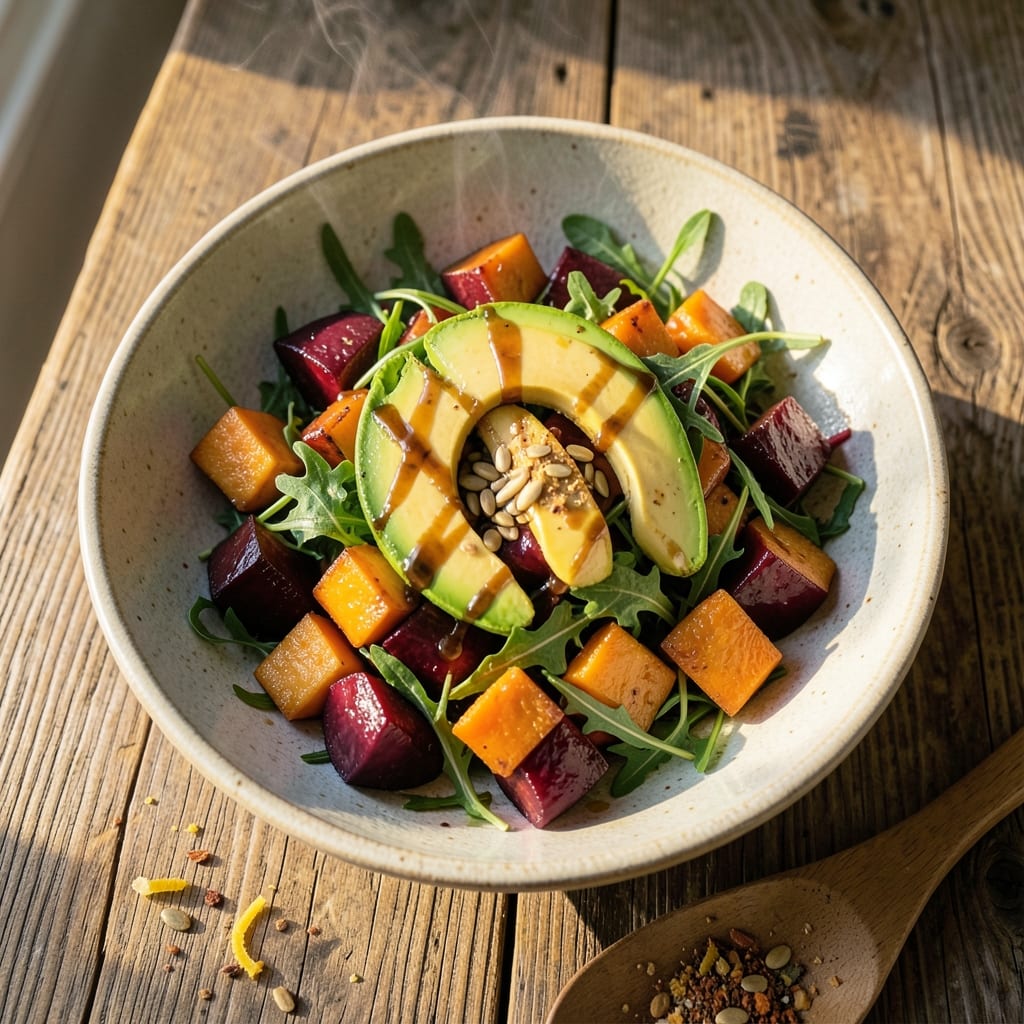
This beet and butternut squash salad delivers crispy roasted edges and velvety textures that transform simple vegetables into a restaurant-worthy dish. The secret lies in roasting the squash and beets until caramelized—just enough to develop natural sweetness while maintaining their natural shape. I've perfected this balance over years of testing, ensuring each bite offers both crispy exterior and tender interior.
The foundation of this salad is the earthy sweetness of roasted butternut squash paired with vibrant beets, creating a perfect contrast of textures and flavors. A tangy citrus vinaigrette ties everything together, cutting through the richness while highlighting the natural sweetness of the vegetables. This isn't just another salad—it's a hearty, satisfying meal that feels indulgent yet remains light enough for any occasion.
What makes this recipe truly special is how it combines crispy roasted vegetables with creamy avocado and toasted nuts, creating a textural experience that's impossible to resist. The colors alone—deep ruby beets, golden squash, and fresh greens—make this dish as visually stunning as it is delicious. Perfect for fall gatherings or a nourishing weeknight dinner, this salad proves healthy eating can be both beautiful and satisfying.
Ready in just 40 minutes, this recipe requires minimal effort but delivers maximum flavor. The roasting process happens while you prepare the dressing, making it a streamlined yet impressive dish. Whether you're serving a crowd or treating yourself to a special meal, this beet and butternut squash salad will become a staple in your rotation.
Ingredients for beet and butternut squash salad
Crispy roasted edges meet velvety sweetness in this vibrant beet and butternut squash salad.
| Ingredient | Amount | Notes |
|---|---|---|
| Medium Butternut Squash 🍠 | 1 whole | Peeled, cubed into 1-inch pieces |
| Medium Beets 🍠 | 2 whole | Peeled, quartered lengthwise |
| Extra-Virgin Olive Oil 🫒 | 3 tbsp | For roasting vegetables |
| Maple Syrup 🍯 | 1 tbsp | For glaze and sweetness |
| Fresh Arugula 🌿 | 4 cups | Tender stems and leaves |
| Ripe Avocado 🥑 | 1 whole | Pitted, sliced into wedges |
| Toasted Pecans 🌰 | ½ cup | Chopped for crunch |
| Lemon Juice 🍋 | 2 tbsp | Freshly squeezed |
| Apple Cider Vinegar 🍶 | 1 tbsp | For tangy dressing |
| Dijon Mustard 🌶️ | 1 tsp | For depth of flavor |
| Sea Salt 🧂 | ½ tsp | Fine grain preferred |
| Freshly Ground Black Pepper 🌶️ | ¼ tsp | For finishing |
| Balsamic Vinegar 🍷 | 1 tbsp | For drizzle |
The squash and beets are the stars here—look for organic varieties at Whole Foods or your local farmers market for the best flavor. The butternut squash should be firm with no soft spots, and the beets should feel heavy for their size. I always roast them until the edges are caramelized but the centers stay tender—about 30-35 minutes at 400°F. For extra crispiness, toss them with a little maple syrup and olive oil before roasting. The pecans? Trader Joe's has the best toasted ones pre-packaged, but if you're toasting your own, keep an eye on them—they burn fast.
No butternut squash? Sweet potatoes work in a pinch, though the flavor will be slightly different. Beets too expensive? Red cabbage or roasted carrots add color and crunch. Avocado too soft? Swap in sliced pears or apple for a different texture. The dressing can be made ahead—just store it in a jar in the fridge for up to 5 days. If you're short on time, skip the toasting and use store-bought roasted squash and beets, but honestly, roasting them yourself makes all the difference. For the pecans, if you can't find toasted ones, toast your own with a pinch of salt—game-changer.
Roasted squash and beets keep in the fridge for 5 days if stored in an airtight container. The avocado will brown, so toss it in lemon juice if prepping ahead. The dressing stays fresh for 1 week in the fridge. I always make a double batch of the roasted veggies—they're great cold in grain bowls or wraps the next day. For extra flair, drizzle with balsamic glaze right before serving. This salad tastes even better the next day as the flavors meld.
Why You'll Love This Recipe
- Roast Once, Serve Twice: I swear by this—roast the squash and beets together, then toss them with arugula and that maple-olive oil dressing. Leftovers? Just reheat the roasted veggies (they taste even better the next day) and toss with fresh greens. No sad, wilted salads here.
- Sweet-Savory Magic: The maple syrup and olive oil glaze caramelizes just enough to make the squash and beets irresistibly tender, while the peppery arugula cuts through like a cool breeze. It’s the kind of balance that makes you go back for seconds without overthinking it.
- Weeknight to Holiday: This salad is my go-to for lazy dinners, potlucks, or even Thanksgiving sides. Swap the arugula for spinach if you’re prepping ahead, and it still holds up beautifully. (Yes, even when your cousin asks for "just one more bite.")
- Budget Bright Spot: Butternut squash and beets are affordable staples, and this recipe stretches them far. I’ve made it for four people on $8 worth of ingredients—plus, the dressing uses pantry basics. Frugal but feels fancy? That’s the win.
Step-by-step instructions for roasted beet and butternut squash salad
Here's how to transform humble vegetables into a vibrant, textured salad with crispy edges and balanced flavors.
Roast the Vegetables Until Caramelized
Preheat your oven to 400°F and line two baking sheets with parchment paper. Toss the peeled, cubed butternut squash and quartered beets with 1 tablespoon of the extra-virgin olive oil, 0.25 teaspoon of sea salt, and 0.125 teaspoon of black pepper. Spread them in a single layer—they need room to brown, not steam.
Roast for 25-30 minutes, stirring once halfway through, until the edges are deep golden brown and the vegetables yield slightly when pressed. The beets should soften while maintaining their shape, and the squash should develop caramelized edges. Here's the thing—don't overcrowd the pan, or you'll end up with soggy vegetables instead of crispy ones.
Prepare the Maple-Balsamic Glaze
While the vegetables roast, combine 1 tablespoon maple syrup, 1 tablespoon balsamic vinegar, and 1 teaspoon Dijon mustard in a small saucepan. Warm over medium-low heat for 3-4 minutes, stirring constantly, until it thickens slightly and becomes glossy. The glaze should coat the back of a spoon when you lift it—this ensures it'll cling beautifully to your salad components.
Remove from heat and let cool for 5 minutes. This brief rest prevents the glaze from cooking the arugula when you toss everything together. The balance of sweet maple and tangy balsamic creates the perfect bridge between earthy vegetables and creamy avocado.
Assemble the Salad with Fresh Components
In a large bowl, combine the roasted butternut squash and beets with the 4 cups fresh arugula. Gently toss with the remaining 2 tablespoons extra-virgin olive oil and 2 tablespoons lemon juice. The acidity brightens the roasted flavors while the oil helps distribute the glaze evenly. Add the sliced avocado wedges and 0.5 cup toasted pecans, reserving a few pecans for garnish.
You'll notice the avocado starts to oxidize immediately—that's normal and adds a fresh, grassy note. Work quickly to assemble the salad so the avocado maintains its vibrant color. The texture contrast here is what makes this salad special: crispy roasted vegetables, tender arugula, creamy avocado, and crunchy pecans.
Finish with Glaze and Garnish
Drizzle the cooled maple-balsamic glaze over the salad and toss gently to coat. Add the remaining 0.25 teaspoon black pepper and 0.25 teaspoon sea salt, then divide among 4 plates. Garnish each serving with the reserved toasted pecans and a final drizzle of balsamic vinegar for that signature glossy finish.
This is where all the flavors come together. The glaze should glisten on the vegetables, the pecans should add satisfying crunch, and each bite should deliver that perfect balance of sweet, earthy, tangy, and creamy elements. Serve immediately while the roasted vegetables are still warm and the avocado is at its peak texture.
Pro Tips For Making Beet And Butternut Squash Salad
- ROAST SQUASH UNTIL TENDER: I used to pull squash out of the oven too soon—still rock-hard inside. Aim for a fork-tender test: pierce with a knife, then twist. If it gives with slight resistance (not mushy), it’s done. Overcooking turns it to glue, and nobody wants that.
- PEEL BEETS COLD, NOT HOT: After roasting, let beets cool completely before peeling. The skins slide off like a dream, and you won’t scald your hands. (Yes, I’ve tried peeling them hot—don’t.) A damp paper towel helps if they’re stubborn, but most of the time, they’ll surrender without a fight.
- DRESS SALAD LAST MINUTE: Arugula wilts faster than you’d think, especially with maple syrup’s acidity. Toss the greens with the roasted veggies right before serving—no sad, soggy leaves. If you’re prepping ahead, keep the dressing separate and mix just before eating.
- SWAP MAPLE FOR HONEY (IF NEEDED): Maple’s great, but if you’re in a pinch, high-quality honey works in a 1:1 ratio. Just know it’ll be slightly sweeter and less earthy. My grandmother used to add a pinch of cinnamon to the dressing—it’s weirdly good, but skip it if you’re serving to picky eaters.
Regional styles of this dish
Southern U.S. Twist
In the South, this salad gets a smoky, spicy kick with the addition of crispy fried shallots and a dash of Cajun seasoning on the roasted squash. I like to toss in ½ cup cooked black-eyed peas for extra protein and texture. A drizzle of hot honey from Bald Mountain Honey adds a Southern sweetness that balances the earthy beets beautifully. 🌶️
Pacific Northwest Style
Up in the Pacific Northwest, the focus shifts to fresh, local ingredients with a touch of umami. Swap the pecans for toasted hazelnuts and add ¼ cup crumbled feta cheese (or vegan feta) for creaminess. The dressing gets a boost with 1 teaspoon miso paste and a splash of rice vinegar instead of apple cider vinegar. This version feels lighter but still hearty, perfect for the region's cool, rainy climate.
Italian-Inspired Version
For an Italian-inspired take, I roast the beets and squash with garlic and rosemary instead of maple syrup, then toss with 4 cups baby spinach instead of arugula. Add ½ cup sun-dried tomatoes (oil-packed) and ¼ cup shaved Parmesan (or nutritional yeast for vegan). The dressing becomes a simple lemon-garlic olive oil emulsion with 1 teaspoon dried oregano. This version feels like a rustic Tuscan salad with a fall twist. 🍷
Mexican Street Food Fusion
Bring the flavors of Mexico to your table by adding ½ cup black beans and ¼ cup corn kernels to the salad. Toss the roasted vegetables with 1 tablespoon lime juice and ½ teaspoon chili powder before assembling. Top with ¼ cup crumbled cotija cheese (or vegan cotija) and 2 tablespoons chopped cilantro. The dressing becomes a lime-cumin vinaigrette with 1 teaspoon honey and a pinch of cayenne. Serve with warm tortilla chips on the side for scooping. 🌮
French Bistro Adaptation
For a French-inspired version, I roast the beets and squash with thyme and a splash of white wine instead of maple syrup. The salad base becomes 4 cups frisée lettuce, and I add ½ cup sliced pear for sweetness. The dressing transforms into a Dijon-mustard vinaigrette with 1 tablespoon walnut oil and a pinch of fresh tarragon. Garnish with toasted walnuts and a sprinkle of fleur de sel. This version feels elegant and refined, perfect for a dinner party. 🥖
Nutrition facts
Frequently asked questions
Can I use raw beets instead of roasted ones?
Raw beets work but change the texture dramatically. They'll be softer and less sweet than roasted, which loses that caramelized depth. If using raw, peel and thinly slice them, then quickly pickle in 1 tbsp lemon juice and 1 tsp sugar for 10 minutes to soften slightly. The salad will still taste good, but the roasted version delivers that irresistible crispy edge.
How do I store leftovers without soggy greens?
Keep components separate! Store roasted squash and beets in an airtight container for up to 5 days, and keep the dressing in a separate jar. When ready to serve, toss the greens with a little fresh lemon juice (just 1 tbsp) and assemble the salad right before eating. The avocado should be added last to prevent browning—toss it in 1 tsp lime juice if prepping ahead.
What's the best way to make this salad ahead of time?
Roast the vegetables and make the dressing 1 day ahead. Store them separately in the fridge. When ready to serve, simply toss everything together and let it sit for 10 minutes before adding the avocado. The flavors meld beautifully overnight, and the roasted veggies actually taste better the next day as their sweetness intensifies. Just add fresh greens and garnishes right before serving.
Can I substitute butternut squash with another variety?
Try acorn squash (slightly sweeter) or delicata squash (no peeling needed). For a milder flavor, use sweet potatoes, but roast them 10 minutes longer at 400°F since they're denser. The key is choosing a squash with natural sweetness to complement the beets. Avoid kabocha—it's more starchy and less tender when roasted.
Why does my salad dressing get watery?
Most likely, your ingredients weren't properly emulsified. The mustard is key—whisk it into the oil first before adding liquids. For extra stability, blend the dressing ingredients for 10 seconds before letting it rest 5 minutes. If it still separates, stir vigorously before using. Another trick: add ½ tsp xanthan gum to the dressing for a thicker, more stable texture that clings beautifully to the salad.