
Salads
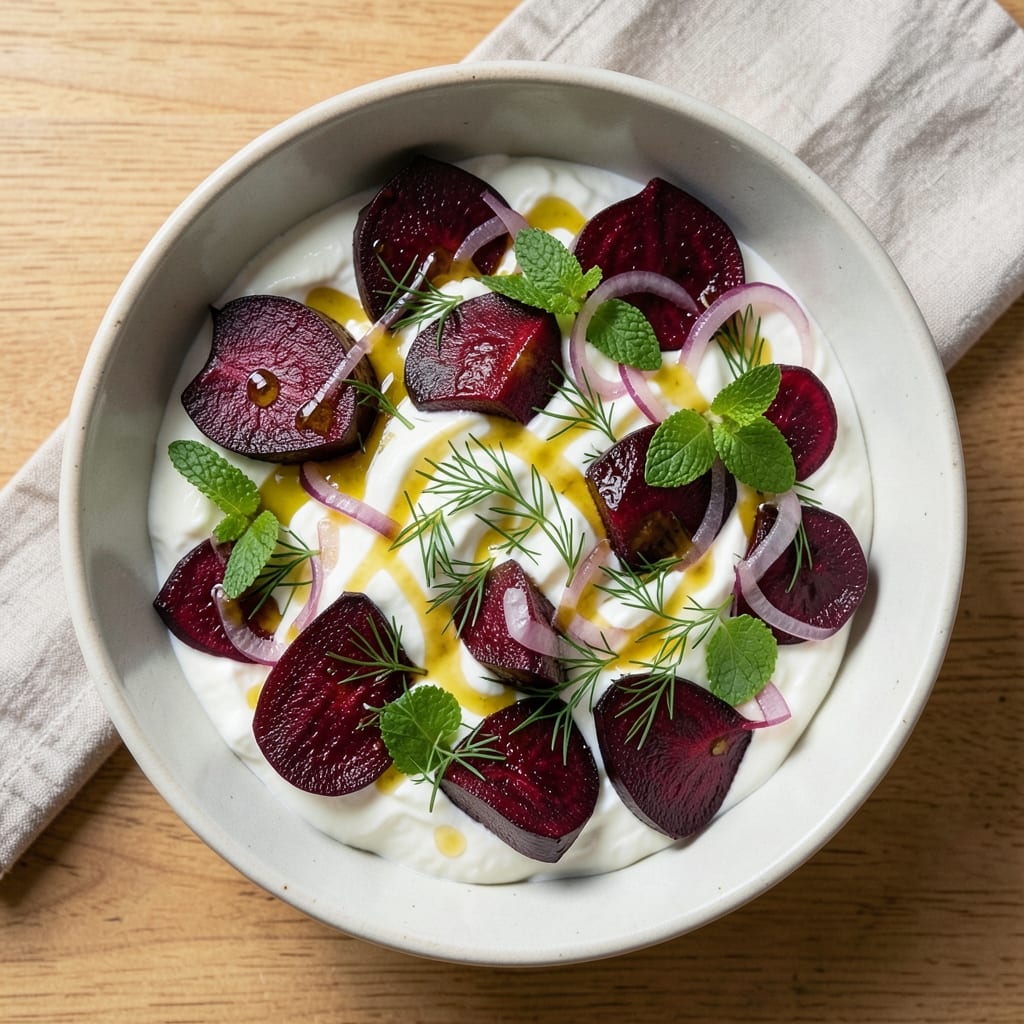
This beetroot and yogurt salad recipe transforms humble ingredients into a vibrant, protein-packed dish that balances earthy sweetness with cooling creaminess. 💛 The secret lies in properly roasting the beets until tender yet firm, then tossing them with tangy yogurt and fresh herbs for a perfect texture contrast. I developed this recipe after realizing how often salads could be more substantial without sacrificing freshness.
The beauty of this salad is its versatility—it works as a light main dish or satisfying side, packed with nutrients from roasted beets, creamy yogurt, and optional additions like toasted walnuts or lemon zest. The roasting process enhances the beets' natural sweetness while keeping them vibrant, and the yogurt dressing adds a refreshing tang that cuts through the richness. What makes this recipe special is how it delivers restaurant-quality flavor with minimal effort.
By the time you're done, you'll have a salad that's colorful, creamy, and packed with texture—crisp vegetables, tender beets, and smooth yogurt all working together in harmony. The dressing clings perfectly to each ingredient, creating bites that are both refreshing and satisfying. This is the kind of salad that makes healthy eating feel indulgent.
Perfect for meal prep or last-minute lunches, this recipe scales easily for crowds while maintaining its fresh, vibrant qualities. The combination of roasted beets and yogurt creates a flavor profile that's both comforting and light, making it ideal for warm days or as a protein-rich addition to any meal. Let's get started on creating this balanced, flavorful dish.
Ingredients for beetroot and yogurt salad
Earthy, vibrant beets meet tangy yogurt for a salad that's both substantial and refreshing.
| Ingredient | Amount | Notes |
|---|---|---|
| Medium Beets 🍠 | 2 whole | Medium size, peeled and cubed |
| Plain Greek Yogurt 🥛 | 1 cup | Full-fat for creaminess |
| Extra-Virgin Olive Oil 🫒 | ¼ cup | High-quality, fruity variety |
| Fresh Dill 🌿 | ¼ cup | Finely chopped, stems removed |
| Fresh Mint Leaves 🌿 | ¼ cup | Finely chopped, vibrant green |
| Red Wine Vinegar 🍷 | 2 tbsp | Dry, bold variety preferred |
| Honey 🍯 | 1 tbsp | Raw or organic preferred |
| Diamond Crystal Kosher Salt 🧂 | ½ tsp | Fine grain preferred |
| Freshly Ground Black Pepper 🌶️ | ¼ tsp | Freshly cracked preferred |
| Persian Cucumber 🥒 | 1 whole | Seeded and thinly sliced |
| Red Onion 🧅 | ½ whole | Thinly sliced, outer layers removed |
| Toasted Walnuts 🥜 | ½ cup | Lightly toasted, chopped (optional) |
| Lemon Zest 🍋 | 1 tsp | Freshly grated, bright yellow |
The beets are the heart of this salad, so choose medium-sized, firm varieties—they roast evenly without turning mushy. Whole Foods or local farmers markets often carry the most vibrant beets, but any grocery store's organic section works. For roasting, I prefer medium heat at 400°F until tender yet firm—about 30-40 minutes. The Greek yogurt should be full-fat for optimal creaminess, but plain non-fat works if you're watching calories. Fresh dill and mint are non-negotiable here—they add that bright, herbaceous contrast to the earthy beets. If you can't find fresh, dried works at one-third the amount, but the flavor won't be as vibrant.
No red wine vinegar? Apple cider vinegar or lemon juice works in a pinch, though the flavor profile shifts slightly. The honey adds just enough sweetness to balance the tang—raw or organic honey has better flavor, but any variety will do. For the cucumber, Persian cucumbers are ideal because they're seedless and crisp, but any variety works if you remove the seeds. The walnuts are optional but add a satisfying crunch—toast them in a dry pan for 3-4 minutes until fragrant. If you're avoiding nuts, omit them entirely or swap for toasted sunflower seeds. The lemon zest should be freshly grated for the brightest flavor—don't skip this—it ties everything together.
This salad keeps beautifully in the fridge for 3-4 days if stored in an airtight container with a paper towel pressed on top to absorb moisture. The dressing separates naturally, so give it a quick stir before serving. For meal prep, I like to roast the beets ahead of time and store them separately—they actually taste better the next day as the flavors meld. The walnuts stay crisp for 2 days if stored in a sealed container. To serve, simply toss everything together just before eating—the textures are best when fresh. Leftovers reheat well in the microwave for 20 seconds if you're using it as a warm salad base.
Why You'll Love This Recipe
- No Boil Required: I roast the beets whole—just toss them in oil, salt, and foil, then bake until tender. No peeling, no mess, and that caramelized crust? Chef’s kiss. (Yes, even if you burn the edges once like I did.)
- Tangy Earthy Magic: The yogurt cuts through the beets’ sweetness while the dill and mint brighten every bite. Honestly, the contrast is like a party in your mouth—creamy, fresh, and just salty enough to keep you reaching for more.
- Packable Lunch Hero: This keeps for days in the fridge, so I meal prep it on Sundays. Toss it in a jar or wrap it in foil—it’s perfect for work lunches, picnics, or even a quick snack when you’re starving but don’t want to cook.
- Budget Brightener: Beets are cheap, Greek yogurt stretches far, and herbs last weeks if stored right. Between us, this salad costs me pennies but feels like a fancy dish—great for feeding guests without breaking the bank.
Step-by-step instructions for beetroot and yogurt salad
Assemble this vibrant salad with precise technique for perfect balance of earthy beets and cooling yogurt.
👨🍳 Step 1: Roast the Beets to Perfect Tenderness
Preheat your oven to 400°F. Place the 2 whole medium beets (peeled and cubed) on a parchment-lined baking sheet. Drizzle with 1 tablespoon of the extra-virgin olive oil and sprinkle with ¼ teaspoon of the diamond crystal kosher salt. Toss gently to coat evenly.
Roast for 25-30 minutes until the beets are fork-tender with slightly caramelized edges. You'll know they're done when they yield easily to a fork and have developed a deep, earthy aroma. Real talk: don't overcook—they should still hold their shape but be soft enough to mash slightly between your fingers.
👨🍳 Step 2: Prepare the Yogurt Dressing
In a medium bowl, combine the 1 cup plain Greek yogurt, 2 tablespoons red wine vinegar, 1 tablespoon honey, 1 teaspoon lemon zest, ½ teaspoon diamond crystal kosher salt, and ¼ teaspoon freshly ground black pepper. Whisk vigorously until completely smooth and well incorporated.
This is where the magic happens—the tangy vinegar and bright lemon zest cut through the richness of the yogurt while the honey adds subtle sweetness. The dressing should have a thick, creamy consistency. If it's too thick, whisk in 1-2 teaspoons of water until it reaches a pourable yet clingy texture—this ensures perfect coating of all salad components.
🥘 Step 3: Assemble the Salad Components
In a large mixing bowl, combine the roasted beets, 1 whole Persian cucumber (seeded and thinly sliced), and ½ whole red onion (thinly sliced). Add ½ cup toasted walnuts (chopped) and gently toss to distribute evenly. The walnuts should be warm from toasting—this enhances their nutty aroma and prevents them from becoming soggy.
Here's the thing—don't overmix. We want the vegetables to retain their distinct textures. The beets should be tender but still hold their shape, the cucumber should remain crisp, and the onion should add a sharp bite. The walnuts should be scattered throughout rather than mashed into the other ingredients.
🍳 Step 4: Combine and Finish with Herbs
Pour the yogurt dressing over the vegetable mixture and gently fold everything together using a large spoon or spatula. Add ¼ cup finely chopped fresh dill and ¼ cup finely chopped fresh mint leaves, reserving a few leaves for garnish. The herbs should be distributed evenly throughout the salad for maximum freshness and aroma.
Taste and adjust seasoning if needed. You might want to add a pinch more salt or a drizzle of honey if the salad tastes too tangy. The ideal balance should be earthy from the beets, cooling from the yogurt, and bright from the herbs. Let the salad sit for 10-15 minutes before serving to allow all the flavors to meld together.
🍽️ Step 5: Serve with Garnish and Extra Dressing
Transfer the salad to a serving platter and arrange it attractively. Drizzle with the remaining ¼ cup extra-virgin olive oil in a zigzag pattern. Sprinkle with the reserved fresh mint and dill leaves, plus any additional toasted walnuts if desired. The presentation should be vibrant with contrasting colors—deep purple beets, green herbs, and white yogurt.
Serve immediately while the beets are still warm from roasting and the dressing is at its creamiest. This salad pairs beautifully with grilled meats or as a refreshing standalone dish. The cooling yogurt balances the earthy beets perfectly, making each bite a harmonious blend of textures and flavors. Don't skip the garnish—it adds that final touch of freshness that makes this salad truly special.
Pro Tips For Making Beetroot And Yogurt Salad
- Peel Beets When Cool: I used to peel them straight out of the pot—big mistake. Let those beets cool completely first, then slip off the skins with a knife or your fingers. They’ll slide off like magic, and you won’t end up with a pile of purplish water in your sink.
- Use Full-Fat Yogurt: Thin Greek yogurt? Skip it. The fat in full-fat yogurt keeps the dressing rich and clings to the beets instead of separating. If you’re set on low-fat, at least stir in a splash of olive oil to compensate—this isn’t the time to skimp.
- Chill the Salad Before Serving: Serve it straight from the bowl? You’re missing out. Give it 30 minutes in the fridge so the flavors meld and the yogurt thickens slightly. The beets will taste deeper, and the herbs won’t wilt into oblivion the second you plate it.
- Toss Herbs Last: Add the dill and mint right before serving—no exceptions. If you mix them in too early, they’ll turn to mush and bleed color into the yogurt. A quick toss at the end keeps them bright and snappy, like they just walked out of the garden.
Troubleshooting this dish
Beets Too Soft
If your roasted beets turn out mushy instead of tender, you likely overcooked them. I find 400°F for 25-30 minutes works best for medium beets—check at 25 minutes if they're small. For extra insurance, wrap them in aluminum foil during roasting to trap moisture and prevent over-browning. Let them cool slightly before handling to avoid breaking apart. 💫
Dressing Separates
The yogurt dressing naturally separates because of its fat content. To fix this, whisk in 1-2 teaspoons of water until smooth before combining with the salad. For extra stability, add ½ teaspoon of xanthan gum (a pinch is enough) to the dressing. I also recommend storing the dressing separately and mixing just before serving—this keeps the textures crisp. 🥛
Herbs Lose Flavor
Fresh herbs wilt quickly in yogurt-based dressings. To preserve their vibrancy, add them to the salad just before serving rather than mixing everything together early. For extra freshness, store chopped herbs in a sealed container with a paper towel to absorb excess moisture. If using dried herbs, reduce to ⅓ the amount of fresh and add them to the dressing first. 🌿
Salad Too Tangy
The red wine vinegar can dominate if not balanced properly. Adjust the flavor by adding ½ teaspoon more honey or a pinch of salt to the dressing. For a milder taste, swap 1 tablespoon of vinegar for lemon juice—it's less acidic but still bright. Taste as you go, and remember that the beets' natural sweetness will mellow over time. 🍯
Onions Too Harsh
Red onions can be overpowering if not handled correctly. Soak the thinly sliced onions in ice water for 5 minutes before adding them to the salad to mellow their sharpness. Alternatively, cook them briefly in 1 teaspoon of olive oil over low heat for 2 minutes until just softened. This reduces their bite while keeping them crisp. 🧅
Walnuts Get Soggy
Toasted walnuts lose their crunch when mixed with yogurt. To prevent this, add them to the salad just before serving or store them separately. For extra crispness, toast them in a dry skillet for 3-4 minutes and sprinkle on top instead of mixing in. If you must add them earlier, toss them with a tiny bit of olive oil before incorporating. 🥜
Nutrition facts
Frequently asked questions
Can I make this salad without yogurt?
The yogurt is key for that creamy texture and tangy contrast, but you can substitute with 1 cup sour cream or ½ cup mayonnaise mixed with ½ cup buttermilk for a similar effect. For a dairy-free version, use ½ cup coconut yogurt plus 2 tablespoons lemon juice to mimic the acidity. The salad will still taste delicious but lose some of its signature creaminess.
How can I make this salad spicier?
Add a kick by mixing ½ teaspoon smoked paprika into the yogurt dressing or sprinkling 1 teaspoon chili flakes over the top. For heat lovers, fold in 1 tablespoon finely chopped jalapeño (seeds removed) with the herbs. Freshly cracked black pepper also amplifies the spice—try ½ teaspoon instead of the recipe's ¼ teaspoon.
What's the best way to store leftovers?
Store the salad in an airtight container with a paper towel pressed on top to absorb moisture. Keep the dressing separate if possible—mix just before eating to maintain crisp textures. The salad stays fresh for 3-4 days in the fridge. For longer storage, roast the beets ahead and store them separately (they actually taste better the next day!), then assemble fresh when ready.
Can I use raw beets instead of roasted?
Raw beets work but won't have the same sweet, tender texture. If you prefer them raw, thinly slice 2 medium beets (peeled) and soak in ice water for 10 minutes to remove excess dirt. Drain well before adding to the salad. The flavor will be more earthy and less mellow than roasted beets. For best results, roasting enhances the natural sweetness and makes the salad more satisfying.
What are the best ways to serve this salad?
This salad shines as a light main dish with grilled chicken or fish, or as a refreshing side for barbecues and summer meals. For extra protein, serve with crumbled feta or grilled halloumi. It also works beautifully as a meal prep lunch—pack the components separately and assemble when ready to eat. The cooling yogurt makes it perfect for warm weather!