
Salads
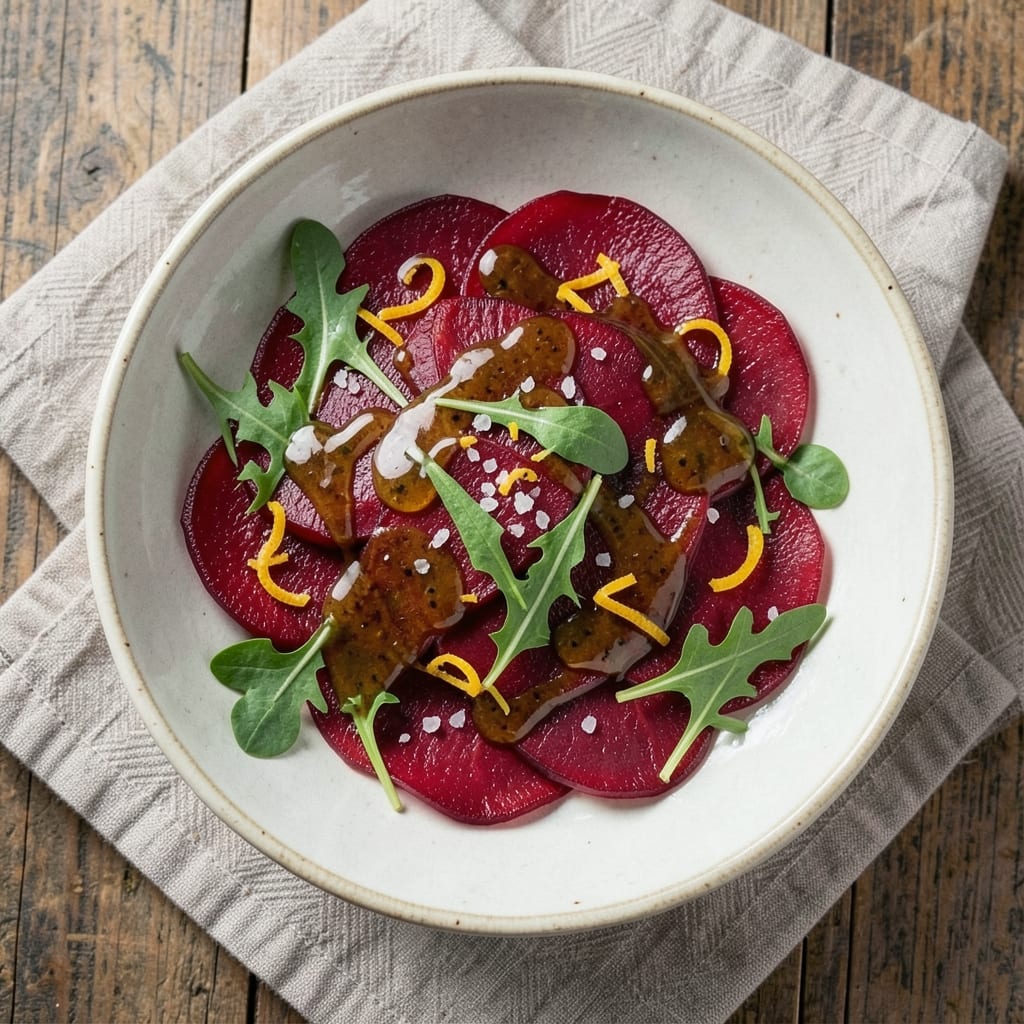
This beetroot carpaccio salad transforms earthy beets into delicate, vibrant slices that rival traditional carpaccio—without any meat. The secret lies in perfectly thin shaving and a bright citrus dressing that cuts through the beetroot's natural sweetness while keeping the dish completely plant-based. What makes this recipe stand out is the texture contrast: crispy walnuts, peppery arugula, and creamy avocado all complement the tender beet slices.
The preparation method is surprisingly simple for such an elegant dish. You'll use a mandoline for uniform slices (safety first—always use the guard!), then assemble with ingredients that highlight freshness. A tangy orange vinaigrette adds the signature citrus kick, while toasted walnuts provide crunch. The result is a salad that looks restaurant-worthy but comes together in under 20 minutes.
What you'll achieve is a visually stunning, nutrient-packed salad with layers of flavor and texture. The vibrant pink beetroot slices create a striking presentation, while the citrus dressing keeps everything bright and refreshing. This dish proves that plant-based meals can be just as sophisticated as their traditional counterparts—perfect for special occasions or a gourmet weeknight dinner.
Serve immediately for the best texture, or assemble ahead and refrigerate for up to 2 hours before plating. The flavors develop beautifully when combined, making it an ideal make-ahead option for dinner parties. Garnish with microgreens or edible flowers for an extra touch of elegance.
Ingredients for beetroot carpaccio salad
Earthy beets meet citrus brightness in this visually stunning, plant-based carpaccio salad.
| Ingredient | Amount | Notes |
|---|---|---|
| Medium Beetroots 🍠 | 2 whole | Raw, organic preferred, peeled |
| Extra-Virgin Olive Oil 🫒 | ½ cup | Cold-pressed, fruity variety |
| Fresh Orange Juice 🍊 | ¼ cup | Freshly squeezed, no pulp |
| Orange Zest 🍊 | 1 tbsp | From 1 organic orange |
| Dijon Mustard 🥬 | 1 tsp | High-quality, smooth variety |
| Maple Syrup 🍁 | 1 tbsp | Grade B for depth |
| Fresh Arugula 🌱 | 4 cups | Baby leaves preferred |
| Ripe Avocado 🥑 | 1 whole | Firm but yielding |
| Walnuts 🌰 | ½ cup | Raw, unsalted, toasted |
| Microgreens 🌱 | ¼ cup | Optional garnish |
| Sea Salt 🧂 | 1 tsp | Fine grain, Diamond Crystal |
| Freshly Ground Black Pepper 🌶️ | ½ tsp | Cracked peppercorns |
| Balsamic Glaze 🍷 | 1 tbsp | Reduced, aged variety |
The beetroots form the heart of this dish, so choose vibrant, medium-sized ones with smooth skins—Trader Joe's or Whole Foods carry excellent organic options. Avoid any with soft spots or blemishes, as they'll affect the delicate shaving process. Peeled and raw, they should be firm to the touch. For the citrus dressing, freshly squeezed orange juice is non-negotiable—bottled lacks the bright acidity that cuts through the beets' natural sweetness. The orange zest adds aromatic depth, so use a fine grater to capture the vibrant oils without the bitter pith. Walnuts should be toasted until golden and fragrant—toast in a dry skillet over medium heat for 5-7 minutes, stirring constantly, then cool completely before chopping.
No mandoline? A sharp chef's knife and steady hand work too—just keep slices paper-thin and uniform. Substituting avocado? Ripe mango or pear adds sweet contrast, but texture will differ. The dressing can be made 1 day ahead, but add fresh orange zest just before serving to preserve its brightness. For a more robust flavor, swap half the orange juice for grapefruit juice. The arugula should be peppery and fresh—if it's wilted, store it in a sealed container with a paper towel to absorb excess moisture. The balsamic glaze can be reduced from store-bought balsamic vinegar by simmering 1 cup of vinegar until it thickens to 2 tablespoons, then cooling completely before using.
Assemble the salad just before serving to maintain crispness—beet slices oxidize quickly, so toss them with a light drizzle of olive oil and a pinch of salt immediately after slicing. Store the dressing separately and combine only when ready to eat. The walnuts keep well in an airtight container for up to 1 week at room temperature, while the avocado should be eaten within 2 days of slicing. For make-ahead convenience, slice the beets and store them submerged in cold water in the fridge for up to 4 hours before draining and assembling. The entire salad holds together beautifully for 2 hours refrigerated, making it ideal for last-minute dinner parties.
Why You'll Love This Recipe
- I swear by this trick: just slice the beets paper-thin with a sharp knife—no fancy tools, no mess. The first time I tried, I thought I’d ruin it, but honestly? The uneven edges just add character.
- No Mandoline Needed: I swear by this trick: just slice the beets paper-thin with a sharp knife—no fancy tools, no mess. The first time I tried, I thought I’d ruin it, but honestly? The uneven edges just add character.
- Citrus-Kissed Earthiness: That bright orange juice and zest cut through the deep, sweet beets like a summer breeze. The Dijon mustard ties it all together—tangy, sharp, and just a little bit bold. It’s the kind of flavor that makes you take a second bite without thinking.
- Office Picnic Ready: Pack it in a jar (dressing on the bottom, beets on top) and it stays fresh for days. I’ve brought this to work, potlucks, even my mom’s house—no one ever guesses it’s just beets until they taste it. (Yes, even the beet skeptics.)
Step-by-step instructions for beetroot carpaccio salad
Precision shaving and careful layering transform humble beetroots into an elegant, vibrant salad.
Prepare the Beetroot Carpaccio
Using a sharp mandoline or vegetable peeler set to the thinnest setting, carefully shave the 2 whole medium beetroots into paper-thin slices. I like to work with the beetroot standing upright for stability—this gives you more control over the thickness. You should end up with about 8-10 thin layers per beetroot, totaling roughly 16-20 slices.
Arrange the slices on a clean kitchen towel in a single layer, ensuring they don't overlap. This prevents them from sticking together and makes them easier to handle. Gently pat them dry with another towel to remove any excess moisture—this step is crucial for crisp slices that won't turn mushy.
Create the Citrus Dressing
In a small bowl, whisk together the 0.5 cup extra-virgin olive oil, 0.25 cup fresh orange juice, 1 tablespoon orange zest, 1 teaspoon Dijon mustard, and 1 tablespoon maple syrup until fully emulsified. The dressing should have a vibrant orange hue and a smooth, velvety texture. Taste and adjust seasoning with the 1 teaspoon sea salt and 0.5 teaspoon freshly ground black pepper—this citrus dressing is the heart of your salad's flavor profile.
I always let the dressing sit for 5 minutes before using it. This brief resting period allows the flavors to meld together, creating a more cohesive taste experience. The acidity from the orange juice will help tenderize the beetroot slices slightly, enhancing their texture.
Assemble the Salad Base
In a large salad bowl, combine the 4 cups fresh arugula with the prepared beetroot slices. The arugula's peppery bite will complement the earthy sweetness of the beetroot beautifully. Using your hands, gently toss the greens and beetroot together just enough to distribute them evenly—you want to maintain some separation so each component remains visible.
While assembling, I like to work in sections. Start with a base layer of arugula, then add a layer of beetroot slices, repeating this pattern until all ingredients are incorporated. This layering technique ensures each bite contains both the vibrant beetroot and the peppery arugula.
Add Toppings and Finish
Slice the 1 whole ripe avocado in half, remove the pit, and scoop out the flesh with a spoon. Chop the avocado into small, even cubes and scatter them over the beetroot and arugula mixture. The creamy texture of the avocado provides a delightful contrast to the crisp beetroot slices.
Next, toast the 0.5 cup walnuts in a dry skillet over medium heat for 3-4 minutes until fragrant and lightly golden. Let them cool slightly, then sprinkle them evenly over the salad. Finally, drizzle with the 1 tablespoon balsamic glaze and scatter the 0.25 cup microgreens on top for a pop of color and freshness. The balsamic adds a touch of sweetness that balances the salad's overall flavor profile.
Serve Immediately
Transfer the beetroot carpaccio salad to serving plates and gently toss one final time just before serving to redistribute all the components. The salad should be vibrant, with layers of deep red beetroot, peppery arugula, creamy avocado, and crunchy walnuts. Serve immediately to enjoy the crisp texture of the beetroot slices and the freshness of all the ingredients.
This salad holds together well for about 15 minutes before serving, but the beetroot slices will begin to soften if left unattended. Pair it with a simple white wine or sparkling water to complement the citrus notes and earthy flavors.
Pro Tips For Making Beetroot Carpaccio Salad
- PEEL BEETS LIKE A PRO: Skip the messy peeler—wrap whole raw beetroots in foil, roast at 400°F (200°C) for 45 minutes, then cool and slip off skins. The heat loosens them effortlessly, and you avoid the purple-stained hands. (Yes, I’ve tried peeling them raw—don’t.)
- THIN SLICES, NOT CHOPPED: Use a sharp mandoline or the thinnest knife you own—aim for paper-thin slices, not ribbons. Pile them loosely on the plate so they don’t steam together. Thick slices turn mushy; thin ones stay crisp and show off the color.
- DRESS JUST BEFORE SERVING: Toss the dressing (olive oil, orange juice, zest, mustard) right before eating—beetroot oxidizes fast. If you prep ahead, store slices in airtight containers with a damp paper towel to keep them vibrant. (I learned this after serving a sad, wilted pile.)
- UPGRADE WITH A PINCH OF SALT: Add ½ teaspoon of flaky salt (like Maldon) to the dressing—it cuts through the sweetness and makes the orange zest pop. Skip the table salt; it’s too heavy and clumps. (Trust me, the difference is noticeable.)
Serving suggestions for this dish
Plate Presentation
Arrange the beetroot slices in an overlapping fan shape on a white or dark slate plate—this creates visual depth and highlights their natural pink hue. I like to place the arugula in a loose pile at one edge, then layer the beet slices diagonally across the plate. The avocado cubes should be scattered lightly over the top, while the walnuts and microgreens add contrasting textures. A drizzle of balsamic glaze in a zigzag pattern adds an artistic touch. 💫
Garnish Ideas
For an extra pop of color, add a few edible flowers like nasturtiums or pansies—these complement the beetroot's earthy tones beautifully. A sprinkle of toasted pumpkin seeds adds crunch, while a pinch of smoked paprika introduces a subtle smoky note. If you're feeling fancy, use a small squeeze bottle to create delicate citrus zest swirls on top. The key is to keep garnishes minimal so the beetroot remains the star.
Serving Sizes
This recipe serves 4 as a light lunch or 2 as a main course, especially when paired with crusty bread or grilled tofu. For larger gatherings, double the beetroot and arugula while keeping other toppings proportional. I often serve this salad at brunch alongside a poached egg or smoked salmon for added protein. The citrus dressing can be scaled up easily to accommodate more servings without altering the flavor balance.
Pairing Suggestions
A crisp Sauvignon Blanc from New Zealand enhances the citrus notes and cuts through the beetroot's richness. For a non-alcoholic option, sparkling water with a slice of orange adds refreshing acidity. If you prefer beer, try a Belgian witbier—its coriander and citrus flavors complement the salad beautifully. The effervescence cleanses the palate between bites, making each component shine. 🍷
Make-Ahead Tips
Prepare the beetroot slices up to 4 hours ahead and store them submerged in cold water in an airtight container. Drain and pat dry just before assembling. The citrus dressing can be made 1 day ahead and stored in the fridge. Toast the walnuts fresh to preserve their crunch. Assemble the salad 30 minutes before serving—this allows flavors to meld without losing texture. The avocado should be added last minute to prevent browning. ✨
Dietary Adaptations
For a nut-free version, swap walnuts for toasted sunflower seeds or crumbled vegan feta. If you prefer extra protein, add marinated artichoke hearts or grilled halloumi (for non-vegans). The salad remains naturally vegan, gluten-free, and can be made oil-free by omitting the dressing and using a lemon-tahini drizzle instead. Always check labels on store-bought ingredients like balsamic glaze for hidden additives.
Nutrition facts
Frequently asked questions
Why do beetroot slices turn brown after cutting?
Beetroot contains natural pigments that oxidize when exposed to air, causing browning. To prevent this, pat the slices dry immediately after cutting and toss them with a light drizzle of olive oil and pinch of salt. Store them in an airtight container with a paper towel to absorb moisture. For extra protection, add a splash of fresh lemon juice to the water if storing submerged.
Can I use cooked beetroot instead of raw?
While raw beetroot gives the authentic carpaccio texture, you can use roasted beetroot if preferred. Roast beets at 400°F for 45 minutes until tender, then cool and slice thinly. The flavor will be sweeter but less crisp. For a compromise, parboil beets for 10 minutes before slicing—they'll hold shape better while remaining slightly tender.
What's the best way to store leftover beetroot slices?
Store slices submerged in cold water in an airtight container for up to 4 hours to maintain crispness. Drain and pat dry before using. For longer storage, wrap slices tightly in plastic wrap with a paper towel between layers, then refrigerate for 2 days max. Avoid freezing raw beetroot slices—they become mushy when thawed.
How can I make this salad more substantial for a main course?
Add ½ cup cooked quinoa or toasted breadcrumbs for heartiness. For protein, include grilled tempeh strips or marinated white beans. Double the avocado and add ½ cup crumbled vegan feta for richness. The salad will still be light but satisfying enough to serve as a complete meal.
What if I don't have a mandoline?
Use a sharp chef's knife instead. Place the beetroot on a stable cutting board and hold it firmly. Make thin, even slices by rocking the knife gently—start with ⅛-inch thickness and adjust as needed. Work quickly to prevent browning. For extra control, freeze the beetroot for 20 minutes first to make slicing easier.