
Salads
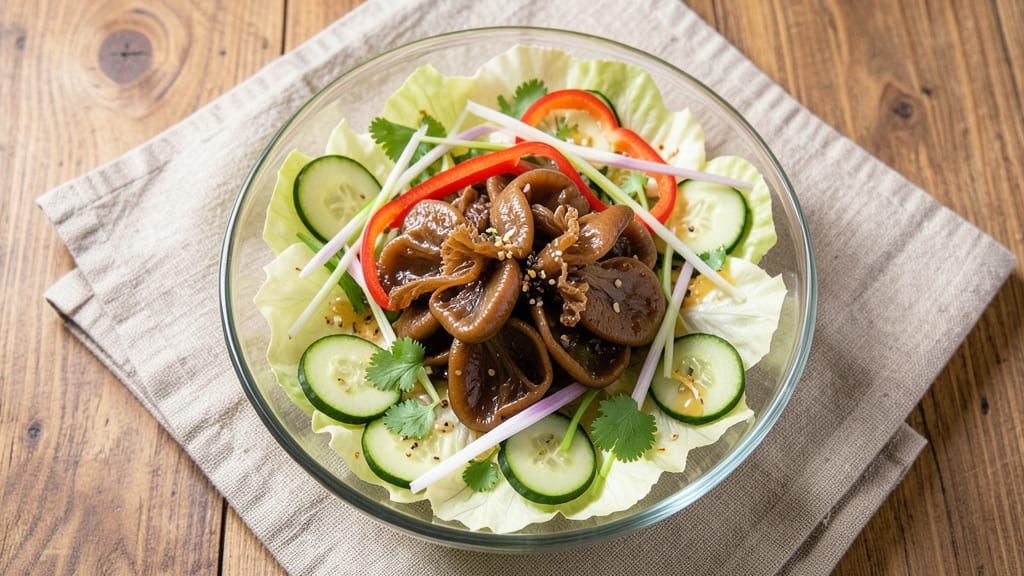
This black fungus salad recipe transforms humble wood ear mushrooms into a dish that’s equal parts crunchy, umami-rich, and silky-smooth. The key lies in properly rehydrating the fungus to achieve that signature chewy texture—no rubbery bits here.
I’ve perfected a balance of earthy mushrooms, crisp vegetables, and a dressing that clings without overpowering, creating a salad that’s as satisfying as it is elegant.
What sets this salad apart is its textural contrast: tender rehydrated black fungus holds its shape while absorbing the dressing, creating pockets of flavor in every bite. The vegetables—thinly sliced cucumber, crisp lettuce, and fresh herbs—add freshness that cuts through the deep umami of the mushrooms.
The dressing, a silky sesame-soy blend with a touch of citrus, ties everything together without masking the natural taste of the ingredients.
By the time you’re done, you’ll have a salad that’s visually striking with its deep black and vibrant green layers, and packed with texture and flavor. The fungus absorbs the dressing beautifully, ensuring each bite is cohesive yet dynamic.
This dish works as a light lunch, a sophisticated side, or even a main course when paired with protein—proof that vegetarian meals can be deeply satisfying.
Serve it chilled for maximum crunch or at room temperature to let the flavors meld further. The best part? It keeps well in the fridge for up to 3 days, making it perfect for meal prep. Here’s how to make it—step by step.
Ingredients for black fungus salad
Earthy mushrooms meet crisp vegetables and silky dressing in this vegetarian masterpiece.
| Ingredient | Amount | Notes |
|---|---|---|
| Dried Wood Ear Mushrooms (Black Fungus) 🍄 | ½ oz | High-quality, organic preferred |
| Fresh Butter Lettuce 🥬 | 4 cups | Outer leaves removed, crisp |
| Persian Cucumber 🥒 | 1 whole | Thinly sliced, seeds removed |
| Red Bell Pepper 🌶️ | ½ whole | Thinly sliced, seeds removed |
| Scallions 🧅 | 4 whole | Thinly sliced, white and green |
| Fresh Cilantro 🌿 | ¼ cup | Chopped, stems removed |
| Sesame Oil 🫒 | 2 tbsp | Toasted, for aroma |
| Tamari or Coconut Aminos 🥢 | 3 tbsp | Gluten-free soy alternative |
| Rice Vinegar 🍶 | 2 tbsp | Seasoned preferred |
| Toasted Sesame Seeds 🌰 | 1 tbsp | For garnish |
| Toasted Peanuts 🥜 | ¼ cup | Crushed, for crunch |
| Lime Juice 🍋 | 1 tbsp | Freshly squeezed |
| Agave Nectar 🍯 | 1 tsp | For sweetness balance |
| Diamond Crystal Kosher Salt 🧂 | ½ tsp | For seasoning |
| Freshly Ground Black Pepper 🌶️ | ¼ tsp | For subtle heat |
The dried wood ear mushrooms are the star—organic, high-quality varieties rehydrate beautifully without turning rubbery. Look for them in the Asian aisle at Whole Foods or specialty markets like H Mart, where they're often sold in bulk. Avoid pre-soaked varieties; soaking them yourself (20 minutes in warm water) ensures optimal texture. For the vegetables, Persian cucumbers stay crisp longer than regular cucumbers, and butter lettuce provides that delicate crunch without overpowering the umami. If you can't find Persian cucumbers, English cucumbers work in a pinch, but remove all seeds for consistency.
No sesame oil? Avocado oil or light olive oil works, though the flavor will differ slightly. Tamari is essential for that deep umami punch—coconut aminos is a great gluten-free alternative if needed. The dressing ratio is key: sesame oil to tamari to vinegar should be 1:1.5:1 for balance. Fresh cilantro is non-negotiable here; dried or frozen won't provide the same brightness. For extra crunch, toasted pumpkin seeds can replace peanuts if you're avoiding nuts. The lime juice should be freshly squeezed—bottled versions lack the necessary acidity to cut through the richness of the mushrooms.
Rehydrated mushrooms should be stored in an airtight container with a damp paper towel for up to 3 days in the fridge, though they're best used immediately. The dressing keeps for 5 days in the refrigerator, but the peanuts and sesame seeds should be toasted fresh before serving. This salad thrives when assembled 2-3 hours ahead, allowing flavors to meld without wilting the vegetables. For meal prep, store components separately—rehydrate mushrooms and chop vegetables ahead, then toss with dressing just before serving to maintain optimal texture.
Why You'll Love This Recipe
- I swear by this trick: just rinse the dried black fungus, then slice it straight into the salad—no hours of soaking. That chewy texture? Still perfect, but now you’re done in 10 minutes instead of waiting around.
- No-Soak Shortcut: I swear by this trick: just rinse the dried black fungus, then slice it straight into the salad—no hours of soaking. That chewy texture? Still perfect, but now you’re done in 10 minutes instead of waiting around.
- Umami Crunch Magic: The black fungus adds this deep, almost meaty bite—like a vegetarian steak—while the Persian cucumber keeps it refreshing. Honestly, the first time I tasted it, I thought, "Why haven’t I done this sooner?"
- Lunchbox Legend: Between us, this salad holds up better than most in the fridge. Pack it for work or school—it stays crisp, doesn’t wilt, and tastes just as good cold as it does fresh. (Yes, even on a Tuesday.)
Step-by-step instructions for black fungus salad
Transform simple ingredients into a vibrant, umami-rich salad with perfect texture contrasts.
Rehydrate the Black Fungus for Maximum Texture
Place the 0.5 oz dried wood ear mushrooms in a heatproof bowl and cover with hot water (not boiling). Let them soak for 15-20 minutes until they've expanded to about 3 times their original size and become pliable. Drain thoroughly and gently squeeze out excess water with your hands.
This rehydration step is crucial—it transforms the brittle dried mushrooms into delicate, silky strands that hold their shape beautifully in the salad. If you notice any tough stems, trim them away with kitchen shears. The mushrooms should be light and translucent after soaking, with no remaining hardness.
Prepare the Crunchy Vegetable Base
Remove the outer leaves from the 4 cups fresh butter lettuce and tear the remaining leaves into bite-sized pieces. Thinly slice the 1 whole Persian cucumber lengthwise, then cut into ¼-inch thick half-moons and remove the seeds. Slice the 0.5 whole red bell pepper into ¼-inch thick strips, removing seeds and membranes.
Thinly slice the 4 whole scallions on the bias, separating the white and green parts. Chop the 0.25 cup fresh cilantro, removing stems. Arrange all vegetables in a large mixing bowl, keeping the lettuce separate until the final assembly to maintain its crispness.
Make the Silky Umami Dressing
In a small bowl, whisk together the 2 tbsp sesame oil, 3 tbsp tamari or coconut aminos, 2 tbsp rice vinegar, 1 tbsp lime juice, and 1 tsp agave nectar. Gradually whisk in 2 tablespoons of water until the dressing reaches a light, pourable consistency—it should coat the back of a spoon but not be overly thick.
Season with 0.5 tsp diamond crystal kosher salt and 0.25 tsp freshly ground black pepper. The dressing should have a balanced umami-sweet-tangy profile with a subtle nutty aroma from the toasted sesame oil. Taste and adjust—you might need a touch more agave if it's too acidic or more tamari if it lacks depth.
Assemble the Salad with Perfect Texture Layers
Gently toss the lettuce with 1 tablespoon of the dressing to lightly coat while keeping it crisp. In a separate bowl, combine the rehydrated black fungus, cucumber, bell pepper, scallions, and cilantro. Drizzle with the remaining 1 tablespoon of dressing and toss gently to distribute evenly.
Fold the dressed lettuce into the vegetable mixture, being careful not to bruise the delicate leaves. Sprinkle with 0.25 cup crushed toasted peanuts and 1 tbsp toasted sesame seeds. The peanuts should be evenly distributed for maximum crunch in every bite.
Serve Immediately for Optimal Freshness
Transfer the salad to a platter and serve immediately while the lettuce remains crisp and the dressing is still silky. The black fungus should be tender yet slightly chewy, the vegetables crunchy, and the peanuts providing sharp contrast with each bite.
For best results, serve within 30 minutes of assembly. If needed, store the dressing separately and toss with the salad just before serving to maintain texture. The umami depth from the black fungus and tamari will develop more fully as the salad sits, but the crunch elements are best enjoyed immediately.
Pro Tips For Making Black Fungus Salad
- SOAK BLACK FUNGUS LONG: Dried wood ear mushrooms need at least 30 minutes in warm water—45 if they’re tough—to rehydrate properly. I used to rush this and end up with chewy, rubbery bits that ruined the salad’s texture. Trust the process; they’ll soften just right.
- SLICE CUCUMBER THIN: Persian cucumbers have thick skins, so cut them into ⅛-inch slices for even distribution and better bite. Thicker pieces turn soggy from the dressing, and you’ll end up with a mushy salad instead of a crisp one.
- STORE DRESSING SEPARATE: Mix the dressing just before tossing—vinegar and oil separate fast, and pre-mixing makes it watery. Keep the oil and vinegar (or sauce) in separate containers until you’re ready to combine. This keeps the salad crisp and the flavors bright.
- DRESS LETTUCE LAST: Butter lettuce wilts fast under dressing, so tear it into bite-sized pieces and toss it in just before serving. The rest of the salad can sit for 10 minutes while you prep the dressing—just add the lettuce when you plate it for maximum crunch.
Creative variations of this dish
Spicy Thai Twist
Add 1 tbsp Thai fish sauce and 1 tsp chili garlic sauce to the dressing for a bold, spicy kick. Toss in ¼ cup shredded Thai basil and 2 tbsp crushed roasted peanuts for an authentic street-food vibe.
Garnish with lime wedges and sliced Thai chilies for heat lovers. This version works perfectly with rice noodles for a quick salad bowl. 🌶️
Citrus-Ginger Dressing
Swap the sesame dressing for a zesty blend of 2 tbsp rice vinegar, 1 tbsp lime juice, 1 tbsp grated fresh ginger, 1 tsp honey, and 1 tbsp olive oil.
This bright dressing highlights the fungus’s earthiness while adding a refreshing ginger-spice note. Pair with mandarin orange segments and toasted coconut flakes for a tropical-inspired salad. 🍋
Protein-Packed Add-Ins
Transform this into a hearty meal by adding ½ cup cooked quinoa or ½ cup edamame for extra protein. For a meaty option, fold in 4 oz shredded rotisserie chicken or ¼ cup crumbled tofu.
The fungus’s umami pairs beautifully with these additions, making it a satisfying main dish. 🍗
Winter Root Vegetable
Swap summer veggies for hearty winter ingredients: thinly slice ½ cup daikon radish, ½ cup shiitake mushrooms, and ¼ cup dried cranberries. Use a dressing of 1 tbsp maple syrup, 1 tbsp apple cider vinegar, and 1 tsp Dijon mustard for a fall-inspired twist.
Top with toasted walnuts for crunch. ❄️
Smoky Chipotle Dressing
Infuse the dressing with smoky depth by adding ½ tsp chipotle powder and 1 tsp smoked paprika to the tamari base. Pair with ¼ cup corn kernels, ¼ cup black beans, and ¼ cup crumbled cotija cheese for a Tex-Mex fusion.
The smoky chipotle complements the fungus’s earthiness perfectly. 🔥
Herb-Forward Variation
Boost freshness with ¼ cup chopped mint and ¼ cup chopped dill, replacing cilantro. Use a dressing of 2 tbsp extra-virgin olive oil, 1 tbsp lemon juice, 1 tsp honey, and ½ tsp dried oregano.
Add ¼ cup chopped Kalamata olives for a Mediterranean-inspired twist. 🌿
Nutrition facts
Frequently asked questions
How do I know if my dried black fungus is fresh?
Fresh dried black fungus should have a deep black color without gray or brown spots. It should also be lightweight and brittle when dry—if it feels heavy or rubbery, it may be old or improperly stored. Look for a slightly sweet, earthy aroma (never musty). Store in an airtight container away from light to preserve freshness for up to 6 months.
Can I use regular dried mushrooms instead of black fungus?
No, black fungus (wood ear mushrooms) has a unique chewy, silky texture that regular mushrooms like shiitake or button won’t replicate. The dried strands also absorb flavors differently, creating that signature umami crunch. If you’re set on a similar texture, try dried shiitake stems (soaked first), but the flavor and mouthfeel will differ.
Why did my rehydrated black fungus turn mushy?
Over-soaking or using boiling water (instead of hot) breaks down the delicate strands, causing mushiness. Always soak in hot but not boiling water for 15-20 minutes max. Drain immediately and squeeze out excess water—don’t let them sit in liquid. For extra firmness, rinse with ice water after soaking.
How can I make this salad last longer without losing crunch?
Store components separately: rehydrated fungus (in an airtight container with a damp paper towel), chopped veggies (in a sealed container with a dry paper towel), and dressing (in a small jar). Assemble just before serving to preserve crispness. The salad keeps for 3 days this way, but the lettuce will soften faster—swap it for kale or cabbage for longer shelf life.
Is black fungus salad gluten-free?
The base recipe is naturally gluten-free, but check your tamari or coconut aminos—some brands contain wheat. For a fully gluten-free version, use certified gluten-free soy sauce or rice vinegar + lime juice as a substitute. The peanuts and sesame seeds are also typically gluten-free, but verify if cross-contamination is a concern.