Sauces & Condiments
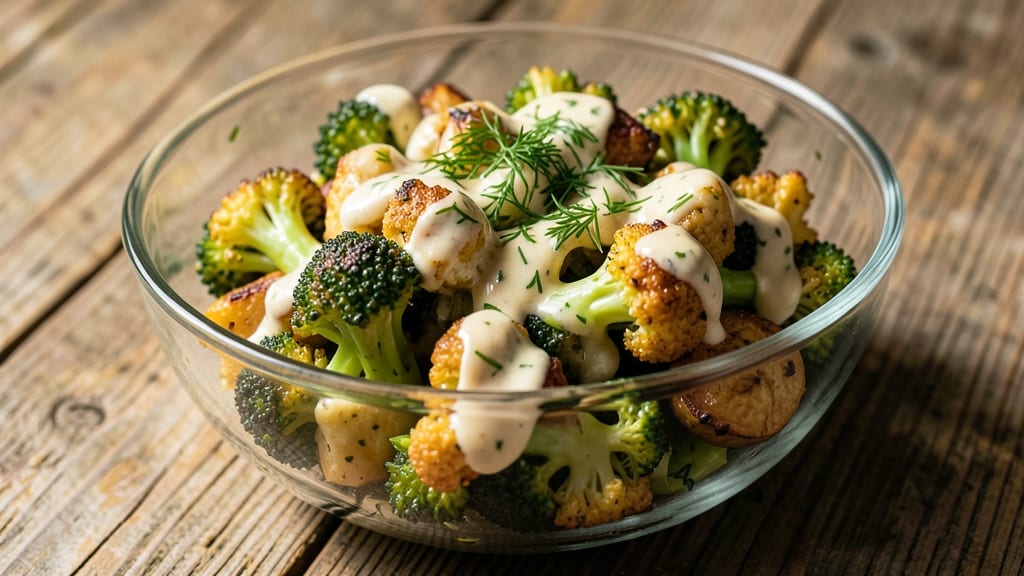
This broccoli and cauliflower salad dressing recipe transforms simple ingredients into a herb-infused, zesty creaminess that elevates every bite.
The secret lies in balancing rich olive oil with bright lime juice and fresh herbs, creating a dressing that clings beautifully to roasted vegetables while adding layers of flavor without overpowering their natural taste.
I developed this recipe after realizing store-bought dressings often fell short for hearty vegetable salads—too heavy, too sweet, or lacking depth.
The foundation is a simple emulsion of extra-virgin olive oil and buttermilk, which provides that signature creamy texture without making the dressing too thick. Fresh herbs like dill and parsley add freshness, while lime juice delivers that essential tang that cuts through richness.
A touch of Dijon mustard ensures the dressing emulsifies properly, so it won't separate in the fridge. What makes this dressing truly special is how it enhances the natural flavors of broccoli and cauliflower—whether roasted, steamed, or raw—by complementing their earthy notes with bright, herbaceous accents.
What you'll end up with is a dressing that's versatile, restaurant-quality, and foolproof—perfect for drizzling over roasted vegetable salads, tossing with grain bowls, or even using as a dip for crudités. The lime kick adds a refreshing contrast to the creamy base, making each bite feel balanced and satisfying.
This recipe also stores beautifully in the refrigerator for up to a week, so you can make a batch ahead and have it ready whenever you're craving a flavorful vegetable dish.
Best of all, this dressing comes together in just 5 minutes with ingredients you likely already have on hand. No fancy techniques required—just whisk, taste, and adjust. Let's make this dressing that will turn your broccoli and cauliflower salads into something truly special.
Ingredients for broccoli and cauliflower salad dressing
Herb-infused richness meets zesty brightness in this dressing designed to elevate roasted vegetables.
| Ingredient | Amount | Notes |
|---|---|---|
| Extra-Virgin Olive Oil 🫒 | ¾ cup | High-quality, fruity variety preferred |
| Buttermilk 🥛 | ½ cup | Full-fat for optimal creaminess |
| Fresh Dill Leaves 🌿 | ¼ cup | Finely chopped, stems removed |
| Fresh Parsley Leaves 🌿 | ¼ cup | Finely chopped, flat-leaf preferred |
| Lime Juice 🍋 | 0.3 cup | Freshly squeezed, seeds strained |
| Dijon Mustard 🍯 | 1 tbsp | High-quality for proper emulsification |
| Garlic Cloves 🧄 | 2 cloves | Minced, for subtle aromatic depth |
| Shallot 🧅 | 2 tbsp | Finely minced, or sub with onion |
| Honey 🍯 | 1 tbsp | Raw preferred for delicate sweetness |
| Kosher Salt 🧂 | ½ tsp | Diamond Crystal preferred for balance |
| Freshly Ground Black Pepper 🌶️ | ¼ tsp | Coarsely cracked for texture contrast |
The olive oil forms the creamy base—opt for California extra-virgin with vibrant green notes, like Corto or Bertolli, available at specialty grocers or online. Buttermilk adds tang without curdling; Cultivate brand from the refrigerated section works best. Fresh herbs are non-negotiable: Whole Foods or local farmers markets offer the brightest dill and parsley. For lime juice, Mexican Key limes deliver superior acidity—sub with regular limes if needed. The Dijon mustard should be 100% mustard seed-based (like Maille) to prevent bitterness. Store all fresh components in airtight containers with paper towels to maintain crispness for up to 5 days.
No buttermilk? Mix 1 tbsp lemon juice + 0.5 cup milk for a 1:1 substitute. Dried herbs work at one-third the amount, but fresh delivers superior brightness. Sub shallots with finely minced red onion (use half the quantity). For honey alternatives, agave nectar works 1:1, though raw honey provides subtle floral notes. The garlic and shallot combo can be pre-minced and stored in the freezer for 3 months. If making ahead, whisk the emulsion just before serving to maintain texture.
This dressing emulsifies beautifully when stored in a glass jar with a tight seal in the fridge for up to 7 days. For longer storage, freeze in ice cube trays, then transfer to a bag—thaw overnight in the fridge before use. The lime juice may separate; simply whisk vigorously before each use. For restaurant-quality results, taste and adjust seasoning immediately after whisking—Dijon mustard and honey are your flavor regulators. Use within 2 days of opening if frozen.
Why You'll Love This Recipe
- Five-Ingredient Magic: I swear by this combo—just olive oil, buttermilk, fresh herbs, lime, and a whisk. No measuring cups, no fancy gadgets, just a quick stir while the veggies steam. Honestly, if I forget an ingredient, I’ll wing it, and it still works.
- Bright & Tangy: That lime juice and buttermilk? It’s like a zesty hug for your greens. The dill and parsley add a freshness that cuts through anything—grilled meats, roasted veggies, or even straight over rice. It’s the kind of flavor that makes you pause mid-bite.
- Meal Prep MVP: Make a big batch on Sunday, and you’re set for the week. Drizzle it on salads, toss it with grains, or even use it as a marinade. Between us, I’ve had this dressing last me five days, and it only gets better as the flavors meld.
- Budget Brightener: No fancy ingredients here—just pantry staples and a handful of herbs. A splash of olive oil, a cup of buttermilk, and whatever greens you have on hand. It’s my go-to when I’m broke but still want something that tastes like I tried. (Yes, even on a Tuesday night.)
Step-by-step instructions for herb-infused cream dressing
This bright, tangy dressing transforms simple broccoli and cauliflower into a restaurant-worthy dish.
Prepare the Herb Mixture
In a small bowl, combine the 0.25 cup fresh dill leaves and 0.25 cup fresh parsley leaves. Use a sharp chef's knife to finely chop them—you want tiny pieces that will disperse evenly throughout the dressing. I like to pulse them briefly in a food processor for consistency, but hand-chopping works just as well if you take your time. The herbs should be bright green with no visible stems, as these can make the dressing bitter.
Set this herb mixture aside. The freshness of these herbs is critical—they provide the bright, grassy notes that balance the richness of the olive oil and buttermilk. If using dried herbs, reduce the amount by half, but fresh is always superior for this dressing.
Emulsify the Base Ingredients
In a medium bowl, whisk together the 0.75 cup extra-virgin olive oil and 0.5 cup buttermilk until fully combined. I prefer using a wire whisk for this step—it creates a smooth, stable emulsion that won't separate. The mixture should look like thick, pale yellow mayonnaise at this stage. If you notice any separation, whisk vigorously for another 30 seconds to re-emulsify.
Next, add the 1 tbsp Dijon mustard, 1 tbsp honey, 0.5 tsp kosher salt, and 0.25 tsp freshly ground black pepper. Whisk continuously for 1 minute until all ingredients are fully incorporated. The Dijon mustard acts as an emulsifier, helping to bind the oil and buttermilk together for a silky texture. The honey adds subtle sweetness that complements the tangy lime to come.
Incorporate Aromatics and Acid
In a separate small bowl, finely mince the 2 cloves garlic and 2 tbsp shallot using a microplane or sharp knife. The goal is to create a paste-like consistency—this ensures even distribution in the dressing. Add these to the bowl with the emulsified base and whisk vigorously for 2 minutes until fully combined. The garlic and shallot should disappear completely, leaving no visible flecks.
Now, slowly drizzle in the 0.3 cup lime juice while whisking constantly. The lime juice adds the signature zesty kick that cuts through the richness of the dressing. Whisk for another 1 minute until the dressing is smooth and glossy. If the dressing starts to thicken too much, add 1-2 teaspoons of water to reach your desired consistency—it should coat the back of a spoon but still pour easily.
Fold in Herbs and Final Adjustments
Gently fold the prepared herb mixture into the dressing using a rubber spatula. Work in small batches to ensure even distribution—you want every spoonful to have that vibrant herbaceous flavor. Taste the dressing at this point. It should be tangy, slightly sweet, and herb-forward with a clean finish. If it needs more brightness, add another 1 teaspoon of lime juice. For extra richness, stir in an additional 1 tablespoon of olive oil.
Let the dressing rest for 10 minutes at room temperature before serving. This allows the flavors to meld together completely. The dressing will thicken slightly as it sits, so adjust the consistency with a splash of water or buttermilk if needed. Store any leftovers in an airtight container in the refrigerator for up to 5 days, shaking well before each use.
Pro Tips For Making Broccoli And Cauliflower Salad Dressing
- Whisk the Buttermilk Slowly: I learned this the hard way—dumping cold buttermilk into olive oil too fast creates a greasy, split dressing. Instead, drizzle the oil into the buttermilk while whisking vigorously, then let it sit for 2 minutes before adding lime or herbs. The emulsion will actually hold together.
- Use a Mortar for Herbs: Fresh dill and parsley release more flavor when bruised, not chopped. Tear the leaves roughly between your fingers first, then give them a quick pulse in a food processor or, if you’re feeling fancy, crush them in a mortar with a pinch of salt. The texture changes the game—less powdery, more vibrant.
- Measure Lime Juice Fresh: Bottled lime juice is convenient, but it’s also watered down and lacks the bright acidity this dressing needs. Squeeze 2-3 limes (about 3 tablespoons) and strain out seeds—don’t skip this. The pulp can turn the dressing gritty, and fresh juice cuts through the richness of the olive oil better.
- Let the Dressing Rest: This isn’t the prettiest method, but it’s the tastiest: After whisking everything together, let the dressing sit for 10 minutes before tossing it with the salad. The flavors meld, and the buttermilk’s tang mellows just enough to balance the lime’s sharpness—trust the wait.
Troubleshooting perfect results
Separation Solutions
The most common issue with this dressing is oil separation after refrigeration. This happens when the emulsion breaks down—usually from too much lime juice or insufficient whisking. To fix it, whisk vigorously for 1-2 minutes until smooth.
For stubborn separation, add 1 tsp Dijon mustard and whisk again. I’ve found that storing the dressing in a glass jar (not plastic) helps maintain stability for up to 7 days. 🌡️
Herb Bitterness Fix
If your dressing tastes bitter, it’s likely from over-chopped stems or old herbs. Always remove stems before chopping, and use only fresh herbs—dried herbs can’t replicate the bright flavor.
For a quick fix, add ½ tsp honey or 1 tsp lemon juice to balance the bitterness. If using dried herbs, reduce the amount by one-third compared to fresh.
Thickness Adjustments
Too thick? Thin with 1-2 tsp water or buttermilk while whisking. Too thin? Stir in 1 tbsp olive oil or let it rest for 10 minutes—it naturally thickens as flavors meld.
For a restaurant-style drizzle, I recommend thinning slightly so it coats vegetables evenly without pooling. Always taste before adjusting!
Mustard Overpower
If the Dijon mustard flavor dominates, balance it with extra lime juice (start with ½ tsp) or honey (½ tsp). For a milder taste, use whole-grain mustard instead—it’s less intense. I’ve also had success adding 1 tsp Greek yogurt to soften the mustard’s kick while maintaining creaminess.
Lime Juice Weakness
If your dressing lacks zing, the lime juice may have lost potency. Always use freshly squeezed lime juice—bottled versions lack brightness. For extra tang, add ¼ tsp citric acid (found in baking aisles) or 1 tsp apple cider vinegar.
Pro tip: Strain seeds thoroughly to avoid a gritty texture. 🍋
Flavor Melding Time
Rushing the 10-minute rest before serving can make flavors uneven. Let the dressing sit at room temperature—this allows the herbs, lime, and aromatics to fully integrate. If short on time, whisk vigorously for 30 seconds to jumpstart the process. For maximum depth, refrigerate overnight and reheat gently before serving.
Nutrition facts
Frequently asked questions about broccoli & cauliflower salad dressing
Can I make this dressing without buttermilk?
Mix 1 tablespoon lemon juice with ½ cup milk to replace the buttermilk. For a richer texture, use ½ cup plain Greek yogurt instead—it adds protein and creaminess while keeping the tangy balance. The dressing will still emulsify beautifully, though the flavor profile will be slightly different.
How do I prevent the dressing from separating?
Whisk vigorously for 1-2 minutes after adding all ingredients, especially when combining oil and buttermilk. Use a high-quality Dijon mustard (like Maille) as it emulsifies better than regular mustard. Store in a glass jar in the fridge and whisk before each use. If separation occurs, add 1 teaspoon Dijon mustard and whisk again.
Can I use this dressing on other vegetables besides broccoli and cauliflower?
This dressing works beautifully on roasted Brussels sprouts, asparagus, or green beans—its herby, zesty profile complements earthy vegetables perfectly. For leafy greens like spinach or kale, thin it slightly with 1-2 teaspoons water so it coats evenly without weighing down the salad. It also makes an excellent dip for crudités or grilled halloumi.
Why does my dressing taste bitter?
Bitterness usually comes from over-chopped herb stems or old herbs. Always remove stems before chopping, and use only fresh dill and parsley. If bitterness persists, balance it with ½ teaspoon honey or 1 teaspoon lemon juice. For extra freshness, add 1 tablespoon chopped cilantro—it mellows the flavor while adding brightness.
How long will this dressing keep in the fridge?
The dressing stays fresh for up to 7 days when stored in an airtight glass container. For longer storage, freeze in ice cube trays, then transfer to a freezer bag. Thaw overnight in the fridge and whisk before using. The lime juice may separate slightly when frozen—just whisk vigorously to re-emulsify. For best flavor, use within 5 days of making.