
Salads
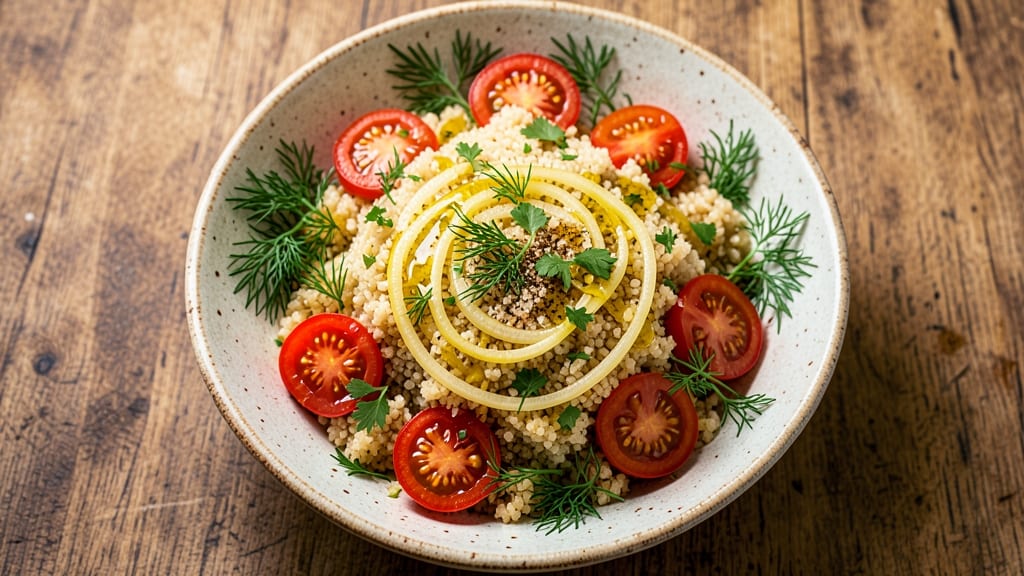
This Turkish bulgur salad recipe transforms simple grains into a fragrant, herby dish that’s the heart of every meze spread. The secret lies in perfectly cooked bulgur—al dente yet tender—sautéed with onions, tomatoes, and spices until the kitchen fills with warm, earthy aromas.
Unlike crunchy grain salads, this version delivers warm, comforting texture with every bite, making it a standout for both casual lunches and festive gatherings.
Traditional Turkish bulgur salads (pilav or çılbır) rely on a balance of bright herbs, tangy lemon, and warm spices to elevate humble ingredients. I’ve refined this recipe to ensure the bulgur soaks just enough to soften without turning mushy, while the vegetables caramelize slightly for depth.
The result? A dish that’s restaurant-quality at home, served alongside grilled meats, yogurt, or as a standalone mezze.
What sets this apart is the layered flavor profile: smoky cumin, fresh dill, and a touch of pomegranate molasses for complexity. The bulgur absorbs the spices beautifully, while the herbs add a bright, fresh finish that cuts through richness.
It’s the kind of salad that tastes even better the next day—ideal for meal prep or bringing to potlucks.
Ready in 30 minutes with minimal effort, this recipe proves you don’t need fancy ingredients for bold flavors. The technique is foolproof—just soak, sauté, and toss—while the versatility lets you customize with mint, parsley, or even a sprinkle of feta. Let’s make it.
Ingredients for bulgur salad recipe turkish
Warm spices, bright herbs, and tender bulgur create this restaurant-quality Turkish dish.
| Ingredient | Amount | Notes |
|---|---|---|
| Fine Bulgur Wheat 🌾 | 1 cup | Rinsed thoroughly before soaking |
| Yellow Onion 🧅 | 1 medium | Thinly sliced for caramelization |
| Ripe Tomatoes 🍅 | 2 medium | Diced, seeds removed for texture |
| Fresh Dill 🌿 | ½ cup | Chopped, stems removed |
| Fresh Parsley 🌿 | ¼ cup | Chopped, for bright finish |
| Extra-Virgin Olive Oil 🫒 | ½ cup | High-quality, fruity variety |
| Lemon Juice 🍋 | 3 tbsp | Freshly squeezed, strained |
| Ground Cumin 🌿 | 1 tsp | Toasted for deeper aroma |
| Ground Allspice 🌶️ | ½ tsp | Warm, earthy spice |
| Salt 🧂 | 1 tsp | Diamond Crystal preferred |
| Black Pepper 🌶️ | ½ tsp | Freshly ground for heat |
| Pomegranate Molasses 🍇 | 1 tbsp | For tangy depth |
| Plain Yogurt 🥛 | ¼ cup | Full-fat for creaminess |
| Garlic Cloves 🧄 | 2 cloves | Minced for subtle flavor |
The bulgur is the foundation—fine bulgur from Trader Joe's or specialty stores works best, as it soaks evenly without turning mushy. Look for 100% whole grain labels to ensure quality. Fresh herbs are non-negotiable here; Middle Eastern markets often carry dill and parsley in bunches, but the grocery store will do in a pinch. The pomegranate molasses adds complexity—Anatolian brands like Mavalli deliver authentic tartness, though any quality molasses works. For the olive oil, Kalamata or Ligurian varieties provide the fruity depth this dish craves.
No pomegranate molasses? Substitute with an extra tablespoon of lemon juice and a pinch of smoked paprika for warmth. Short on fresh dill? Dried dill at one-third the amount suffices, though fresh is ideal. The yogurt can be Greek or regular—just ensure it's plain and full-fat for that creamy texture. Tomatoes too watery? Pat them dry before dicing to prevent a soggy salad. For extra richness, fold in a spoonful of tahini at the end, though traditional recipes omit it. The allspice can be tricky to find; substitute with a pinch of cinnamon and nutmeg if needed, though the flavor will differ slightly.
This salad improves overnight—the flavors meld beautifully when refrigerated. Store in an airtight container for up to 5 days, though the bulgur may soften further. For meal prep, portion into individual containers with a drizzle of olive oil on top to preserve freshness. The yogurt can be added fresh before serving to maintain texture. Freezing isn't recommended due to the bulgur's texture changes, but the base components (without yogurt) keep well for 3 months in the freezer for quick assembly later.
Why You'll Love This Recipe
- No-Chop Nightmare: I swear, this salad only needs one knife—just dice the onion and tomatoes, then let the bulgur do the work while you sip tea. The parsley and dill? Toss them in whole if you’re lazy; they’ll still perfume the whole bowl like a Mediterranean breeze.
- Herb Bomb Brightness: That fresh dill and parsley aren’t just garnish—they’re the stars. The bulgur soaks up their sharp, citrusy punch while the tomatoes add juicy sweetness, and suddenly you’ve got a salad that tastes like a vacation in a bowl. (Yes, even on a Tuesday night.)
- Lunchbox Legend: Between us, this keeps perfectly for days—no sad wilted greens here. Pack it for work, toss it in kids’ lunches (they’ll eat it, I promise), or serve it cold at picnics. The bulgur stays chewy, the tomatoes stay plump, and no one will guess it’s from last night’s dinner.
- Pocketbook Hero: Fine bulgur and seasonal veggies make this ridiculously cheap—way cheaper than pre-made salads or takeout. A single batch feeds four, and leftovers? They’re just free lunches waiting to happen. Honestly, I’ve made this on a $5 budget and still felt fancy.
Step-by-step instructions for warm Turkish bulgur salad
This method delivers perfectly textured bulgur with vibrant, balanced flavors—authentic and approachable.
Prepare the Bulgur Base
Rinse the 1 cup fine bulgur wheat thoroughly under cold water until the water runs clear. This removes excess starch that would make the bulgur gummy. Drain well in a fine-mesh strainer, then transfer to a medium saucepan.
Add 2 cups hot water (not boiling) and bring to a gentle simmer over medium heat. Immediately reduce heat to low and cover with a tight-fitting lid. Let it steam for 12-15 minutes until all liquid is absorbed and the bulgur is tender but still slightly firm to the bite. Avoid stirring—this disrupts the even cooking process.
Caramelize the Aromatics
While the bulgur cooks, heat 2 tablespoons extra-virgin olive oil in a large skillet over medium heat. Add the thinly sliced yellow onion and cook for 8-10 minutes until golden brown and sweetly caramelized. Remove from heat and set aside.
In the same skillet, add 1 tablespoon extra-virgin olive oil and cook the minced garlic cloves for 30 seconds until fragrant but not browned. Add the diced ripe tomatoes (with seeds removed) and cook for 3-4 minutes until softened. Season with ½ teaspoon salt and ¼ teaspoon black pepper.
Toast the Spices
In a dry skillet over low heat, toast the 1 teaspoon ground cumin and ½ teaspoon ground allspice for 1 minute until fragrant. This enhances their aroma significantly. Let cool slightly, then transfer to a small bowl.
In a separate bowl, whisk together the 3 tablespoons lemon juice, 1 tablespoon pomegranate molasses, ¼ cup plain yogurt, and the toasted spices. This creates the tangy, slightly sweet dressing that binds the salad.
Combine and Rest
Transfer the cooked bulgur to a large mixing bowl. Add the caramelized onions, tomato mixture, and the dressing. Gently fold everything together with a wooden spoon, being careful not to break the bulgur grains. Stir in the ½ cup chopped fresh dill and ¼ cup chopped fresh parsley.
Cover the bowl and let the salad rest at room temperature for 15-20 minutes. This allows the flavors to meld and the bulgur to absorb the dressing evenly. The salad should be moist but not soggy—if it appears dry, add 1 tablespoon water and mix gently.
Adjust and Serve
Taste and adjust seasoning with additional salt, lemon juice, or pomegranate molasses as needed. The ideal balance should be bright, tangy, and subtly spiced with a touch of sweetness from the molasses.
Serve the salad warm or at room temperature, garnished with extra fresh herbs. This dish pairs beautifully with grilled meats, as a side to kebabs, or as a standalone vegetarian meal. The bulgur should be tender but still hold its shape, with vibrant, fresh herbs throughout.
Pro Tips For Making Bulgur Salad Recipe Turkish
- Boil Bulgur Twice: I learned this the hard way—rinsing fine bulgur once isn’t enough. After boiling, drain it, give it a quick stir, then boil it again for 5 minutes. This guarantees it’s fully tender and absorbs the lemon juice properly later. (Yes, it sounds tedious, but mushy bulgur ruins everything.)
- Dice Onions Small: Skip the big chunks—cut yellow onions into 1/8-inch pieces so they soften evenly and blend into the salad without chewy bits. I used to halve them for speed, but the texture suffers. (Your future self will notice.)
- Salt the Tomatoes: Sprinkle diced tomatoes with a pinch of salt and let them sit for 10 minutes before adding to the salad. This draws out excess water, keeping the dish from getting soggy. (Sounds weird, but it works—trust me.)
- Add Lemon Last: Toss in fresh lemon juice and oil right before serving, not while mixing. Waiting ensures the bulgur stays fluffy and the herbs stay vibrant. (I know, I know—you want to mix it all at once, but this makes all the difference.)
Storing and reheating your leftovers
Refrigerator Storage
Store your Turkish bulgur salad in an airtight container with a lid, pressing the herbs slightly into the bulgur to preserve freshness. The salad keeps well in the refrigerator for up to 5 days—the flavors actually deepen as the spices and lemon meld together.
I like using glass containers because they prevent odors from seeping in and keep the bulgur from absorbing fridge smells. 🥫
Freezer-Friendly Base
While the finished salad isn't ideal for freezing (the bulgur softens), you can prep the base components ahead: cook the bulgur, caramelize the onions and tomatoes, and toast the spices. Store these separately in freezer-safe bags for up to 3 months.
When ready to serve, simply toss everything with fresh herbs and dressing. This saves time while keeping the texture intact. ❄️
Reheating Without Mush
To reheat, transfer the salad to a skillet over low heat and add 1-2 tablespoons water to restore moisture. Cover and warm for 3-5 minutes, stirring gently to prevent breaking the bulgur grains.
For microwave reheating, cover with a damp paper towel and heat in 30-second intervals on medium power, stirring between each interval. The goal is to warm through without drying out. 🔥
Reviving Stale Herbs
If the herbs lose their vibrancy after refrigeration, sprinkle with 1 teaspoon fresh lemon juice and toss with 1 tablespoon extra-virgin olive oil. The acidity perks up the flavors, and the oil helps restore moisture.
For extra freshness, top with chopped fresh parsley or dill just before serving. This trick works wonders for any herb-heavy salad. 🌿
Meal Prep Pro Tips
Divide the salad into single-serving containers with a layer of plastic wrap pressed directly on the surface to minimize oxidation. Store the yogurt dressing separately and add it fresh when ready to eat—this keeps the bulgur from absorbing too much liquid overnight.
For potlucks, pack the salad in a wide, shallow container to prevent crushing the grains. 📅
Serving Warm vs. Cold
This salad tastes amazing both warm and at room temperature. If reheating, aim for 110-115°F—hotter than that risks overcooking the bulgur. For a warm serve, gently heat the bulgur portion first, then fold in the cooled vegetables and herbs.
The contrast of warm grains with cool yogurt dressing is a game-changer at dinner parties. ✨
Nutrition facts
Frequently asked questions
Why does Turkish bulgur salad taste different from regular grain salads?
Traditional Turkish bulgur salad relies on warm spices like cumin and allspice toasted for depth, plus pomegranate molasses for tangy sweetness. Unlike cold grain salads, this version is served warm or at room temperature, with caramelized onions and fresh herbs like dill and parsley that brighten the earthy bulgur. The yogurt dressing adds creaminess that cold salads often lack.
Can I use coarse bulgur instead of fine bulgur?
Fine bulgur is ideal because it soaks evenly and stays al dente—coarse bulgur takes longer to cook and may remain firm even after 20+ minutes of soaking. If you must use coarse, increase water by ½ cup and simmer for 20-25 minutes, but the texture will be chewier. For best results, stick with fine bulgur for that signature tender-yet-firm bite.
What’s the secret to perfectly cooked bulgur?
Three keys: rinse thoroughly to remove starch, use hot (not boiling) water, and cook on low heat without stirring. The lid traps steam, cooking the bulgur evenly in 12-15 minutes. Overcooking turns it mushy, while undercooking leaves it crunchy. Test with a fork—it should be tender but still hold its shape.
How can I make this salad ahead of time?
Prep the bulgur, caramelized onions, and spices up to 3 days ahead and store separately in the fridge. Assemble the salad 1-2 hours before serving to let flavors meld. For meal prep, keep the yogurt dressing separate until serving to prevent sogginess. The bulgur stays best for 5 days refrigerated—flavors even improve overnight!
What’s the best way to serve this Turkish bulgur salad?
Serve it as a warm mezze alongside grilled meats like kebabs, or as a standalone vegetarian dish with olives and pickles. For extra richness, drizzle with extra-virgin olive oil and sprinkle with toasted pine nuts before serving. It’s also perfect in grain bowls with roasted vegetables or as a filling for stuffed peppers.