
Salads
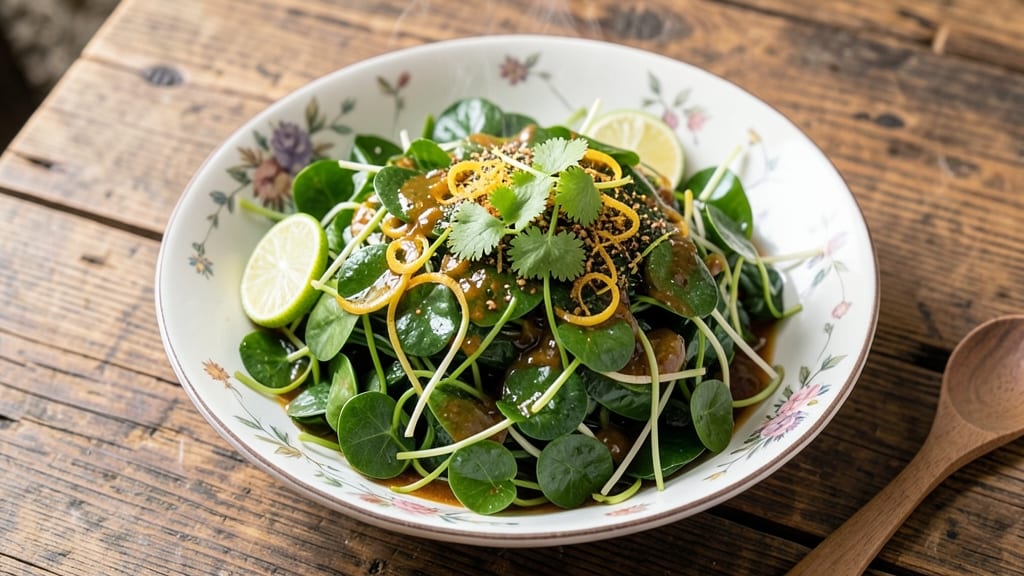
This Burmese pennywort salad recipe brings the vibrant flavors of Myanmar to your table with a perfect balance of tangy, spicy, and fresh. The star of the dish is the crispy shallots, which add a delightful crunch that contrasts beautifully with the tender pennywort leaves.
A traditional tamarind dressing ties everything together, delivering a bright, slightly sweet, and zesty flavor profile that's both refreshing and deeply satisfying.
The preparation begins with carefully washing and tenderizing the pennywort leaves—this leafy green, also known as kha maung in Burmese, is a staple in Burmese cuisine and packed with nutrients.
The tamarind dressing, made with lime juice, chili, and aromatic herbs like cilantro and mint, infuses the salad with layers of complexity. The crispy shallots, fried to a golden brown, bring a savory depth that elevates the dish from simple to extraordinary.
What you’ll end up with is a salad that’s as visually stunning as it is delicious—bright green pennywort leaves glistening with the tangy dressing, topped with golden crispy shallots that add both texture and flavor.
This dish is not only vegan but also rich in cultural heritage, offering a taste of Myanmar’s culinary traditions. It’s perfect as a light lunch, a refreshing side, or even a vibrant appetizer for a dinner party.
The beauty of this recipe lies in its simplicity and versatility. Serve it chilled for a refreshing bite or at room temperature for a more robust flavor experience. Pair it with grilled tofu, steamed rice, or even a simple cucumber soup for a full Burmese-inspired meal.
The key to success is in the balance of flavors—ensure the tamarind dressing is tangy enough to cut through the richness of the crispy shallots while complementing the freshness of the pennywort.
Ingredients for burmese pennywort salad
Fresh pennywort leaves, crispy shallots, and a tangy tamarind dressing create this vibrant Burmese-inspired salad.
| Ingredient | Amount | Notes |
|---|---|---|
| Pennywort Leaves (Kha Maung) 🌿 | 8 cups | Fresh, tender, stems removed |
| Yellow Shallots 🧅 | 1 lb | Sliced into 1/4-inch rounds |
| Extra-Virgin Olive Oil 🫒 | ½ cup | For frying shallots |
| Tamarind Paste 🍯 | ¼ cup | Unsweetened, high-quality |
| Fresh Lime Juice 🍋 | ¼ cup | From 2-3 limes |
| Fresh Cilantro 🌿 | ½ cup | Stems removed, chopped |
| Fresh Mint Leaves 🌿 | ¼ cup | Chopped, stems removed |
| Red Chili Peppers 🌶️ | 2 whole | Thinly sliced, seeds removed |
| Garlic Cloves 🧄 | 4 cloves | Minced, for dressing |
| Coconut Sugar 🍯 | 1 tbsp | Or substitute maple syrup |
| Sea Salt 🧂 | ½ tsp | Fine grain preferred |
| Black Pepper 🌶️ | ¼ tsp | Freshly ground |
| Toasted Sesame Seeds 🌱 | 1 tbsp | For garnish |
The pennywort leaves are the heart of this dish—look for bright green, crisp leaves at Asian markets or specialty grocers. Whole Foods or Trader Joe's often carry them, but if unavailable, substitute with watercress or butter lettuce for a milder flavor. The shallots should be yellow, firm, and free of sprouts. Slice them evenly for consistent crispiness. For the tamarind paste, Thai Kitchen brand is widely available and reliable, but check the ingredients to ensure it's unsweetened. Fresh lime juice is non-negotiable—Mexican or Persian limes have the best balance of acidity and sweetness.
No tamarind paste? Lemon juice with a pinch of coconut sugar works in a pinch, though the flavor won't be identical. Swap red chili peppers for Thai bird's eye chilies if you prefer more heat, or omit entirely for a milder version. The coconut sugar can be replaced with agave nectar or maple syrup, but reduce to 1 tsp to avoid over-sweetening. For the shallots, yellow onions work in a bind, though they won't have the same delicate sweetness. If you can't find fresh mint, dried mint at half the amount adds depth, but fresh is ideal. Toast the sesame seeds in a dry pan for 1-2 minutes until fragrant—they add a nutty crunch that ties everything together.
Store the tamarind dressing separately in an airtight container for up to 5 days in the fridge, or freeze for 3 months. The crispy shallots lose their crunch quickly, so fry them fresh and store in a single layer on paper towels to keep them crisp for 2-3 hours. The pennywort leaves wilt fast—rinse them in cold water, spin dry, and store in a sealed container with a paper towel for 2 days max. Assemble the salad just before serving to preserve the texture contrast. Leftovers keep for 1 day if stored properly, but the crispy shallots will soften—best enjoyed fresh.
Why You'll Love This Recipe
- No-Chop Salad: I swear by this trick—just tear the pennywort leaves by hand (no knife required). The shallots add a sweet, sharp crunch that needs zero prep beyond a quick rinse and rough chop.
- Tamarind-Lime Magic: That tangy tamarind paste and lime juice cut through the earthy pennywort like a burst of sunshine. Honestly? It’s the kind of balance that makes you reach for seconds without even thinking.
- Picnic or Potluck Star: Pack it in a jar for lunch or bring it to gatherings—it stays fresh for days and pairs perfectly with grilled meats or rice. My go-to for office lunches (yes, even on a Tuesday).
- Budget Brightener: Pennywort grows wild in many places, and shallots stretch further than regular onions. I’ve made this salad for under $5 and still felt like I was dining out—minimal cost, maximum flavor.
Step-by-step instructions for Burmese pennywort salad
Here's how to create a vibrant Burmese salad with perfectly crispy shallots and a tangy tamarind dressing.
Prepare the Pennywort Leaves
Begin by thoroughly washing the 8 cups of pennywort leaves (kha maung) under cold running water to remove any dirt or sand. Gently shake off excess water and pat dry with paper towels. Remove any thick stems or discolored leaves - you want only the tender, fresh leaves for the best texture. Spread the leaves on a clean kitchen towel and let them air dry for 5 minutes while you prepare the remaining ingredients. This ensures they're completely dry before assembly, which prevents a soggy salad.
Once dry, give the leaves a final visual inspection. They should appear bright green and crisp. If any leaves still look wilted, gently press them between your fingers to revive them. This step is crucial because the salad's freshness and crunch depend on the quality of your pennywort leaves.
Fry the Yellow Shallots Until Crispy
Heat 0.5 cup of extra-virgin olive oil in a large skillet over medium heat until the oil shimmers but doesn't smoke. Add the 1 lb of sliced yellow shallots in a single layer, making sure they don't overlap. Cook undisturbed for 5-7 minutes until the edges begin to turn golden brown.
This is where the magic happens - you want the shallots to become crispy while maintaining their shape. After the initial 5 minutes, gently stir the shallots and continue cooking for another 3-5 minutes until they're deep golden brown and crisp to the touch. Remove them from the oil using a slotted spoon and drain on paper towels. The shallots should be dry and crispy - if they're still oily, return them to the skillet for another 30 seconds to evaporate excess moisture.
Create the Tangy Tamarind Dressing
In a medium bowl, combine the 0.25 cup tamarind paste, 0.25 cup fresh lime juice, 1 tablespoon coconut sugar, 0.5 teaspoon sea salt, and 0.25 teaspoon black pepper. Whisk vigorously until the sugar and salt completely dissolve. The mixture should be smooth with no visible granules.
Next, add the 4 minced garlic cloves and 2 thinly sliced red chili peppers (seeds removed) to the bowl. Use a fork to mash them into the dressing, creating a slightly textured consistency. Taste the dressing and adjust the sweetness or acidity as needed - you might want to add a splash more lime juice or a pinch of sugar to achieve the perfect balance between tangy, sweet, and spicy.
Assemble the Pennywort Salad
In a large serving bowl, gently combine the prepared pennywort leaves with the 0.5 cup chopped fresh cilantro and 0.25 cup chopped fresh mint leaves. Add the crispy shallots on top, being careful not to crush them. Drizzle the tamarind dressing evenly over the salad and toss gently with clean hands or a large spoon, ensuring every leaf is coated with the tangy sauce.
This is where the salad comes together - the crispy shallots provide texture contrast to the tender pennywort leaves, while the dressing binds everything with its vibrant flavors. For an extra touch, sprinkle the 1 tablespoon toasted sesame seeds over the top just before serving. The sesame seeds add a nutty crunch that complements the salad's fresh flavors.
Serve Immediately for Best Results
Serve the Burmese pennywort salad immediately while the shallots are still crispy and the leaves retain their vibrant color. The salad's freshness is at its peak right after assembly, so don't let it sit for more than 10 minutes before serving. This salad pairs beautifully with grilled meats or makes a refreshing standalone dish for warm weather.
For presentation, transfer the salad to individual plates or a large platter, making sure the crispy shallots are visible on top. The contrast between the bright green leaves, golden shallots, and purple-red chili slices creates a visually stunning dish that's as beautiful as it is delicious. Enjoy immediately while the textures and flavors are at their best!
Pro Tips For Making Burmese Pennywort Salad
- Blanch Leaves First: Pennywort wilts fast—give those leaves a quick 10-second dip in boiling water, then plunge into ice water. This softens them just enough to take the dressing without turning to mush later. (Yes, even if you’re impatient like me, resist the urge to skip this.)
- Toast Shallots Low: Yellow shallots burn faster than you think. Cook them over medium-low heat in olive oil until golden—not crispy—about 8-10 minutes. If they darken too soon, you’ve lost that sweet, caramelized depth the salad needs.
- Thin Tamarind Paste: Tamarind paste is thick stuff. Mix it with equal parts warm water before adding to the salad; otherwise, you’ll end up with clumpy, bitter pockets. A whisk helps, but even a fork works—just don’t rush it.
- Acid in Stages: Drizzle lime juice after tossing the salad with tamarind and oil. Start with half the amount, taste, then add more—pennywort’s natural bitterness needs balancing, and you can’t take lime out later. (Trust me, I’ve tried.)
Wine and beer pairings for this burmese pennywort salad
Burmese-Inspired White Wine
For this vibrant salad, I recommend a crisp Burmese white wine like Taungoo or Bagan—both are locally produced and offer bright acidity that mirrors the tamarind dressing's tang.
If unavailable, opt for a dry Riesling from Germany or a Sauvignon Blanc with citrus notes to complement the lime and chili. The wine's acidity cuts through the richness of the crispy shallots while enhancing the herbal freshness of the pennywort. 🍷
Light Beer Pairings
A Burma-style lager like Myanmar Beer (if you can find it) is my top choice—its light body and subtle hoppiness won’t overpower the salad’s delicate flavors. For a Western alternative, try a crisp Belgian witbier (like Hoegaarden) or a pilsner with a clean finish.
Avoid heavy stouts or IPAs, as their bitterness clashes with the salad’s bright, tangy profile. 🍺
Non-Alcoholic Refreshers
For a non-alcoholic pairing, I love a sparkling lime soda (like San Pellegrino Limonata) mixed with a splash of coconut water for a hydrating contrast. Alternatively, serve iced hibiscus tea (jamaica) with a pinch of salt—its tartness echoes the tamarind dressing beautifully.
Both options keep the meal light and refreshing while balancing the salad’s bold flavors. 💧
Spicy Palate Cleansers
If your salad has a kick from the chili, serve it with cooling accompaniments like mango slices or cucumber sticks to refresh your palate. For a Burmese touch, offer pickled garlic (a local favorite) or sliced radishes with a sprinkle of salt.
These additions highlight the salad’s complexity while adding another layer of texture and flavor. 🌶️
Warm Comfort Pairings
For a heartier meal, pair this salad with steamed jasmine rice or toasted rice noodles to soak up the tangy dressing. If you’re serving it as part of a larger spread, add a lightly spiced coconut curry (like gaeng som) to balance the salad’s freshness with warmth.
The contrast of hot and cold makes every bite feel intentional. 🍛
Nutrition facts
Frequently asked questions
What makes pennywort leaves different from other salad greens?
Pennywort leaves (kha maung) have a unique mild, slightly peppery flavor with a tender yet slightly chewy texture when fresh. Unlike common lettuces, they're packed with nutrients like vitamin C and antioxidants, giving them a more robust nutritional profile. The leaves also hold up better to dressing without wilting quickly, making them ideal for vibrant salads.
Can I substitute yellow shallots in this recipe?
Yes, but with some adjustments. Red or white shallots work, though they'll be slightly milder in flavor. For a closer substitute, use yellow onions sliced thinly (about 1/8-inch rounds) and increase cooking time by 2-3 minutes to achieve crispiness. The sweetness of yellow shallots is key to balancing the tangy dressing.
How do I adjust the spice level in the tamarind dressing?
Start with the 2 sliced red chilies as written, then taste and adjust. For more heat, add 1 extra chili or 1/4 tsp chili flakes. To reduce spice, remove the chili seeds before slicing or use less lime juice (which can amplify heat). Always taste before assembling the salad.
Why do the crispy shallots lose their crunch?
Shallots absorb moisture quickly - store them in a single layer on paper towels in an airtight container for no more than 2-3 hours before serving. If they soften, reheat them in a dry skillet for 1-2 minutes to restore crispness. Avoid covering them with plastic wrap, which traps steam.
Is this salad traditionally served warm or cold?
This dish is traditionally served at room temperature to appreciate both the crispy shallots and fresh pennywort. While it's delicious chilled for up to 30 minutes in warm weather, letting it sit at room temp for 10-15 minutes after assembly enhances the flavor balance between the tangy dressing and crispy toppings.