
Side Dishes
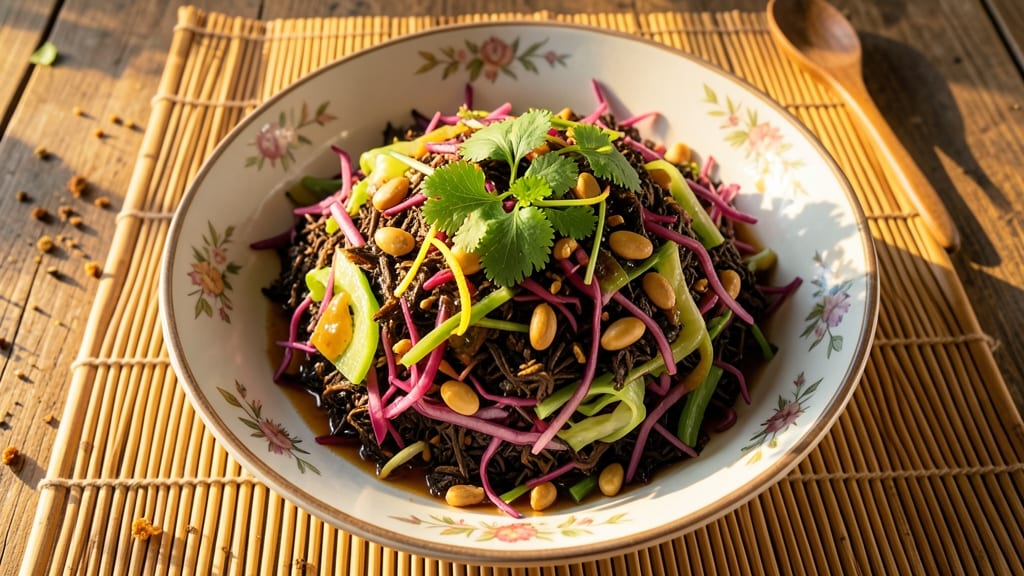
This Burmese tea salad recipe brings a burst of vibrant flavors to your table, blending tender tea leaves with crisp vegetables and a tangy tamarind dressing. 🌿 The dish is rooted in traditional Burmese cuisine, where tea leaves are a staple ingredient, adding a unique earthy depth that pairs perfectly with the sweet-spicy dressing.
It’s a vegetarian-friendly dish packed with texture—crunchy peanuts, fresh herbs, and delicate shredded cabbage—all coming together in a refreshing bite.
The heart of this salad lies in its dressing, where tamarind, lime, and chili create a balance of sweet, sour, and heat. I’ve perfected this recipe to ensure the tea leaves stay tender while absorbing the bold flavors of the dressing without turning mushy.
The salad is simple to prepare but feels special, making it ideal for gatherings or a light yet satisfying meal on its own.
What you’ll end up with is a dish that’s as visually striking as it is delicious—layers of deep green tea leaves, bright vegetables, and golden peanuts all glistening with the glossy tamarind dressing.
The contrast of textures and flavors makes every bite exciting, while the dish remains light enough to enjoy on a warm day or as a palate-cleansing starter.
This recipe is versatile enough to adapt to your taste—add more chili for heat, extra peanuts for crunch, or even a sprinkle of sesame seeds for an extra layer of flavor. Let’s bring the bold, refreshing taste of Burma to your kitchen.
Ingredients for burmese tea salad
Fresh herbs, crisp veggies, and a bold tamarind dressing make this Burmese tea salad shine.
| Ingredient | Amount | Notes |
|---|---|---|
| Assam Tea Leaves ☕ | ½ oz | Loose-leaf, black tea preferred |
| Green Cabbage 🥬 | 4 cups | Shredded, outer leaves removed |
| Red Cabbage 🥬 | 2 cups | Thinly sliced, adds vibrant color |
| Fresh Cilantro 🌿 | ½ cup | Stems removed, chopped fine |
| Fresh Mint Leaves 🌿 | ¼ cup | Chopped, adds bright freshness |
| Roasted Peanuts 🥜 | ½ cup | Crushed lightly, unsalted preferred |
| Tamarind Paste 🍯 | ¼ cup | Unsweetened, or substitute lime juice |
| Lime Juice 🍋 | ¼ cup | Freshly squeezed, seeds removed |
| Fish Sauce 🍶 | 1 tbsp | Vegetarian alternative: coconut aminos |
| Brown Sugar 🍚 | 2 tbsp | Lightly packed, or coconut sugar |
| Red Chili Flakes 🌶️ | 1 tbsp | Adjust for heat preference |
| Sesame Seeds 🌰 | 1 tbsp | Toasted for extra crunch |
| Olive Oil 🫒 | 2 tbsp | Extra-virgin for best flavor |
| Salt 🧂 | ½ tsp | Kosher or sea salt |
| Garlic Cloves 🧄 | 2 cloves | Minced finely for subtle flavor |
The tea leaves are the star here—Assam black tea works best for its robust flavor, but any loose-leaf black tea will do. Local Asian markets usually carry it in small bags, but if you can't find it, Earl Grey is a decent substitute. The cabbage should be crisp, so avoid pre-shredded bags (they wilt fast). For the cilantro and mint, grab the freshest bunches—Mexican or Thai markets often have the best selection. Pro tip: If you can't find tamarind paste, blend tamarind pods with water until smooth—it's worth the effort for that authentic tang.
No tamarind? Lime juice plus a splash of date syrup gets you close, though it won't be identical. The fish sauce is tricky for vegetarians—coconut aminos (like Tamari) is the best swap, but soy sauce works in a pinch (just add a pinch of sugar to balance). Want more crunch? Toast the sesame seeds in a dry pan for 30 seconds until golden—they'll add a nutty depth. The peanuts can be regular or roasted, but avoid salted if you're using coconut aminos (you'll double up on salt). For extra heat, add fresh chili slices on top instead of just flakes.
This salad keeps best in the fridge for 2-3 days, but the tea leaves start to soften after day one. To preserve crispness, store the veggies and tea leaves separately from the dressing until ready to serve. The peanuts and sesame seeds stay fresh for 1 week in an airtight container. For a quick meal prep hack, portion the dressing separately and toss just before eating. The flavors actually improve after sitting for 30 minutes—let it mingle if you can!
Why You'll Love This Recipe
- Here’s what sold me: I already had everything. Tea leaves? Check. Cabbage? Always in the fridge. Cilantro and mint? Grow them in pots on my windowsill. No specialty ingredients, no last-minute grocery runs. And if I make a big batch, it’s cheap enough to feed the family for days. Between us, it’s my go-to when I’m broke or lazy—or, let’s be real, both.
- No Steaming Required: I’ll admit, I was skeptical too—steamed tea leaves? Sounds fussy. But here’s the thing: you just brew the Assam leaves like a pot of tea, then let it cool. No special gadgets, no waiting for hours. The cabbages get tossed in raw, and that’s it. Honestly, the hardest part is remembering to steep it long enough for the deep, malty flavor to bloom.
- Earthy & Bright: Between us, this salad tastes like a party in your mouth. The Assam tea gives it this rich, almost spiced depth—like a cup of chai but in salad form—while the red and green cabbage add that satisfying crunch. Then you hit it with fresh cilantro and mint, and suddenly it’s fresh in the best way. It’s the kind of flavor that makes you reach for seconds without even thinking.
- Lunchbox Hero: I pack this for work all the time. It holds up perfectly for a day or two in the fridge—no soggy greens, no wilted herbs—because the tea-infused dressing keeps everything crisp. Plus, it’s the kind of dish that feels fancy enough for a potluck but simple enough to throw together on a Monday. My coworkers ask for it constantly, and I don’t even have to lie about how easy it is.
Step-by-step instructions for Burmese tea salad
Here's how to assemble this vibrant, crunchy salad with a perfect balance of tangy and savory flavors.
👨🍳 Step 1: Prepare the Tea Infusion
Bring 1 cup of water to a boil in a small saucepan. Remove from heat and add the 0.5 oz Assam tea leaves. Cover and steep for 5 minutes until the water turns a rich amber color. Strain through a fine-mesh sieve into a bowl and let it cool completely to room temperature.
This tea infusion forms the base of your dressing, adding depth and complexity. If you prefer a stronger flavor, you can steep it for an extra 2 minutes, but don't let it cool too quickly—rapid cooling can make the tea taste bitter. The cooled tea should be about ½ cup once strained.
🥘 Step 2: Shred and Combine the Vegetables
Remove the outer leaves from the 4 cups green cabbage and shred it into thin strips using a mandoline or sharp knife. For the 2 cups red cabbage, slice it thinly—about 1/8-inch thick slices work perfectly. Transfer both to a large mixing bowl.
Add the 0.5 cup fresh cilantro and 0.25 cup fresh mint leaves, both chopped finely. Give everything a gentle toss with your hands to distribute the herbs evenly. The vibrant colors should blend beautifully—this is where the salad gets its visual appeal and fresh aroma.
🍳 Step 3: Make the Tangy Tamarind Dressing
In a small bowl, whisk together the cooled tea infusion, 0.25 cup tamarind paste, 0.25 cup lime juice, 1 tbsp fish sauce, 2 tbsp brown sugar, 1 tbsp red chili flakes, and 2 cloves minced garlic. Start with a small amount of the tea infusion and add more as needed to reach a smooth, pourable consistency.
The tamarind paste should dissolve completely—if it's too thick, add 1-2 tablespoons of water to thin it out. Taste and adjust the balance: you want the sweetness of the brown sugar and tamarind to contrast with the sour lime and salty fish sauce. The chili flakes should add just a hint of heat without overwhelming the other flavors.
🥘 Step 4: Assemble and Toss the Salad
Pour the dressing over the cabbage mixture and toss gently but thoroughly with your hands. The cabbage should be evenly coated, but don't overmix or it'll get soggy. Sprinkle in the 0.5 cup roasted peanuts (lightly crushed) and 1 tbsp sesame seeds, tossing just until distributed.
Add the remaining 2 tbsp olive oil and the 0.5 tsp salt, then give one final toss. The salad should look glossy and inviting, with peanuts peeking through the vibrant cabbage layers. Let it sit for 10 minutes before serving—this allows the flavors to meld together beautifully.
🍽️ Step 5: Serve with Fresh Garnishes
Transfer the salad to a large serving platter and garnish with additional cilantro and mint leaves if desired. Serve immediately while the cabbage is still crisp and the dressing is bright. This salad pairs perfectly with grilled meats, steamed rice, or as a refreshing standalone dish.
For extra flair, drizzle a little more dressing around the edges of the platter before serving. The contrast of warm peanuts, cool cabbage, and the tangy dressing creates a truly memorable eating experience that's both satisfying and balanced.
Pro Tips For Making Burmese Tea Salad
- STEEP TEA LONG ENOUGH: Assam tea needs 5-7 minutes to steep—any less and the salad will taste like weak Earl Grey. I used to rush it, thinking more tea bags meant stronger flavor, but that just makes it bitter. Use one good-quality bag per cup and let it sit.
- SHRED CABBAGE FINE: Thin, even slices (about 1/8-inch) ensure the cabbage soaks up the tea dressing properly. I learned this after seeing my first batch look like a sad coleslaw. Use a sharp knife or mandoline—your wrists will thank you later.
- SALT THE TEA FIRST: Add salt to the hot tea before the dressing ingredients—this helps dissolve it completely. I skipped this once and ended up with grainy, uneven seasoning. A pinch of salt early makes the whole dish taste more cohesive.
- CHILL BEFORE SERVING: Let the salad sit in the fridge for at least 30 minutes after dressing—this lets the flavors meld. I was impatient and served it immediately, and it tasted disjointed. Patience here makes the difference between "meh" and "wow."
Pro cooking tips for this recipe
Tea Leaf Prep
The key to tender tea leaves is proper steeping—don’t overdo it! Use Assam black tea and steep for exactly 5 minutes in 1 cup boiling water. Over-steeping makes the leaves bitter, while under-steeping weakens their flavor.
Let the infusion cool completely before using it in the dressing. I like to strain it through a fine-mesh sieve into a clean bowl to remove any loose leaves or debris. 🌿
Cabbage Texture
For the crispiest cabbage, use a mandoline slicer set to 1/8-inch thickness. If you don’t have one, a sharp chef’s knife works—just be consistent with your cuts. Remove the tough outer leaves first, and slice the cabbage against the grain for easier chewing.
Toss the shredded cabbage with 1 tsp lime juice immediately after slicing to slow oxidation and keep it vibrant. 🥬
Dressing Balance
The tamarind dressing is where the magic happens—taste as you go! Start with 0.25 cup tamarind paste and 0.25 cup lime juice, then adjust the brown sugar and fish sauce to hit that perfect sweet-sour-salty balance.
If using coconut aminos, add 1 tsp extra sugar to compensate for the lower salt content. Thin with 1 tbsp water if needed, but avoid over-diluting—the dressing should coat the salad without making it soggy. 🍯
Peanut Crunch
Lightly crush the roasted peanuts with the flat side of a knife or rolling pin—just enough to break them into small clusters, not a fine powder. Toast the sesame seeds in a dry pan for 30 seconds until golden for extra flavor.
Add these last to the salad so they stay crunchy. For a smoky twist, swap half the peanuts for toasted cashews. 🥜
Flavor Resting
Never skip the 10-minute rest before serving! This lets the cabbage absorb the dressing evenly and the flavors meld together. If prepping ahead, store the dressing and salad separately in the fridge—combine just before serving to keep everything crisp.
The salad tastes even better after sitting for 30 minutes, so plan accordingly. ✨
Garnish Like a Pro
Finish with fresh cilantro and mint leaves for a pop of color and brightness. For extra flair, drizzle a little extra dressing around the platter’s edges or sprinkle with crushed red pepper flakes for heat lovers.
Serve on a large platter to showcase the vibrant layers—this salad is as beautiful as it is delicious! 💫
Nutrition facts
Frequently asked questions
Can I substitute tamarind paste in this recipe?
Yes! If you can't find tamarind paste, mix 0.25 cup lime juice with 1 tbsp date syrup or honey for a similar tangy-sweet balance. For extra authenticity, blend 1 tbsp tamarind pods with 2 tbsp hot water until smooth—this works best but requires more prep time.
How do I keep the cabbage crisp for longer?
Store the shredded cabbage and dressing separately in airtight containers. Toss them together only when ready to serve. For extra crispness, add 1 tsp lime juice to the cabbage right after slicing—this slows wilting. The salad stays fresh for 2-3 days if kept chilled.
Is this salad spicy? Can I make it milder?
The recipe includes 1 tbsp chili flakes for a gentle heat. For a milder version, reduce to 0.5 tbsp or omit entirely. Add chili only after tossing the salad to control the heat level. Fresh chili slices can also be added as a garnish for customizable spice.
What’s the best way to serve this salad?
This vibrant salad works as a refreshing starter, side dish, or even a light lunch. Pair it with steamed jasmine rice or grilled proteins like chicken or tofu. For presentation, serve on a large platter with extra herbs and peanuts scattered on top. The colors make it perfect for gatherings!
Can I make this ahead of time?
Prep the dressing and salad components separately up to 2 days ahead. Store the cabbage and tea leaves in one container with a paper towel to absorb moisture, and keep the dressing in another. Combine just before serving to maintain crispness. The flavors actually improve after 30 minutes of resting!