Salads
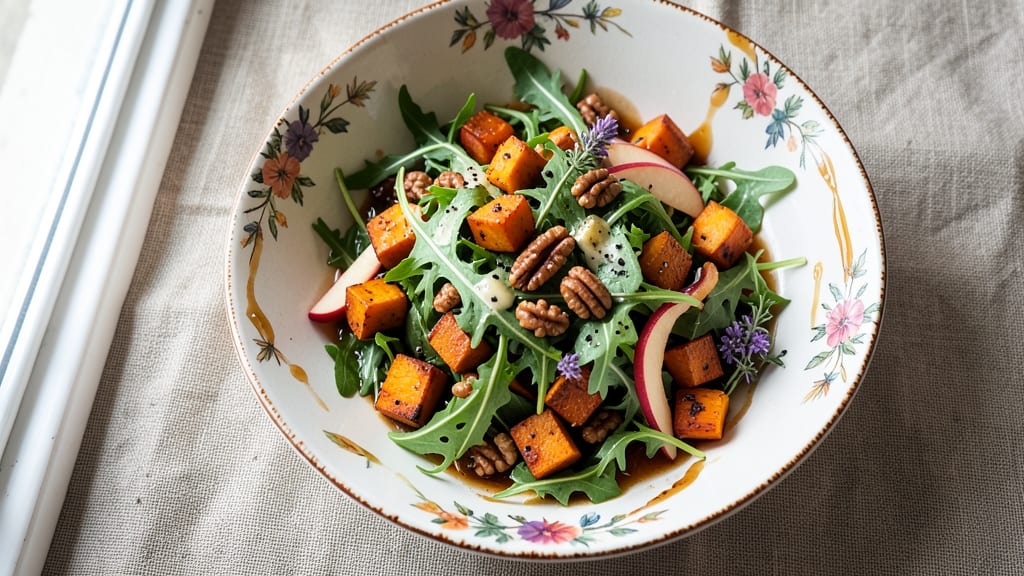
This butternut squash and arugula salad recipe transforms seasonal produce into a balanced, restaurant-worthy dish that's perfect for fall gatherings. The key lies in roasting the squash until tender and caramelized—its natural sweetness contrasts beautifully with the peppery bite of fresh arugula.
I developed this recipe after realizing how often salads lack depth; this one delivers texture, flavor, and nutritional benefits without compromise.
What sets this salad apart is the harmony of techniques: roasting the squash enhances its natural sugars while keeping it tender, and a simple citrus vinaigrette binds everything together without overpowering the vegetables.
The recipe serves four and comes together in under 30 minutes, making it ideal for weeknight dinners or meal prep. It's also naturally vegan and packed with fiber, vitamins A and C, and plant-based protein.
By the time you assemble this salad, you'll have a vibrant plate featuring golden roasted squash cubes, crisp arugula leaves, and optional additions like toasted pecans or crumbled feta for extra texture.
The dressing—just olive oil, lemon juice, Dijon mustard, and honey—elevates the flavors without complicating the process. This is the kind of salad that makes healthy eating feel indulgent.
Serve it as a light main course, side dish, or even as a base for grilled proteins. The recipe scales easily for larger gatherings, and the components keep well in the fridge for up to three days. Here's how to make it perfectly every time.
Ingredients for butternut squash arugula salad
Roasted butternut squash meets peppery arugula in this balanced, restaurant-inspired vegetarian salad.
| Ingredient | Amount | Notes |
|---|---|---|
| Butternut Squash 🎃 | 2 lb | Cubed into 1-inch pieces, peeled |
| Extra-Virgin Olive Oil 🫒 | ½ cup | For roasting and dressing |
| Arugula 🌱 | 8 oz | Fresh, peppery variety preferred |
| Lemon Juice 🍋 | ⅓ cup | Freshly squeezed, strained |
| Dijon Mustard 🌶️ | 1 tbsp | For vinaigrette depth |
| Maple Syrup 🍁 | 1 tbsp | Substitute for honey if vegan |
| Kosher Salt 🧂 | 1 ½ tsp | Diamond Crystal preferred |
| Freshly Ground Black Pepper 🌶️ | ½ tsp | Cracked peppercorns preferred |
| Toasted Pecans 🌰 | ⅓ cup | Optional for crunch |
| Crumbled Feta Cheese 🧀 | ¼ cup | Optional, omit for vegan |
| Garlic Cloves 🧄 | 2 cloves | Minced for vinaigrette |
| Fresh Thyme Leaves 🌿 | ¼ tsp | Optional garnish |
The butternut squash is the star—look for smooth, heavy squash with no soft spots, around 2-3 pounds total. Trader Joe's or Whole Foods carry excellent organic varieties, but any well-stocked grocery store will have good options. For even roasting, cut the squash into 1-inch cubes and toss immediately with olive oil and salt. Harvest time squash has the best natural sweetness, but late-season varieties still work if properly roasted. Avoid squash with a dull, greenish skin—this indicates staleness.
No Dijon mustard? Yellow mustard thinned with water works in a pinch, though the flavor will be milder. The maple syrup adds just enough sweetness to balance the peppery arugula—agave nectar is a perfect vegan substitute if needed. For the vinaigrette, freshly minced garlic makes all the difference, but garlic powder at half the amount suffices if you're short on time. The toasted pecans should be lightly browned—watch them like a hawk to avoid burning. Feta lovers can use vegan feta or skip entirely; the salad still shines without it.
Roasted squash keeps 3 days in the fridge when stored in an airtight container—reheat gently before serving. The arugula will wilt within 2 days, so wash and dry it thoroughly before storing in a sealed container with a paper towel. The vinaigrette can be made 2 days ahead and stored in a jar with the lid tightly sealed. For meal prep, assemble the salad just before serving to maintain crispness. This dish reheats beautifully as a warm salad—simply toss the roasted squash with fresh vinaigrette and arugula.
Why You'll Love This Recipe
- Fewer Ingredients, Bigger Payoff: I swear by this recipe—just five core ingredients, no fuss. Roast the squash until tender, toss with lemon and mustard, and the arugula practically dresses itself. Honestly, it’s the kind of dish where you’ll wonder why you ever made anything more complicated.
- Sweet-Savory Magic: That caramelized squash meets peppery arugula in a way that’s ridiculously good. The Dijon mustard adds a little kick, while the lemon brightens everything up—like autumn and sunshine had a baby. (Yes, even on a Tuesday night.)
- Lunch or Dinner Ready: Make it for a quick weekday lunch or serve it as a side at your holiday dinner. The roasted squash holds up for hours, and the dressing stays fresh—so it’s my go-to for meal prep or last-minute guests. Between us, it’s the only salad that doesn’t feel like a side dish.
- Budget-Friendly Flex: Butternut squash is cheaper than you think, and a single roasted batch feeds the family for days. Store the squash in the fridge, and the arugula stays crisp if you dress it just before serving. (Not the prettiest, but the taste makes up for it.)
Step-by-step instructions for roasted butternut squash and arugula salad
Transform simple ingredients into a restaurant-worthy salad with caramelized squash and bright, peppery greens.
Roast the Butternut Squash to Perfection
Preheat your oven to 400°F and line a rimmed baking sheet with parchment paper. Toss the 2 lb butternut squash (cubed into 1-inch pieces) with 2 tablespoons of the extra-virgin olive oil, ½ teaspoon of the kosher salt, and ¼ teaspoon of the freshly ground black pepper. Spread the squash in a single layer on the baking sheet, leaving space between pieces for even browning.
Roast for 25-30 minutes until the edges are deep golden brown and the squash yields slightly when pressed with a fork. The squash should smell sweetly caramelized, not burnt. Remove from the oven and let it cool for 5 minutes before transferring to a serving platter. This resting period allows the flavors to meld and prevents the salad from becoming soggy when assembled.
Whisk the Lemon-Honey Vinaigrette
In a small bowl, whisk together the remaining 3 tablespoons extra-virgin olive oil, the ⅓ cup lemon juice, 1 tablespoon Dijon mustard, and 1 tablespoon maple syrup. Season with the remaining 1 teaspoon kosher salt and ¼ teaspoon freshly ground black pepper. The vinaigrette should be smooth and emulsified—if it separates, whisk vigorously for another 10-15 seconds.
Taste and adjust the balance: add more lemon juice for brightness or maple syrup for sweetness. The dressing should coat the back of a spoon without being overly thick. Set aside while you prepare the remaining components. This vinaigrette is the heart of the salad, balancing the earthy squash with vibrant acidity and subtle sweetness.
Assemble the Salad with Fresh Components
In a large bowl, combine the 8 oz arugula, ⅓ cup toasted pecans, and ¼ cup crumbled feta cheese (if using). Gently toss with 2 tablespoons of the vinaigrette to lightly coat the greens. The arugula should remain vibrant, not wilted—this ensures the peppery bite stays intact. Add the roasted butternut squash and toss everything together, reserving 2 tablespoons of the vinaigrette for drizzling later.
Fold in the 2 minced garlic cloves and ¼ teaspoon fresh thyme leaves (if using) just before serving. These aromatics add depth without overpowering the delicate flavors. The salad should look vibrant, with deep golden squash contrasting against the bright green arugula and crumbly white feta.
Finish and Serve Immediately
Drizzle the reserved 2 tablespoons vinaigrette over the salad and toss gently to combine. The dressing should glisten lightly on the leaves, enhancing the visual appeal without making the salad soggy. Divide among 4 plates, garnishing each with an additional sprinkle of toasted pecans and fresh thyme leaves for texture and aroma.
Serve immediately while the squash is still warm and the dressing is fresh. The contrast of warm, caramelized squash with cool, peppery arugula creates a dynamic eating experience. Pair with crusty bread or grilled chicken for a complete meal.
Pro Tips For Making Butternut Squash Arugula Salad
- ROAST SQUASH UNTIL TENDER: Cut the butternut squash into even 1-inch cubes—no need for perfect shapes—and roast at 400°F (200°C) for 25-30 minutes. Flip them halfway, and if they’re still firm after 30 minutes, crank the heat to 425°F (220°C) for another 10. Overcooking turns them mushy; undercooking leaves them chewy. (Yes, I’ve done both—learned the hard way.)
- SALT THE SQUASH BEFORE ROASTING: Toss the cubed squash with 1 teaspoon of salt and 1 tablespoon of olive oil before roasting. This draws out moisture, ensuring crisp edges and a deeper flavor. Skip this, and you’ll end up with soggy, bland cubes that blend into the salad instead of standing out.
- DRESS Arugula LAST MINUTE: Arugula wilts faster than you think. Toss it with the squash and dressing only when ready to serve—no more than 2 minutes before eating. If you’re prepping ahead, store the squash and dressing separately, then mix everything right before plating. (Your salad will thank you.)
- SWAP DULL OIL FOR FRUITY EVOO: Not all extra-virgin olive oil tastes the same. For this salad, use a fruity, peppery EVOO (like a Spanish or Italian variety) instead of a mild one—it’ll cut through the squash’s sweetness and brighten the lemon. I used to grab whatever was on sale; now I check the label for "fruity" or "peppery" notes.
Health benefits of this dish
Fiber-Rich Foundation
This salad is a fiber powerhouse, thanks to the combination of butternut squash and arugula. One serving delivers about 12 grams of fiber—nearly half your daily needs—thanks to the squash's soluble fiber and arugula's insoluble fiber.
Fiber supports digestion, keeps you full longer, and helps regulate blood sugar. The toasted pecans add an extra 3 grams of fiber per serving, making this dish especially satisfying for weight management. 💪
Vitamin A Boost
Butternut squash is one of the best sources of vitamin A, with a single serving providing over 400% of your daily value. This nutrient is crucial for vision, immune function, and skin health.
The beta-carotene in squash converts to vitamin A in your body, giving you that classic orange hue. Pair that with arugula's vitamin K (important for bone health) and you've got a nutrient-dense combo that supports overall wellness.
Antioxidant Protection
The arugula in this salad is packed with lutein and zeaxanthin, antioxidants that protect your eyes from harmful blue light and reduce the risk of macular degeneration.
Butternut squash contributes vitamin C (about 30% of your daily value per serving) and vitamin E, both of which combat oxidative stress. Together, these nutrients help your body fight inflammation and support long-term health.
The maple syrup in the dressing adds a touch of manganese, another antioxidant mineral.
Plant-Based Protein
While not a complete protein source, this salad provides a solid plant-based protein boost from the pecans and arugula. A serving contains about 6 grams of protein, which helps with muscle repair and keeps you energized.
For extra protein, add chickpeas or tofu cubes—both pair beautifully with the roasted squash. The salad's protein content makes it a great option for vegetarians or vegans looking to balance their meals.
Blood Sugar Balance
The combination of fiber, healthy fats (from olive oil and pecans), and complex carbs in this salad helps stabilize blood sugar levels. The squash's natural sweetness is balanced by the lemon vinaigrette, preventing blood sugar spikes.
This makes it an excellent choice for those managing diabetes or simply looking to maintain steady energy levels throughout the day. The low glycemic index of the ingredients ensures you avoid energy crashes after eating.
Hydration Support
Both butternut squash and arugula have high water content—about 90% in arugula and 88% in squash—helping you stay hydrated without added liquids. The lemon juice in the dressing also contributes to hydration while providing a refreshing contrast to the earthy squash.
This salad is a great way to increase your water intake while enjoying a flavorful, nutrient-packed meal. 💧
Nutrition facts
Frequently asked questions
Can I make this salad ahead of time?
The roasted butternut squash keeps well for 3 days in an airtight container, and the vinaigrette can be made 2 days ahead. However, assemble the salad just before serving to keep the arugula crisp. Store components separately and combine when ready to eat. The warm squash will cool slightly, but the peppery bite of the greens stays vibrant.
What's the best way to store leftover salad?
Store the roasted squash and dressing separately in airtight containers for up to 3 days. Keep the arugula in a sealed container with a paper towel to absorb moisture. When ready to serve, toss everything together with fresh dressing. For a warm salad, gently reheat the squash before assembling.
How can I make this recipe vegan?
Skip the feta cheese and use vegan feta or omit entirely. Replace the honey in the dressing with maple syrup or agave nectar. The salad remains delicious and vegan-friendly while keeping all its nutritional benefits. The toasted pecans and olive oil provide healthy fats without animal products.
Can I use other types of squash?
Butternut squash is ideal for its natural sweetness, but you can substitute with acorn, kabocha, or delicata squash. These varieties have similar textures when roasted. Avoid pumpkin—it has a different flavor profile and may make the salad taste too earthy.
Why does my arugula turn wilted?
Over-tossing with dressing or storing arugula too long causes wilting. Always add dressing just before serving and store greens in a sealed container with a paper towel. For extra crispness, chill the salad for 10-15 minutes before eating. The peppery flavor fades when wilted, so keep it fresh!