
Sauces & Condiments
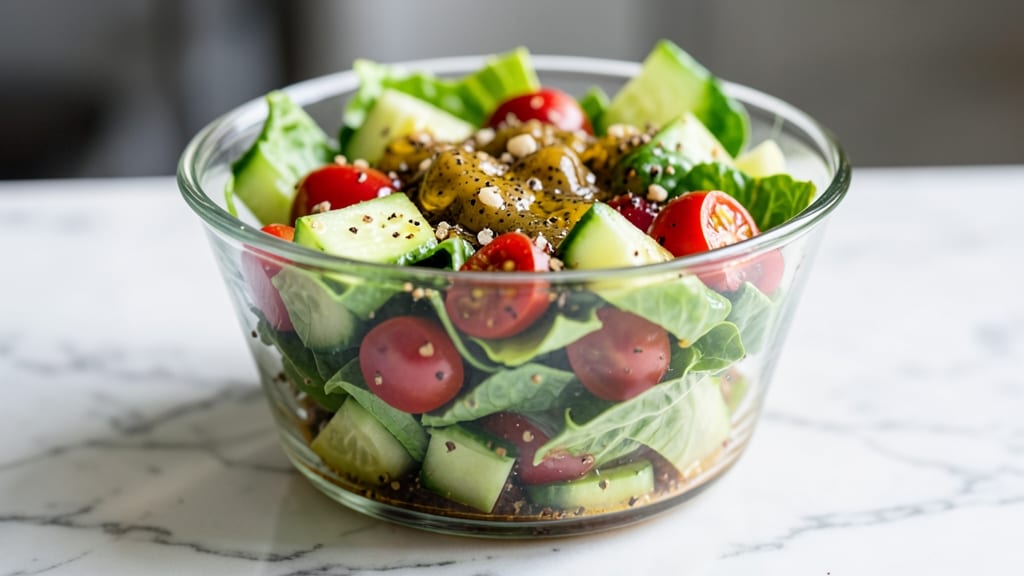
This Greek salad dressing with Dijon mustard transforms ordinary greens into a vibrant, tangy masterpiece that clings to every leaf. 💛 The secret lies in balancing sharp Dijon with bright lemon and fragrant oregano, creating a dressing that's both complex and effortlessly elegant.
I developed this recipe after years of testing—it's the one that finally made my Greek salads taste like they came straight from a Mediterranean taverna.
The foundation is simple: high-quality extra-virgin olive oil meets red wine vinegar for acidity, while Dijon mustard adds depth that store-bought versions can't match. Fresh garlic and oregano provide that signature Mediterranean aroma, and a touch of honey balances the tang.
What makes this dressing special is how it enhances rather than overpowers the salad's natural flavors—lettuce stays crisp, cucumbers bright, and tomatoes sing.
What you'll achieve is a dressing that's rich enough to coat every ingredient yet light enough to let the fresh vegetables shine through. The Dijon mustard creates a subtle complexity that makes this dressing stand out from basic vinaigrettes, while the lemon keeps it refreshingly bright.
This isn't just dressing—it's the flavor bridge between your salad's components, turning a simple meal into something memorable.
The best part? It comes together in just minutes with ingredients you likely already have on hand. Perfect for Greek salads, grilled meats, or even as a marinade. Let's create this bright herb zing that will elevate your salads to restaurant-quality levels.
Ingredients for greek salad dressing recipe with dijon mustard
Nine simple ingredients create a dressing so vibrant it turns salads into Mediterranean masterpieces.
| Ingredient | Amount | Notes |
|---|---|---|
| Extra-Virgin Olive Oil 🫒 | ¾ cup | High-quality, fruity, and peppery |
| Red Wine Vinegar 🍷 | ¼ cup | Dry variety for tanginess |
| Dijon Mustard 🌶️ | 1 tbsp | Sharp and smooth preferred |
| Fresh Lemon Juice 🍋 | 2 tbsp | Freshly squeezed for brightness |
| Garlic Cloves 🧄 | 2 cloves | Freshly minced for aroma |
| Dried Oregano 🍃 | 1 tsp | Crumbled for authentic flavor |
| Raw Honey 🍯 | 1 tbsp | Light floral variety preferred |
| Salt 🧂 | ½ tsp | Kosher or sea salt |
| Freshly Ground Black Pepper 🌶️ | ¼ tsp | Freshly cracked for bite |
The olive oil is non-negotiable—Trader Joe’s or Whole Foods carry the best fruity, peppery varieties that make this dressing sing. Red wine vinegar? Balsamic vinegar works in a pinch, but the acidity is sharper with red wine. Dijon mustard should be smooth and sharp—Maille or Amora are my go-tos. Fresh garlic cloves make all the difference; roast them first if you want a sweeter note. Oregano is best from Penzeys or bulk bins—it loses flavor fast once opened. And that honey? Local, raw honey adds subtle floral notes that store-bought can't match.
No Dijon? Whole-grain mustard thinned with water works, though it won’t be as smooth. Short on honey? Maple syrup or agave are great swaps—just reduce the amount slightly. Vinegar substitute? Lemon juice at double the amount, but your dressing will taste more citrus-forward. Fresh oregano? Dried works at half the quantity, but it’s not the same. The garlic can be roasted for a milder flavor—just bake it at 400°F for 10 minutes before mincing. And if you’re making this ahead, store the vinegar and honey separately until ready to mix.
This dressing keeps beautifully—1 week in the fridge if stored in an airtight jar. Shake before each use, as the oil and vinegar will separate. For extra longevity, add a splash of lemon juice when storing. I like to make a double batch—one for salads, one for grilled chicken. The flavors meld even better after a day in the fridge, so let it sit for at least 30 minutes before serving. Perfect for meal prep—just grab and shake.
Why You'll Love This Recipe
- Five-Ingredient Magic: I swear by this combo—just oil, vinegar, mustard, lemon, and garlic. That’s it. No measuring cups, no fancy gadgets, just a whisk and a jar. The mustard cuts through the richness while the lemon keeps it bright, and honestly? I’ve never met a dressing that’s this foolproof.
- Tangy Kick: Between us, the Dijon mustard and red wine vinegar team up like old friends—sharp, bold, and just a little dangerous. That minced garlic? It sneaks in warmth without overpowering, so you get this perfect balance of zing and depth. Drizzle it on anything, and suddenly, it tastes elevated.
- Meal Prep MVP: This dressing lasts in the fridge for weeks—yes, really. I make a big batch on Sunday, toss it in salads, drizzle it over grilled chicken, even mix it into hummus. It’s my secret weapon for lazy nights when I don’t want to think about cooking. Plus, it’s cheap—just a splash of olive oil and you’re golden.
- Weeknight Hero: No chopping, no waiting, no stress. I’ll be real: some nights, I grab a jar, dump in the ingredients, and shake. Done. The lemon juice keeps it fresh, so even if you forget to eat it right away, it’s still good. And because it’s so versatile, I never run out of reasons to use it up.
Step-by-step instructions for Greek salad dressing with Dijon mustard
This bright, tangy dressing comes together in minutes with simple ingredients.
🍳 Step 1: Whisk Together the Liquids
In a medium bowl, combine the 0.75 cup extra-virgin olive oil with the 0.25 cup red wine vinegar. Start with just these two ingredients—they form the base of your dressing. Give them a quick whisk to break up any oil clumps, but don't worry about getting everything perfectly smooth yet.
Here's the thing—olive oil and vinegar don't naturally mix, so you'll need to whisk vigorously later. But starting with these two creates a smooth foundation that's easier to emulsify. If you're using a high-quality olive oil with natural pepperiness, you'll already notice that bright, fruity flavor coming through.
👨🍳 Step 2: Add Mustard, Honey, and Lemon
Next, stir in the 1 tablespoon Dijon mustard, 1 tablespoon raw honey, and 2 tablespoons fresh lemon juice. The mustard acts as an emulsifier, helping to blend the oil and vinegar. The honey and lemon juice add that perfect balance of sweetness and acidity that makes Greek dressing so addictive.
I like to add these ingredients one at a time, whisking gently after each addition. The Dijon mustard should dissolve completely—if you see any lumps, whisk a bit longer. The lemon juice will make the mixture look slightly cloudy, but that's normal and actually indicates freshness. This is where the dressing starts to take on its signature tangy-sweet character.
🔪 Step 3: Incorporate Garlic and Oregano
Mince the 2 cloves garlic finely and add them to the bowl along with the 1 teaspoon dried oregano. The garlic should be minced, not chopped—you want those tiny particles to distribute evenly. Crumble the oregano between your fingers to break up any clumps before adding it.
Give everything a good stir to combine. The garlic will add a subtle, aromatic depth, while the oregano brings that classic Mediterranean herb flavor. Don't worry if the garlic seems to disappear into the dressing—it'll still infuse the entire mixture. This is where the dressing gets its authentic Greek flavor profile, so don't skip this step.
🥘 Step 4: Season and Emulsify
Add the 0.5 teaspoon salt and 0.25 teaspoon freshly ground black pepper, then whisk vigorously for about 1 minute. You'll notice the dressing start to thicken slightly as the mustard begins to work its magic as an emulsifier. This is the critical step—keep whisking until the dressing looks smooth and creamy, not separated.
Real talk: If it looks like it's not coming together, don't panic. Add 1-2 teaspoons of warm water and whisk again. The warmth helps the oil and vinegar blend more easily. You're aiming for a dressing that's thick enough to coat a spoon but still pourable. The perfect consistency should be like heavy cream—smooth and velvety.
⏰ Step 5: Rest and Adjust
Let the dressing sit at room temperature for 10 minutes before using. This resting time allows all the flavors to meld together beautifully. After resting, give it one final taste and adjust the seasoning if needed—maybe a pinch more salt or a splash more lemon juice to balance the flavors.
This dressing keeps well in the refrigerator for up to 1 week, though I find it's best used within 3-4 days when the flavors are at their peak. Before using, give it a good shake or whisk—it might separate slightly when refrigerated, but it'll come back together perfectly. The dressing should be bright, tangy, and just sweet enough to complement the crispness of your greens.
Pro Tips For Making Greek Salad Dressing Recipe With Dijon Mustard
- WHISK IN STAGES: Start with the mustard and vinegar first—this prevents a greasy mess when you add the oil later. I learned this the hard way after trying to dump everything in at once and ending up with a gloppy, unbalanced dressing.
- USE COLD GARLIC: Mince the garlic cloves right before mixing and keep them refrigerated until you add them to the dressing. Warm garlic turns bitter fast, and you’ll taste the difference in the final flavor—trust me, it’s noticeable.
- SALT THE MUSTARD: Mix a pinch of salt into the Dijon mustard before whisking it with the vinegar. This cuts through the sharpness and lets the garlic and lemon shine without overpowering them. (Yes, even if you’re impatient like me.)
- LEMON FIRST, OIL LAST: Add the lemon juice and vinegar before the olive oil—this keeps the dressing from separating when you store it. If you reverse the order, the acid and oil will fight each other, and you’ll end up with a split jar.
Troubleshooting great greek salad dressing recipe with dijon mustard
Oil-Vinegar Separation
If your dressing looks curdled or has a distinct oil layer after mixing, don't toss it! This happens when the mustard fails to emulsify properly. First, whisk vigorously for another 2-3 minutes—the motion helps break up oil droplets.
For stubborn separation, add 1 teaspoon of warm water and whisk until smooth. Pro tip: Use a handheld immersion blender for 10-15 seconds if whisking doesn't work. The key is patience—keep blending until it reaches a creamy consistency. 💛
Mustard Lumps
Dijon mustard sometimes clumps when added to the dressing, especially if it's too thick. To fix this, whisk in 1 teaspoon of warm water while stirring continuously. For stubborn lumps, mix the mustard with 1 tablespoon of vinegar first, then add it to the oil.
If using whole-grain mustard, blend it with 2 tablespoons of olive oil before incorporating into the dressing. The goal is to create a smooth base before combining all ingredients. 🌶️
Overly Tangy Flavor
If the dressing tastes too sharp or acidic, balance it with more honey or a splash of olive oil. Add ½ teaspoon of honey at a time until the tang mellows. For extra richness, stir in 1 teaspoon of olive oil—this also helps re-emulsify if the dressing separated.
If the problem persists, reduce the vinegar by 1 tablespoon next time and replace it with lemon juice, which is slightly sweeter. Taste as you go! ✨
Weak Garlic Flavor
If the garlic taste is faint, use 1 extra clove next time or let the minced garlic sit for 5 minutes before adding it to the dressing. For a stronger aroma, lightly toast the garlic in a dry pan for 30 seconds before mincing.
If you're sensitive to raw garlic, try roasting it at 400°F for 10 minutes—this mellows the flavor while keeping its sweetness. Freshly ground black pepper also enhances garlic's impact, so don't skip that step. 🧄
Dressing Too Thick
If your dressing is too thick to pour, thin it with 1-2 teaspoons of warm water or a splash of vinegar. For a smoother texture, whisk in ½ teaspoon of olive oil—this also helps re-emulsify.
If the dressing is still too thick, try making it again with slightly less mustard (½ tablespoon instead of 1 tablespoon). The ideal consistency should coat the back of a spoon but still drizzle easily over salad. 💡
Nutrition facts
Frequently asked questions
Can I use this dressing on other dishes besides Greek salad?
This bright herb dressing works beautifully on grilled chicken, roasted vegetables, or even as a marinade for seafood. The Dijon mustard and lemon add enough acidity to tenderize proteins, while the olive oil keeps everything moist. For a bolder flavor, try drizzling it over warm pita bread with olives.
What if I don't have Dijon mustard?
Use 1 tablespoon whole-grain mustard mixed with 1 teaspoon water to thin it, or swap for 1 tablespoon yellow mustard. For a smoother texture, blend the mustard with 1 tablespoon olive oil first. The flavor will be slightly different but still delicious—just more textured.
How do I make this dressing less tangy?
Reduce the vinegar by 1 tablespoon and increase the honey to 1.5 tablespoons for a sweeter balance. Alternatively, stir in ½ teaspoon more olive oil—this adds richness and helps mellow the acidity. Taste as you go! The dressing should complement, not overpower, your salad's flavors.
Can I make this dressing ahead of time?
Yes! Store the dressing in an airtight jar in the fridge for up to 1 week. Before using, shake or whisk vigorously—the oil and vinegar may separate slightly. Let it sit at room temperature for 10 minutes before serving so the flavors meld. The longer it rests, the better the taste!
Why does my dressing look curdled?
This happens when the mustard fails to emulsify. Whisk vigorously for 2-3 minutes or use a handheld blender for 10-15 seconds. If it's still thick, add 1 teaspoon warm water. The dressing should become smooth and creamy—just like it should be!