Side Dishes
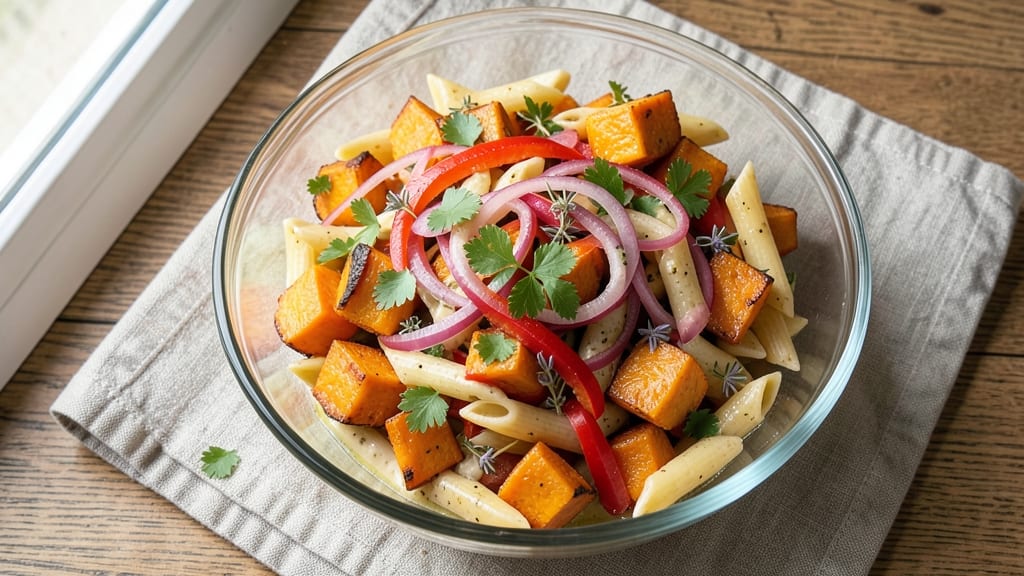
This butternut squash pasta salad transforms autumn produce into a restaurant-worthy side dish that balances sweet caramelized squash with herby crunch and bright acidity. 💛 The key lies in roasting the squash until tender and golden—its natural sweetness develops into a rich, almost honey-like flavor that pairs perfectly with earthy herbs and tangy dressing.
What makes this recipe special is how it elevates simple ingredients into something sophisticated, without requiring advanced techniques.
Start with cubed butternut squash roasted until caramelized at the edges, then toss it with al dente pasta, crisp vegetables, and a zesty lemon-herb dressing. The texture contrast—creamy squash against crispy roasted red peppers and fresh herbs—creates a satisfying bite in every forkful.
This salad holds up beautifully for meal prep, making it ideal for busy weeks when you still want flavorful, seasonal dishes on the table.
What you’ll end up with is a vibrant, hearty salad that’s as visually appealing as it is delicious—think deep oranges from the squash, bright greens from fresh parsley, and pops of red from roasted peppers.
The dressing ties everything together with a perfect balance of tangy, savory, and slightly sweet notes, ensuring every bite is harmonious. It’s the kind of dish that feels indulgent yet light, making it a standout side for holidays or a satisfying vegetarian main.
For extra depth, add toasted pecans or pepitas for crunch, or swap the feta for vegan cheese to keep it plant-based. Serve it warm or at room temperature—either way, this salad delivers bold autumn flavors that will have everyone asking for seconds. Let’s get started!
Ingredients for butternut squash pasta salad
Roasted squash and al dente pasta come together with bright herbs for this autumn favorite.
| Ingredient | Amount | Notes |
|---|---|---|
| Butternut Squash 🎃 | 2 cups | Cubed, peeled, seedless |
| Penne Pasta 🍝 | 12 oz | Al dente cooked, room temp |
| Red Onion 🧅 | ½ cup | Diced small, about 1/2 medium |
| Red Bell Pepper 🌶️ | ½ cup | Diced, roasted for sweetness |
| Fresh Parsley 🌿 | ¼ cup | Chopped, stems removed |
| Fresh Thyme 🌿 | 1 tbsp | Chopped, leaves only |
| Extra-Virgin Olive Oil 🫒 | ¼ cup | For roasting and dressing |
| Lemon Juice 🍋 | ¼ cup | Freshly squeezed |
| Dijon Mustard 🍯 | 1 tbsp | For dressing tang |
| Maple Syrup 🍯 | 1 tbsp | For subtle sweetness |
| Salt 🧂 | 1 ½ tsp | Kosher or sea salt |
| Black Pepper 🌶️ | ½ tsp | Freshly ground |
| Crumbled Feta Cheese 🧀 | ½ cup | Optional for tangy bite |
| Toasted Pecans 🥜 | ¼ cup | Chopped for crunch |
The butternut squash is the star—look for firm, heavy squash with no soft spots. Costco or Trader Joe's usually have good organic options. Cut it in even cubes so it roasts uniformly. For the pasta, penne holds up best—it's hearty enough to stand up to the roasted veggies. Fresh herbs make all the difference here, so grab them last at the grocery store. The feta? Kalamata olives if you want extra flavor, but any crumbled feta works. Toast your pecans in a dry pan for 3-4 minutes until fragrant—don't walk away, they burn fast.
No butternut squash? Sweet potato cubes work in a pinch, but the flavor's different. Skip the feta for vegan? Vegan feta or omit entirely—the dressing still packs flavor. Fresh herbs wilt fast, so store them in a damp paper towel in a sealed container for up to 5 days. The dressing keeps for 5 days in the fridge, but the squash is best eaten fresh. For extra crunch, swap pecans for toasted pepitas or sunflower seeds. The roasted red peppers can be jarred (drained) if you're short on time—look for the ones packed in oil for better flavor.
This salad tastes even better the next day—the flavors meld perfectly after resting. Store components separately: pasta, squash, and veggies in one container, dressing in another. Toss everything together when ready to eat. Keeps 4-5 days refrigerated. For meal prep, portion into individual containers with a small dressing packet—just shake to combine. Freezes for 2 months, but texture changes slightly. I always make double batches—leftovers make great lunchboxes.
Why You'll Love This Recipe
- I swear by this trick: just spiralize the squash raw, toss it in warm pasta water for 2 minutes, and it gets that silky texture without extra steps. The onions and peppers add color but barely any chopping—just slice, dice, and go.
- No Roasting Required: I swear by this trick: just spiralize the squash raw, toss it in warm pasta water for 2 minutes, and it gets that silky texture without extra steps. The onions and peppers add color but barely any chopping—just slice, dice, and go.
- Sweet-Savory Magic: That roasted butternut squash? It’s the star—naturally sweet with a hint of nutmeg, balanced by the bright crunch of red bell pepper and sharp kick of red onion. The parsley ties it all together like a fresh hug at the end.
- Lunchbox Hero: Between us, this is my go-to for packed lunches—keeps for 4 days in the fridge, no weird textures. Add a sprinkle of feta before serving, but save it for lunches so the pasta stays al dente. Honestly, my coworkers keep asking for the recipe.
Step-by-step instructions for butternut squash pasta salad
Here's how to create a perfectly balanced salad with caramelized squash and herby crunch.
🔥 Step 1: Roast the Butternut Squash and Bell Pepper
Preheat your oven to 425°F and line a baking sheet with parchment paper. Toss the 2 cups butternut squash and 0.5 cup red bell pepper with 1 tablespoon extra-virgin olive oil, 0.5 teaspoon salt, and 0.25 teaspoon black pepper. Spread them in a single layer—they need room to roast evenly.
Roast for 25-30 minutes until the squash is tender when pierced with a fork and the edges are deep golden brown. The bell pepper should be slightly charred in spots—this adds amazing sweetness. If you notice the squash browning too quickly, tent the tray with foil for the last 10 minutes to prevent burning.
🍳 Step 2: Cook the Penne Pasta Al Dente
While the squash roasts, bring a large pot of water to a rolling boil and add 1.5 teaspoons salt. Add the 12 oz penne pasta and cook for 1 minute less than the package instructions—you want it al dente. It should still have a slight bite when you test a piece.
Drain immediately and rinse under cold water for 10 seconds to stop the cooking process. Toss with 1 teaspoon extra-virgin olive oil to prevent sticking. The pasta should be room temperature when you mix it with the other ingredients—this helps everything cling together better.
👨🍳 Step 3: Prepare the Herby Dressing
In a small bowl, whisk together the remaining 0.15 cup extra-virgin olive oil, 0.25 cup lemon juice, 1 tablespoon Dijon mustard, 1 tablespoon maple syrup, 0.5 teaspoon salt, and 0.25 teaspoon black pepper. The dressing should be smooth and slightly thick—this ensures good coverage without making the salad soggy.
Add the 0.25 cup chopped fresh parsley and 1 tablespoon chopped fresh thyme and stir gently. Taste and adjust seasoning—you might want to add a pinch more salt or a splash of lemon juice depending on your preference. This dressing is the secret to balancing the sweetness of the roasted vegetables with bright acidity.
🥘 Step 4: Assemble and Toss Everything Together
In a large bowl, combine the roasted butternut squash, roasted red bell pepper, and al dente penne pasta. Pour the dressing over the hot pasta and toss gently but thoroughly. The residual heat from the pasta will help the dressing cling to everything—this is why we waited until now to mix.
Fold in the 0.5 cup crumbled feta cheese and 0.25 cup toasted pecans last. The feta adds a nice tangy contrast to the sweet squash, while the pecans provide satisfying crunch. Taste again and adjust seasoning if needed—sometimes the feta makes the salad saltier than expected, so you might want to add a touch more lemon juice.
⏰ Step 5: Chill and Serve for Best Texture
Cover the salad and refrigerate for at least 30 minutes before serving. This chilling time lets the flavors meld together perfectly and allows the dressing to fully coat the pasta. The salad will keep well in the fridge for up to 2 days, making it great for meal prep.
When ready to serve, give it one final toss to revive the texture. The contrast of warm toasted pecans against the cool salad makes this dish especially satisfying. Serve with a side of crusty bread to soak up any extra dressing—you'll want every last bite!
Pro Tips For Making Butternut Squash Pasta Salad
- ROAST SQUASH UNTIL TENDER: I learned this the hard way—overcooked squash turns to mush, and nobody wants that in a salad. Roast the butternut squash at 400°F (200°C) for 25-30 minutes, cut-side down, until a fork glides in like butter. Flip it halfway if you’re impatient like me, but don’t skip the initial 20 minutes face-down—it caramelizes the edges just enough to make the whole dish taste richer.
- SALT PASTA WATER LIKE THE SEA: This isn’t the prettiest method, but it’s the tastiest. Boil your penne in water that tastes like the ocean—about 1 tablespoon salt per quart. Under-salted pasta water makes your dressing cling like glue, and over-salted water ruins everything. Taste the water before draining; it should taste intentionally salty, not like you’re preserving a mummy.
- PULSE ONIONS FOR FINE TEXTURE: Skip the chopping board and pulse red onions in a food processor for 3-4 seconds—just until they’re tiny, uneven bits. Whole slices get soggy in salads, but finely pulsed onions mingle with the squash and pasta without turning the dish into onion soup. (Yes, even if you’re skeptical—it works.)
- DRESS IT RIGHT AFTER ASSEMBLING: I used to toss dressing on raw ingredients, then regret it when the pasta turned to glue. Wait until everything’s mixed—warm pasta, roasted squash, all the veggies—and then drizzle the dressing. Let it sit for 5 minutes so the flavors marry. If you’re in a rush, give it a quick toss and come back in 10—your future self will notice the difference.
Wine and beer pairings for this dish
Crisp White Wine
For this salad’s bright, herby flavors, I reach for a dry Riesling or Sauvignon Blanc from the Pacific Northwest. The crisp acidity cuts through the sweet roasted squash while complementing the lemon-herb dressing.
Look for a wine with citrus and mineral notes—I love Chateau Ste. Michelle Riesling or Kim Crawford Sauvignon Blanc. Serve it slightly chilled (45-50°F) to enhance its refreshing qualities. 🍷
Light Red Option
If you prefer red, a Pinot Noir with earthy undertones pairs beautifully. The Willamette Valley in Oregon produces excellent examples that won’t overpower the salad’s delicate flavors.
Try Domaine Serene Pinot Noir—its red fruit and spice notes harmonize with the toasted pecans and thyme. Keep it at 55-60°F for optimal balance.
Craft Beer Pairing
A Belgian witbier like Hoegaarden or Stella Artois works wonderfully with this salad. The citrusy coriander notes mirror the lemon in the dressing, while the light effervescence cleanses the palate between bites.
For a darker option, try an amber ale like Fat Tire—its caramel and biscuit flavors complement the roasted squash’s sweetness. 🍺
Seasonal Cider
In fall, swap wine for a dry hard cider like Angry Orchard Dry or Woodchuck Dry. The tart apple notes echo the lemon dressing, while the honeyed undertones enhance the squash’s caramelization.
Serve it ice-cold (38-42°F) for a refreshing contrast to the warm salad. It’s a crowd-pleaser for holiday gatherings!
Non-Alcoholic Sparkler
For a refreshing non-alcoholic option, mix sparkling apple cider with a splash of ginger beer and a lemon twist. The effervescence mimics wine’s palate-cleansing effect, while the ginger’s zing balances the salad’s richness. Chill thoroughly before serving—this combo is perfect for brunch or light lunches. ✨
Nutrition facts
Frequently asked questions
Can I use canned butternut squash instead of fresh?
You can, but fresh roasted squash gives the best texture and flavor. If using canned, drain it well and warm it with a drizzle of olive oil and pinch of cinnamon to mimic the caramelized taste. For texture, add 1/4 cup pumpkin puree to compensate for the difference in moisture.
How do I make this salad vegan?
Swap the feta for vegan feta or omit it entirely. Use vegan butter in the dressing instead of regular butter if needed, and ensure your pasta is vegan-certified. The maple syrup and lemon dressing remain plant-based. Toasted nuts and seeds provide plenty of protein without dairy.
Why does my dressing make the pasta soggy?
This happens when the pasta cools too much before mixing. Always toss the dressing with warm pasta—its residual heat helps it absorb without turning mushy. If it's already soggy, drain the salad and pat dry with a clean towel before adding fresh dressing. For extra insurance, chill the salad 30 minutes before serving.
Can I make this ahead of time?
Store components separately: roasted squash and veggies in one container, cooked pasta in another, and dressing in a sealed jar. When ready to eat, toss everything together. The salad tastes even better after 24 hours as flavors meld. For best texture, add crunchy toppings (pecans, fresh herbs) just before serving.
What's the best pasta shape for this salad?
Penne or fusilli work best—their ridges hold dressing and roasted veggies well. For a lighter option, try farfalle or gemelli. Avoid long pasta like spaghetti, as it tends to stick together. Always cook pasta 1 minute less than package instructions for perfect al dente texture.