Sauces & Condiments
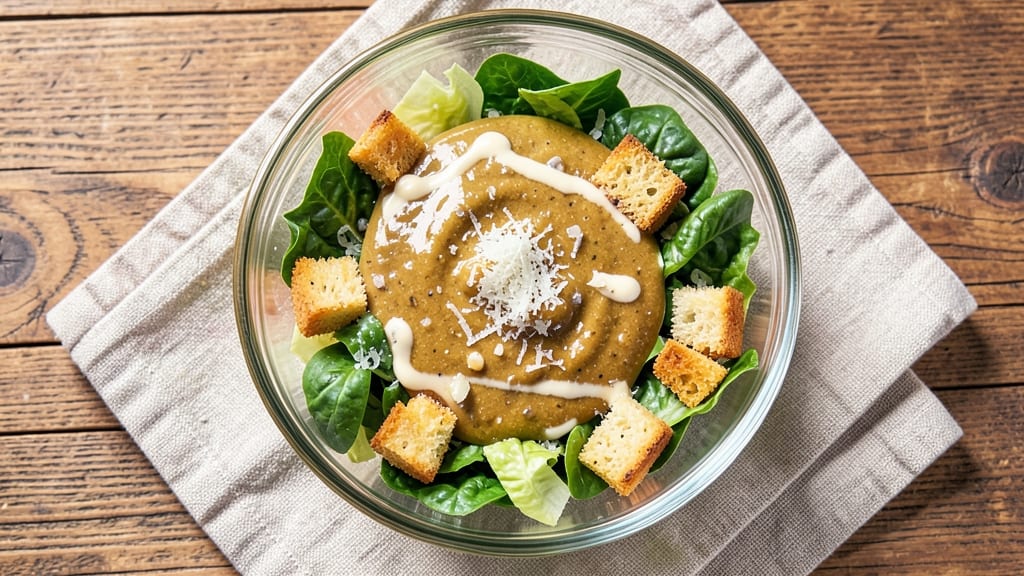
This Caesar salad vinaigrette delivers restaurant-quality boldness without mayo, using a rich anchovy-parmesan base that creates unmistakable depth. The secret lies in emulsifying garlic, lemon, and Dijon mustard with olive oil—no blender required.
I developed this version after years of testing, ensuring every spoonful delivers that signature tangy, umami punch that transforms simple greens into something extraordinary.
The foundation starts with freshly grated parmesan and anchovy fillets (or vegan anchovy paste), which dissolve into the dressing to create a savory backbone.
A touch of Dijon mustard acts as a natural emulsifier, binding the oil and vinegar for a silky texture that clings to romaine like it was meant to be there. The result? A dressing that's creamy yet bright, with just enough acidity to cut through the richness.
What sets this apart is the balance—sweet, salty, tangy, and umami all in one spoonful. The garlic adds warmth, the lemon keeps it vibrant, and the parmesan delivers that unmistakable cheesy note without clumping.
Unlike traditional mayo-based Caesar, this version stays light and refreshing, perfect for warm weather or anyone watching their fat intake.
Best of all, it keeps for up to a week in the fridge, making it ideal for meal prep. Whether you're dressing a classic Caesar or using it as a bold marinade, this recipe is your ticket to bold, authentic flavor without the heaviness.
Let's make it—your taste buds will thank you.
Ingredients for caesar salad vinaigrette
Nine ingredients transform into restaurant-quality Caesar dressing without mayo or blender.
| Ingredient | Amount | Notes |
|---|---|---|
| Freshly Grated Parmesan Cheese 🧀 | ½ cup | Aged 24+ months for maximum flavor |
| Anchovy Fillets 🐟 | 4 whole | High-quality, oil-packed preferred |
| Extra-Virgin Olive Oil 🫒 | ¾ cup | Fruity, peppery variety for depth |
| Dijon Mustard 🍯 | 1 tbsp | Mild or hot, not prepared |
| Fresh Lemon Juice 🍋 | 2 tbsp | Freshly squeezed, no pulp |
| Garlic Cloves 🧄 | 2 cloves | Freshly minced, not pre-minced |
| Shallot 🧅 | ¼ cup | Finely minced, about 1 small shallot |
| White Wine Vinegar 🍷 | 1 tbsp | Dry, not balsamic |
| Granulated Garlic 🧄 | ½ tsp | For extra umami, optional |
| Diamond Crystal Kosher Salt 🧂 | ½ tsp | Adjust to taste |
The Parmesan and anchovies are non-negotiable—they create that signature umami backbone. Look for aged Parmigiano-Reggiano (24+ months) at specialty stores like Whole Foods or Eataly, and Colosio or Contadina anchovies for the best flavor. Freshly grating your own Parm makes all the difference—pre-grated gets clumpy. For anchovies, I prefer oil-packed over salt-packed since we're balancing flavors here. If you can't find fresh shallots, substitute 1 tbsp finely minced onion, but it won't be quite the same. The olive oil should be fruity and peppery—California extra-virgin brands like Corto or Lucini work perfectly.
No anchovies? Vegan anchovy paste (like Red Boat) or even a dash of soy sauce in a pinch. Running low on Dijon? Whole-grain mustard thinned with water works, but it'll be less smooth. The lemon juice needs to be fresh—bottled won't cut it. For a sweeter touch, add 1 tsp honey or maple syrup, but I find the natural sweetness of the shallot and garlic balances perfectly. The granulated garlic is optional but adds that extra umami punch without overpowering. If you're making this ahead, add the lemon juice last—it prevents the dressing from separating.
This keeps beautifully in the fridge for up to 7 days, though it tastes best within the first 3. Store it in a small jar with a tight seal—the smaller the jar, the longer it stays fresh. If it thickens, just whisk in a splash of water or lemon juice. I like to make a double batch and keep one in the pantry for up to 3 months—just add fresh lemon juice before using. The dressing thickens when cold, so give it a quick whisk before tossing with your greens. Perfect for meal prep—just add romaine and croutons when you're ready to serve.
Why You'll Love This Recipe
- Five-Ingredient Magic: I swear by this combo—just toss those five things in a bowl and whoosh, you’ve got a dressing that tastes like it came from a restaurant. No straining, no measuring cups, just pure, salty, tangy perfection.
- Umami Bomb: That anchovy fillet? It’s the secret weapon here. One tiny thing, but it turns your dressing from good to oh my god, why didn’t I do this sooner?—deep, savory, and a little briny, with the Parmesan melting into it like a dream.
- Weeknight to Party: Same dressing, endless uses. Slather it on crispy chicken, toss it with pasta, or drizzle it over grilled shrimp—it’s my go-to for anything that needs that rich, creamy punch without the fuss of mayo.
- Pantry Stash Savior: Honestly, this keeps for ages in the fridge, and the ingredients? You’re probably already buying them. A little olive oil, a wedge of lemon, a can of anchovies—no extra shopping, just flavor on demand.
Step-by-step instructions for Caesar salad vinaigrette
Here's how to make a rich, tangy Caesar dressing that delivers bold flavor without mayo.
Prepare the Umami Base
Begin by finely mincing the 2 cloves garlic cloves and 0.25 cup shallot—this ensures they dissolve completely into the dressing. In a small bowl, combine these with the 4 whole anchovy fillets and 0.5 cup freshly grated Parmesan Cheese. Let them sit for 5 minutes while you prepare the rest. This resting time allows the anchovies to soften slightly and release their intense umami flavor.
The anchovies should break down into tiny, almost invisible pieces—this is what gives authentic Caesar dressing its signature depth. If you're using high-quality oil-packed anchovies, you might notice some of their oil mixing in, which actually enhances the texture. Don't skip this step; it's the foundation of your dressing's complexity.
Whisk in Acid and Mustard
To the anchovy-Parmesan mixture, add the 2 tablespoons fresh lemon juice, 1 tablespoon white wine vinegar, and 1 tablespoon Dijon mustard. Using a whisk, combine these ingredients thoroughly until you have a smooth, slightly thick paste. The lemon juice and vinegar will start to break down the anchovies further while adding bright acidity that balances the richness.
This is where the dressing begins to come together. You'll notice the mixture will look slightly curdled at first, but keep whisking—it will emulsify as you add the olive oil. The Dijon mustard acts as an emulsifier, helping to bind the oil and water-based ingredients later. If you're using hot Dijon, you'll get an extra kick of heat that pairs perfectly with the salty Parmesan.
Slowly Incorporate the Olive Oil
With the whisk moving continuously, begin adding the 0.75 cup extra-virgin olive oil very slowly—about 1 tablespoon at a time. This gradual addition is crucial for creating a stable emulsion. The oil should be incorporated completely before adding more, or you'll risk separating the dressing later.
You're looking for a smooth, velvety texture at this point. If the mixture starts to look broken or oily, simply keep whisking vigorously for another 30-60 seconds. The olive oil should be fully absorbed, creating a dressing that coats the back of a spoon. Here's the thing—if it looks too thick, you can thin it with 1-2 teaspoons of water later, but it's better to start with a slightly thicker consistency that you can adjust.
Finish with Seasonings and Rest
Add the 0.5 teaspoon granulated garlic and 0.5 teaspoon Diamond Crystal kosher salt, then whisk everything together until fully combined. Taste the dressing at this stage—it should be intensely flavorful but balanced. If it needs more acidity, add another ½ teaspoon of lemon juice; if it needs more salt, add another ¼ teaspoon. Remember, you can always adjust, but you can't take flavor out once it's in.
Transfer the dressing to a clean jar and let it rest at room temperature for at least 30 minutes before using. This resting period allows all the flavors to meld together and the emulsion to stabilize. The dressing will actually improve overnight if stored in the refrigerator, developing even more complex flavors. When you're ready to use it, give it a good shake before drizzling over your Caesar salad.
Pro Tips For Making Caesar Salad Vinaigrette
- GRATE FRESH, USE FAST: Freshly grated Parmesan makes all the difference—skip the pre-shredded kind, which has anti-caking agents that dull the flavor. Grate it yourself right before mixing, and keep a fine-mesh strainer handy to catch any stray bits of rind that’ll make your dressing gritty.
- SOAK ANCHOVIES IN OIL: Don’t just toss those anchovy fillets into the bowl dry—they’ll turn your dressing into a salty, fishy mudslide. Instead, let them soak in a splash of olive oil for 5 minutes first. This softens them, spreads their flavor evenly, and keeps the texture smooth.
- WHISK IN STAGES, NOT ALL AT ONCE: I used to dump everything in the bowl at once and end up with a clumpy, greasy mess. Start with the Dijon and lemon juice, whisk until smooth, then slowly drizzle in the olive oil while stirring constantly. The anchovies and Parmesan go in last—this way, you control the consistency and avoid lumps.
- DILUTE WITH ICE WATER IF NEEDED: Made your dressing too thick? Don’t panic—just add a teaspoon of ice water at a time while whisking. It cuts the richness without watering down the flavor, and the cold water helps emulsify the oil and mustard faster. (Yes, even if you’re impatient like me.)
Make-ahead tips for this dish
Prep Ahead Strategy
Make this Caesar vinaigrette 2 days in advance for maximum flavor development—it tastes even better after resting! Store it in a small glass jar with a tight seal in your fridge.
The flavors meld beautifully overnight, with the anchovies and Parmesan deepening in complexity. I like to make a double batch so I always have some ready for quick salads. 🧀
Freezer-Friendly Hack
For long-term storage, freeze the dressing in ice cube trays—each cube makes the perfect single serving. Once frozen, transfer cubes to a ziplock bag and store for up to 3 months.
Thaw in the fridge overnight, then whisk with a splash of lemon juice to restore freshness. This works surprisingly well for meal prep! ❄️
Dressing Greens Early
Toss your romaine with dressing 1-2 hours before serving to let the leaves absorb flavor without wilting. Store the greens in a sealed container with a paper towel to absorb moisture.
Add croutons and Parmesan just before eating—they stay crisp this way. Pro tip: Use iceberg lettuce for a crunchier texture that holds up better to advance prep. 🥗
Batch Prep Tips
When making multiple batches, divide the dressing into small jars (4-6 oz each) for easy portion control. Label with dates—this keeps your fridge organized and helps track freshness.
I keep one batch in the pantry (without lemon juice) for up to 3 months, then add fresh lemon juice when ready to use. This extends shelf life while maintaining quality. 📅
Reheating Tricks
If your dressing thickens in the fridge, simply whisk in 1 tsp of warm water or lemon juice to restore consistency. For a quick refresh, microwave for 10-15 seconds (stirring halfway) to loosen the texture.
Never reheat mayo-based dressings, but this oil-based version handles heat beautifully. Always taste before serving—adjust seasoning if needed. 🔥
Meal Prep Pairings
Pair this dressing with pre-cooked chicken or grilled shrimp for complete meal prep. Store proteins separately in airtight containers, then assemble everything the morning of. The dressing's bold flavors complement grilled meats perfectly, making it a versatile pantry staple. I often prep this on Sundays for busy weeknights! 🍗
Nutrition facts
Frequently asked questions
Can I make this vinaigrette without anchovies?
For a vegan version, substitute the anchovies with 1 tbsp vegan anchovy paste or ½ tsp soy sauce plus ½ tsp nutritional yeast for umami depth. The key is balancing the saltiness—reduce the added salt by ¼ tsp if using soy sauce. This keeps the dressing's signature savory kick without fish.
Why does my dressing separate after making it?
Separation usually happens when oil isn't emulsified properly. The fix? Whisk in 1 tsp Dijon mustard or 1 tsp water to help bind the ingredients. For future batches, add oil even slower (1 tsp at a time) while whisking vigorously. If it still separates, blend briefly with an immersion blender—this forces a stable emulsion.
How much dressing should I make for a standard Caesar salad?
A standard Caesar salad serving (about 4 cups romaine) needs roughly ¼ cup dressing. This recipe yields about 1.5 cups, perfect for 6 servings. For meal prep, double the batch—it keeps well in the fridge for 7 days or frozen for 3 months. Store in small jars to prevent oxidation and maintain freshness.
Can I use this dressing on other dishes besides Caesar salad?
This versatile vinaigrette works beautifully as a marinade for grilled chicken or shrimp, a dip for crudités, or a bold sauce for pasta. Toss it with roasted potatoes or use it to elevate grain bowls. The anchovy-parmesan base adds depth to any dish, though you may want to reduce the salt slightly (¼ tsp less) for non-salad applications.
What's the best way to store leftover dressing?
Transfer leftovers to a clean, airtight jar and refrigerate for up to 7 days. For longer storage, freeze in ice cube trays—each cube makes one serving. Thaw overnight in the fridge, then whisk with 1 tsp lemon juice to refresh. Avoid adding extra oil when reheating, as it can cause separation. Always taste before using to adjust seasoning.